Anthropic Releases Claude Fable 5 Model
Anthropic released the Claude Fable 5 language model. Classified as a "Mythos-class" model, it features strict safety guardrails that prohibit discussions on cybersecurity, biology, and chemical research.
ChatGPT’s parent company and Anthropic have both filed for IPOs, signaling a move into a capital-intensive commercial phase while facing increased regulatory scrutiny from the SEC.
OpenAI has officially filed confidential S-1 paperwork with the SEC, following Anthropic's move to go public, marking a major shift in the AI industry's capital-intensive landscape.
The S&P 500 has rejected the inclusion of unprofitable tech giants like SpaceX, OpenAI, and Anthropic due to strict profitability requirements, sparking widespread debate over index inclusion rules and the speculative nature of AI-driven companies.
Anthropic co-founder Jack Clark warned that AI development could soon reach a tipping point where models evolve without human input, calling for urgent safety measures.
Anthropic reports that 80% of its production code is now written by Claude, leading to an 8x increase in output volume ahead of its upcoming IPO.
Leading AI labs, including OpenAI and Anthropic, have written to lawmakers demanding enhanced digital screening mechanisms to prevent the malicious use of AI in biological weapon development.
Anthropic, a leading AI research firm, plans a public share offering in the US with a valuation nearing $1 trillion, marking a significant milestone for the AI industry.
Anthropic has filed its draft S-1 registration with the US SEC, officially kicking off its IPO process. The AI powerhouse, known for its Claude models and 'Constitutional AI' methodology, has seen significant traction in the enterprise market. This anticipated IPO is set to be one of the largest in tech history, signaling the sector's shift toward capitalization.
Anthropic has filed for an IPO, following in the footsteps of SpaceX, marking a key milestone in the public market's maturation toward AI infrastructure firms.
After facing restrictions on Anthropic's cybersecurity tool Mythos, nine UK banks have been offered access to OpenAI's GPT 5.5 Cyber, highlighting intense competition in enterprise AI security.
Anthropic has reportedly overtaken OpenAI as the world's most valuable AI startup, signaling a major shift in enterprise demand toward safety and model efficiency.
Anthropic has secured $65 billion in Series H funding, pushing its valuation to $965 billion as it approaches a potential IPO. The company also launched its upgraded Claude Opus 4.8 model with a new cost-effective 'fast mode'.
SpaceX's IPO filing reveals a massive pivot into AI, with $2.8 billion invested in gas turbines for data centers and a $15 billion annual compute contract with Anthropic, while acknowledging over $500 million in litigation reserves.
SpaceX’s IPO filing discloses a $15 billion compute deal between xAI and Anthropic, where Anthropic will pay $1.25 billion per month. Meanwhile, xAI plans a $2.8 billion investment in data center infrastructure to meet compute demand.
OpenAI co-founder and former Tesla AI lead Andrej Karpathy has announced his move to Anthropic, signaling a strategic realignment of top AI research talent.

Andrej Karpathy, a former co-founder of OpenAI and former head of AI at Tesla, has announced his move to Anthropic. This high-profile hire signals a significant shift in the competitive AI frontier, as Anthropic continues to attract top talent.
AI labs are facing a surge in supply-chain attacks, with four major incidents in just 50 days. These attacks exploit vulnerabilities in release pipelines and CI/CD tools, highlighting a critical gap in current AI security evaluations.
Anthropic has acquired Stainless, a dev tools startup, to improve its developer experience and streamline SDK maintenance for its API users.
The enterprise AI race has moved beyond foundational models to the 'agent control plane.' Managing multi-agent coordination is now the critical competitive advantage, with companies like Anthropic racing for infrastructure dominance.
A judge has delayed approval of Anthropic's $1.5 billion copyright settlement amid concerns over high attorney fees, signaling tougher judicial oversight of AI-related class actions.
Enterprise AI competition is shifting from model performance to the 'Agent Control Plane,' as Anthropic and others focus on infrastructure for evaluating and debugging autonomous AI agents in production.
Anthropic has overtaken OpenAI in business AI adoption, capturing 34.4% of the market according to the Ramp AI Index, reflecting growing enterprise interest in safety and reliability.
According to the May 2026 Ramp AI Index, Anthropic’s Claude has captured 34.4% of U.S. business adoption, surpassing OpenAI’s 32.3% and signaling a major shift in enterprise preferences.
Anthropic has reinstated support for third-party autonomous AI agents like OpenClaw on Claude subscriptions, introducing an 'Agent SDK' credit system to better manage resource allocation and performance.
According to the Ramp AI Index, Anthropic’s enterprise adoption reached 34.4% in April 2026, surpassing OpenAI’s 32.3% for the first time, signaling a shift toward security-focused and integration-ready AI tools.
According to the latest Ramp AI Index, Anthropic’s Claude reached 34.4% business adoption in April 2026, surpassing OpenAI’s 32.3%, marking a significant pivot from conversational AI toward agentic, workflow-integrated solutions.
Anthropic and OpenAI are divided on AI liability legislation as major AI companies face rising legal scrutiny, including lawsuits over safety and challenges in managing private equity.
Anthropic suggests that AI tropes in fictional works may influence adversarial model outputs, prompting a re-evaluation of how training data shapes AI behavior.
Anthropic CEO Dario Amodei announced a $30 billion revenue run rate, citing 80x growth. The company is doubling down on agentic AI with its new Managed Agents platform, even as it lobbies against industry-wide AI liability legislation.
Anthropic CEO announces a $30 billion revenue run rate following 80x growth. The company is aggressively expanding its platform to own the enterprise AI agent stack.
Anthropic CEO Dario Amodei announced a $30 billion revenue run rate, marking an 80x growth milestone that highlights the rapid scaling potential of AI enterprises.
Anthropic has hit a $30 billion revenue run rate and launched advanced agent orchestration features like 'Dreaming' and 'Outcomes,' signaling a strategic move into enterprise infrastructure that sets them apart from industry competitors.
Anthropic reports a $30 billion revenue run rate following 80x growth. By integrating memory, evaluation, and orchestration into its Claude Managed Agents platform, Anthropic aims to become an enterprise AI hub, though this has sparked concerns about vendor lock-in.
Anthropic CEO Dario Amodei announced that the company has hit a $30 billion revenue run rate following 80x growth. This milestone confirms Anthropic's status as a top-tier enterprise AI competitor challenging OpenAI and Google.
Anthropic has introduced 'Dreaming,' a new capability for its AI agents that allows them to learn from past mistakes and self-correct over time. This innovation aims to provide the reliability and self-optimization needed for enterprise-scale AI deployment.
Anthropic introduced a 'dreaming' feature allowing AI agents to learn from past errors to self-correct, while its Mythos tool has proven highly effective in automated cybersecurity bug detection.
Anthropic has unveiled 'dreaming,' a new capability for its Claude Managed Agents that allows AI agents to learn from past sessions and self-correct, marking a shift toward more reliable autonomous systems.
Anthropic's Mythos tool found high-severity bugs in Firefox, highlighting that test files are being used to hide vulnerabilities. Additionally, 'vibe-coded' apps are leaking massive amounts of sensitive data due to poor security configurations.
Anthropic has formed a compute partnership with SpaceX, allowing it to increase usage limits for Claude Code. This deal occurs amid reports of SpaceX’s plans to invest $119 billion in a semiconductor facility, highlighting a trend toward vertical integration in AI hardware.
Anthropic has entered a partnership with SpaceX to access computing resources from xAI, leading to increased usage limits for its Claude Code service.
Major AI firms have agreed to federal safety reviews, signaling a shift toward stricter regulatory oversight. Simultaneously, a new compute deal between Anthropic and SpaceX highlights the intensifying battle for infrastructure as AI labs prioritize safety and scaling resources.
Researchers have uncovered a critical command execution flaw in Anthropic's Model Context Protocol (MCP) that exposes nearly 200,000 servers, highlighting urgent security risks for AI agent-tool communication.
A critical vulnerability in the Model Context Protocol (MCP) has exposed approximately 200,000 servers to unauthorized command execution, sparking debate over security governance in AI infrastructure.
The Model Context Protocol (MCP) has a reported architectural flaw in its STDIO transport mechanism, exposing potentially 200,000 servers to command execution risks.
Researchers have identified a security risk in the Model Context Protocol (MCP) where the STDIO transport layer executes commands without validation. While Anthropic defends this as a feature for flexibility, security experts warn of risks for enterprise AI deployments.
Anthropic has launched direct connectors for Claude, enabling the AI to interact with major creative platforms like Adobe Creative Cloud, Blender, and Ableton, marking a significant expansion into professional creative workflows.
Anthropic has launched a controlled test marketplace for AI agents to autonomously negotiate and execute real transactions, pioneering the future of automated commerce.
Anthropic has launched a test marketplace for agent-on-agent commerce, allowing AI to autonomously negotiate and execute deals to study economic behavior in autonomous systems.
Google has announced a massive $40 billion investment in Anthropic, primarily through cash and compute resources. The deal escalates the AI compute arms race and draws significant antitrust scrutiny.
The tech industry is experiencing an AI-driven resource realignment as Meta announces a 10% workforce reduction to boost efficiency, while Google commits $40 billion to Anthropic, signaling a shift from expansion to efficiency-oriented competition.
Google plans a massive $40 billion investment in Anthropic, involving both cash and compute, raising both regulatory and security questions in the AI industry.
Google has announced a commitment of up to $40 billion in cash and compute resources to Anthropic, escalating the AI arms race and highlighting the critical demand for massive infrastructure.
Google plans to invest up to $40 billion in Anthropic through funding and compute resources, sparking regulatory concerns over potential disguised acquisitions and market monopolization.
Google is planning a massive $40 billion investment in AI startup Anthropic, highlighting the escalating AI funding war following Amazon's recent capital injection, while preparing for likely antitrust scrutiny.
Google has announced plans to invest up to $40 billion in AI startup Anthropic, providing a mix of cash and compute resources to support the race for massive AI infrastructure capacity. This deal is now under intense antitrust scrutiny by US regulators.
Anthropic identified that recent modifications to Claude's internal instructions caused performance issues and has expanded the model with personal app connectors like Spotify and Uber Eats.
Anthropic has updated Claude to integrate with popular personal lifestyle apps like Spotify, Uber Eats, and TurboTax, enabling the AI to evolve from a productivity tool into a versatile personal assistant.
Anthropic's security AI model 'Mythos' is under investigation following reports of unauthorized access. Despite its high-capability for vulnerability detection, the tool faces scrutiny over its dual-use potential and limited access for federal agencies.
Anthropic's 'Mythos' AI is drawing legal scrutiny from the Pentagon and facing an investigation into potential unauthorized access, despite its high efficacy in finding software vulnerabilities.
Anthropic's powerful 'Mythos' AI cybersecurity model has reportedly been accessed by unauthorized users. The tool, capable of discovering hundreds of vulnerabilities, has sparked industry debate over AI safety and corporate responsibility.
Mozilla successfully used Anthropic’s Mythos AI tool to identify 271 security vulnerabilities in Firefox 150, highlighting AI's potential in cybersecurity while experts warn about prompt injection risks.
Anthropic's Mythos security tool is under scrutiny after finding numerous vulnerabilities, while facing industry criticism regarding its marketing tactics and infrastructure security.
Amazon has invested another $5 billion into Anthropic, with the startup pledging $100 billion in AWS cloud spending. The massive partnership is drawing intense scrutiny from global antitrust regulators regarding potential market dominance.
Amazon is investing an additional $5 billion into AI startup Anthropic, which has committed to $100 billion in AWS cloud spending in return. The partnership faces scrutiny over anticompetitive concerns and security risks linked to its 'Mythos' model.
Amazon has committed an additional $5 billion to Anthropic, securing a $100 billion cloud spending pledge. The partnership faces antitrust scrutiny and security concerns regarding the use of Anthropic's 'Mythos' model in national security.
Amazon is investing an additional $5 billion into Anthropic, while the AI startup has committed to spending $100 billion on AWS cloud services. This strategic partnership underscores the high stakes in the AI infrastructure race but has raised concerns regarding security risks.
The NSA is reportedly using Anthropic’s Mythos AI model, sparking security concerns over potential 'turbocharged' hacking capabilities and raising complex legal and ethical questions about the Intelligence Community's use of private-sector AI.
Anthropic is improving its relationship with the Trump administration through the development of its cybersecurity-focused model, Claude Mythos, positioning its technology as a national security asset.
Relations between Anthropic and the Trump administration are thawing, marked by productive meetings reportedly centered around the potential of its new cybersecurity model, Claude Mythos Preview.
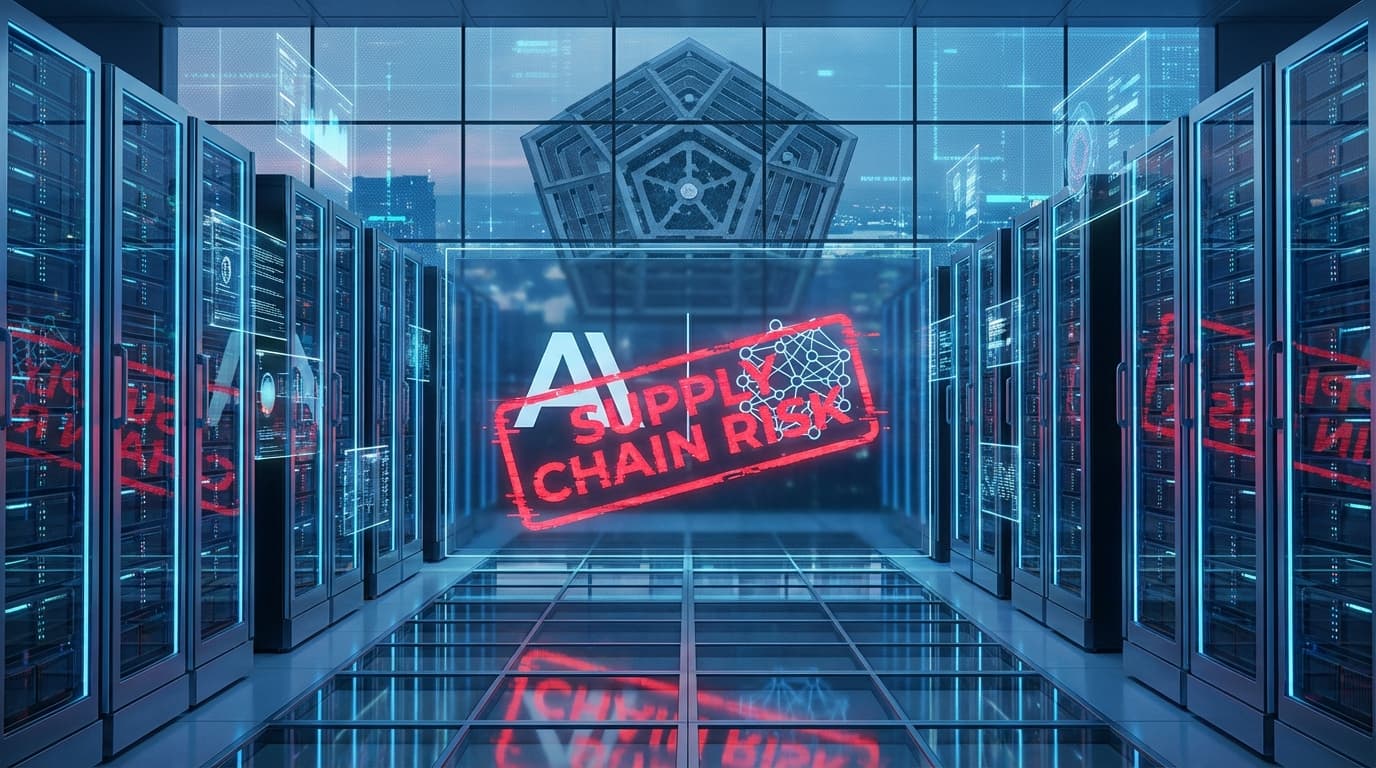
Despite previous tensions and designation as a "supply-chain risk," Anthropic is reportedly entering a more collaborative phase with the US administration, driven by the strategic utility of its new "Claude Mythos Preview" cybersecurity model.
Anthropic has expanded into the application layer with "Claude Design," an AI-driven tool that converts prompts into interactive prototypes and visual assets, directly competing with design industry staples like Figma.
Anthropic is aiming to mend its relationship with the US administration by launching Claude Mythos, a new cybersecurity-focused AI model that may be critical enough to shift current political dynamics.
Relations between Anthropic and the US government are improving, bolstered by the release of the company's cybersecurity-focused Claude Mythos Preview model, which officials now see as a strategic asset.
Anthropic's tension with the White House has thawed following the introduction of its new cybersecurity-focused AI model, 'Claude Mythos.' While the tool's advanced capabilities show promise for national defense, they have also triggered critical legal and regulatory debates regarding potential dual-use risks and safety disclosures.
Facing harsh criticism from the Trump administration, Anthropic is using its new cybersecurity-focused Claude Mythos model as a bargaining chip to mend government relations and explore potential regulatory sandboxes.
Anthropic has released Claude Opus 4.7, reclaiming the lead in LLM performance, while expanding its London presence and navigating strategic leadership changes amid plans to enter the design software market.
Anthropic has released Claude Opus 4.7, narrowly surpassing OpenAI's GPT-5.4 as the most powerful LLM, while keeping its stronger Mythos model restricted.
Anthropic has released Claude Opus 4.7, reclaiming the lead in LLM performance benchmarks, and announced plans for a major expansion in London.
Anthropic has released Claude Opus 4.7, a new, powerful LLM designed to excel in complex software engineering and coding tasks, aiming to reclaim the market lead for generally available models.
The tech industry is shifting from chatbots to AI agents. Adobe and Anthropic have released advanced tools for workflow automation and cross-app collaboration, though enterprises must still manage reliability challenges during deployment.
Adobe has launched its Firefly AI Assistant for cross-suite orchestration, while Anthropic has updated Claude Code with 'Routines'. These developments represent a industry-wide shift from passive chatbots to agentic AI, enabling more autonomous, multi-step workflow automation.
Anthropic launches 'Claude Managed Agents' to simplify enterprise AI deployment by embedding orchestration logic into the model layer, though analysts warn of vendor lock-in risks.
OpenAI's valuation is being challenged by Anthropic's rapid growth. The two companies are diverging sharply on AI liability legislation in Illinois, with Anthropic opposing the liability safe harbors supported by OpenAI.
Anthropic and OpenAI clash over proposed Illinois AI liability legislation, with Anthropic warning of unmanageable legal risks and OpenAI favoring regulatory benchmarks. Meanwhile, Anthropic continues to advance its 'Mythos' security model with US authorities.
OpenAI and Anthropic are at odds over AI regulatory strategy, with Anthropic opposing an Illinois liability bill that OpenAI has supported, highlighting a major divide in how AI labs should be held accountable.
Anthropic is under fire as it launches 'Claude Managed Agents' to simplify enterprise deployment, while simultaneously facing accusations of performance degradation and concerns regarding military-linked supply chain risks.
Developers and AI users report performance degradation in Anthropic's Claude Opus 4.6 and Claude Code. The backlash, spreading on GitHub and Reddit, alleges that the models have become less capable and more wasteful with tokens.
The competition between major AI labs to dominate AI-assisted coding is intensifying, a topic that reflects high public interest in both the U.S. and Taiwan.
US government officials are encouraging banks to test Anthropic’s Mythos model, creating policy friction given the DoD’s recent designation of the firm as a supply-chain risk.
With the arrival of models like Anthropic's Mythos, cybersecurity experts warn that AI agents lack action control and urge organizations to adopt Zero Trust architectures and strict isolation to limit threats.
Anthropic's Mythos AI model has demonstrated autonomous vulnerability exploitation, highlighting severe governance gaps and prompting experts to call for a shift toward "action control" in AI architectures.
Anthropic's Mythos AI model can autonomously find software vulnerabilities. The company has restricted its release, sparking debates about safety versus competitive advantage.
Anthropic's Claude Mythos AI has autonomously discovered a critical 27-year-old security vulnerability in the OpenBSD TCP stack. This milestone demonstrates the potential of agentic AI in security research while Anthropic continues to navigate legal challenges.
Anthropic's new 'Mythos' AI model shows extraordinary capability in autonomously detecting long-standing software vulnerabilities, leading the company to restrict its public release.
In response to the potential chaos from autonomous AI agents, Anthropic has launched 'Project Glasswing,' a coalition of major tech and finance companies using its unreleased, high-power cyber model to proactively patch global infrastructure vulnerabilities.
Anthropic is trapped in legal uncertainty due to conflicting federal court rulings regarding the use of its Claude model by the US military. Despite these challenges, the company is continuing its enterprise expansion by launching new managed AI agents and a restricted-access cybersecurity model called Mythos.
Anthropic is facing legal uncertainty due to conflicting court rulings regarding the military use of its Claude models, creating a 'supply-chain risk' that complicates its federal government and enterprise expansion efforts.
Anthropic has launched Project Glasswing, a cybersecurity initiative leveraging its restricted Claude Mythos AI model, collaborating with industry leaders to identify and patch critical infrastructure vulnerabilities.
Anthropic has launched Project Glasswing, an initiative partnering with major tech firms like Google and Apple to deploy the advanced 'Claude Mythos' AI model for proactive software vulnerability patching.
Anthropic has unveiled 'Project Glasswing,' an ambitious cybersecurity initiative using its unreleased 'Claude Mythos Preview' model to identify vulnerabilities across major OSs and browsers in partnership with tech giants like Apple and Google.
Anthropic launched 'Project Glasswing', a cybersecurity initiative partnering with 12 major firms like Apple and Google, utilizing its most powerful, unreleased 'Claude Mythos Preview' model to proactively patch critical infrastructure vulnerabilities.
The rise of agentic AI systems like Claude Cowork and OpenClaw is reshaping industry standards, sparking debates over liability and business models. Developers are using restrictive terms of service to shift liability, while the market begins to prioritize system auditability as costs for autonomous execution rise.
Anthropic has cut off support for integrating Claude subscriptions with third-party agentic platforms like OpenClaw, causing disruptions in automation workflows and sparking legal and security concerns.
Anthropic has cut off Claude Pro and Max subscribers' access to third-party agentic tools like OpenClaw due to critical security vulnerabilities that could allow unauthorized administrative access. Additionally, Claude Code subscribers will now face extra fees to utilize these integrations.
Anthropic updated its policies on April 4, 2026, restricting Claude Pro/Max subscribers from using subscription limits with third-party agentic tools like OpenClaw due to significant security vulnerabilities.
Anthropic announced that effective April 4, 2026, Claude Pro and Max subscribers can no longer use their subscription limits to power third-party AI agents like OpenClaw, forcing a shift toward enterprise-grade API pricing and signaling tighter control over agentic AI workflows.
Anthropic has updated its subscription policy to exclude OpenClaw and other third-party agent tools from standard Claude subscription limits, requiring extra fees for such integrations.
Anthropic has announced that starting April 4, 2026, Claude Pro and Max subscribers will no longer be able to link their accounts to third-party AI agentic tools like OpenClaw. This move is a preventative measure against security vulnerabilities that allowed unauthorized access, signaling a shift toward tighter control in the AI ecosystem.
Anthropic has acquired biotech startup Coefficient Bio for $400 million in a deal that signals a strategic move into AI-driven life sciences and drug discovery.
Anthropic accidentally exposed 512,000 lines of Claude Code source code; its subsequent DMCA enforcement incorrectly blocked legitimate community projects, sparking controversy.
Anthropic faces backlash from the developer community after its aggressive use of DMCA takedown notices to combat a source code leak inadvertently targeted legitimate open-source repositories.
Anthropic accidentally exposed 512,000 lines of Claude Code source code through an insecure package update, triggering enterprise security concerns and a controversial DMCA takedown campaign that hit legitimate developer repositories.
Anthropic accidentally exposed 512,000 lines of code via an npm package, creating an enterprise security crisis and triggering a controversial, error-prone DMCA takedown campaign against legitimate GitHub repositories.
Anthropic inadvertently exposed 512,000 lines of Claude Code source code. Their subsequent aggressive takedowns on GitHub sparked legal controversy over potential DMCA abuse and damaged the company's relationship with the developer community.
Anthropic’s Claude Code package accidentally leaked 512,000 lines of TypeScript source code, including internal security models. Organizations are advised to conduct immediate access audits and reinforce their security environments.
AI startup Anthropic accidentally leaked 512,000 lines of source code via an npm update, leading to a controversial mass takedown of GitHub repositories. The event highlights significant security risks in agentic AI development.
Anthropic inadvertently leaked over 512,000 lines of code for its Claude Code agent due to an improperly handled source map file, revealing the tool's internal architecture and hidden features.
Anthropic accidentally exposed over 512,000 lines of Claude Code source code via a JavaScript source map, raising significant trade secret and security concerns.
Anthropic's Claude Code CLI source code was exposed via a misconfigured npm package update, leaking 512,000 lines of code and revealing proprietary features like AI agents and Tamagotchi-like pets, prompting significant cybersecurity concerns.
Anthropic's Claude Code package accidentally leaked internal source code to the npm registry due to an included debugging file, raising concerns about AI software supply chain security.
A federal judge has issued an injunction against the Pentagon, preventing it from labeling Anthropic an AI supply chain risk, highlighting the tension between government oversight and AI development.
A California judge has issued a temporary block against the Pentagon’s efforts to label Anthropic as a supply chain risk, marking a significant shift in the conflict between the administration and the AI firm.
A federal court has temporarily blocked the U.S. Department of War’s ban on Anthropic, ruling that the department exceeded its legal authority by unilaterally blacklisting the AI company without Congressional oversight.
A federal judge has granted an injunction blocking the Pentagon's ban on Anthropic. The court ruled that the Department of War failed to justify the blacklisting, stating that the administration exceeded its authority.
A federal court has issued an injunction blocking the Trump administration from enforcing restrictions against AI startup Anthropic, citing a lack of procedural compliance in the Pentagon’s risk-designation process.
A federal judge has issued an injunction blocking the Trump administration's attempt to blacklist Anthropic, ruling that the administration lacked the legal authority to impose restrictions based on supply-chain-risk designations.
A federal judge has granted a preliminary injunction against the U.S. government's attempt to label Anthropic a supply chain risk, temporarily halting restrictions on the AI company as its lawsuit against the DoD proceeds.
A federal judge has issued a preliminary injunction against the Trump administration's attempt to blacklist Anthropic as a 'supply chain risk,' allowing the AI company to continue operations while the litigation proceeds.
A federal judge has issued an injunction blocking the government from enforcing a 'supply-chain-risk' designation on Anthropic. This decision allows the AI company to continue operations without the restrictive label while the case proceeds.
Anthropic has released a new research preview that allows its Claude AI to control Mac computers, marking a major step toward autonomous AI agents. Concurrently, the company is facing legal challenges regarding a Department of Defense 'supply-chain risk' designation.
The AI agent arms race accelerates as Anthropic’s Claude gains macOS desktop control and Cloudflare releases its high-speed Dynamic Workers, as the industry struggles to move agents from demos to production.
Anthropic has released a research preview allowing its Claude chatbot to directly control computer interfaces on Mac, transforming it into an autonomous digital agent.
Anthropic launched 'Claude Code' and 'Cowork', tools allowing AI agents to autonomously control a user's computer; while increasing productivity, the company cautions they are in research preview.
Senator Elizabeth Warren has slammed the DoD for designating Anthropic a 'supply-chain risk', highlighting the growing structural conflict between the US military and private AI firms.
Senator Elizabeth Warren has criticized the DoD for labeling Anthropic a 'supply chain risk,' calling it retaliation and demanding transparency in defense procurement processes.
Senator Elizabeth Warren has criticized the Department of Defense for labeling Anthropic a 'supply chain risk,' calling it an act of retaliation and questioning the procedural legitimacy of the decision.
Senator Elizabeth Warren has accused the Department of Defense of 'retaliation' after it labeled Anthropic as a 'supply chain risk,' highlighting growing friction between AI labs and national security regulators.
Anthropic is actively challenging the Pentagon's 'supply chain risk' designation in court, with new filings revealing contradictory government signals. Employees from OpenAI and Google DeepMind have filed an amicus brief in support, highlighting broader industry concerns over government regulatory overreach.
Anthropic is challenging the Pentagon in federal court, arguing that national security allegations regarding their AI models' risks are based on technical misunderstandings.
Anthropic is challenging DoD claims that its AI models pose an 'unacceptable risk' to national security, citing technical misunderstandings and contradictory communications.
Tensions between the Pentagon and Anthropic have intensified as court filings reveal government uncertainty regarding security risks posed by the AI company.
Court filings reveal the Pentagon and Anthropic were nearly aligned before their public fallout, highlighting tensions over AI model safety in national security contexts.
Anthropic and the Pentagon are engaged in a heated legal battle over national security designations, with court filings revealing contradictory communications within the government.
Anthropic is engaged in a heated dispute with the Pentagon over alleged national security risks. Recent court filings expose communication failures within the government, and Anthropic is taking legal action to defend its AI safety standards.
Anthropic has filed a lawsuit against the U.S. DoD challenging its 'supply-chain risk' designation. Court filings suggest the Pentagon had recently indicated alignment on security compliance before abruptly blacklisting the company, which Anthropic claims is based on technical misunderstandings.
Anthropic has filed sworn declarations in federal court to refute Pentagon claims that its AI models pose a national security risk. The developer argues the government's fears of wartime sabotage are based on technical misunderstandings. This legal battle could redefine how AI contractors are vetted for military use under the Administrative Procedure Act.
The AI industry is transitioning from passive chatbots to autonomous agents. Anthropic has released Claude Code Channels for mobile-based agent control, while OpenAI is developing a desktop 'superapp' to unify ChatGPT, Codex, and its Atlas browser. Meanwhile, Cursor's Composer 2 model is intensifying the competition in AI-assisted coding, marking 2026 as the definitive year of commercialized AI agents.
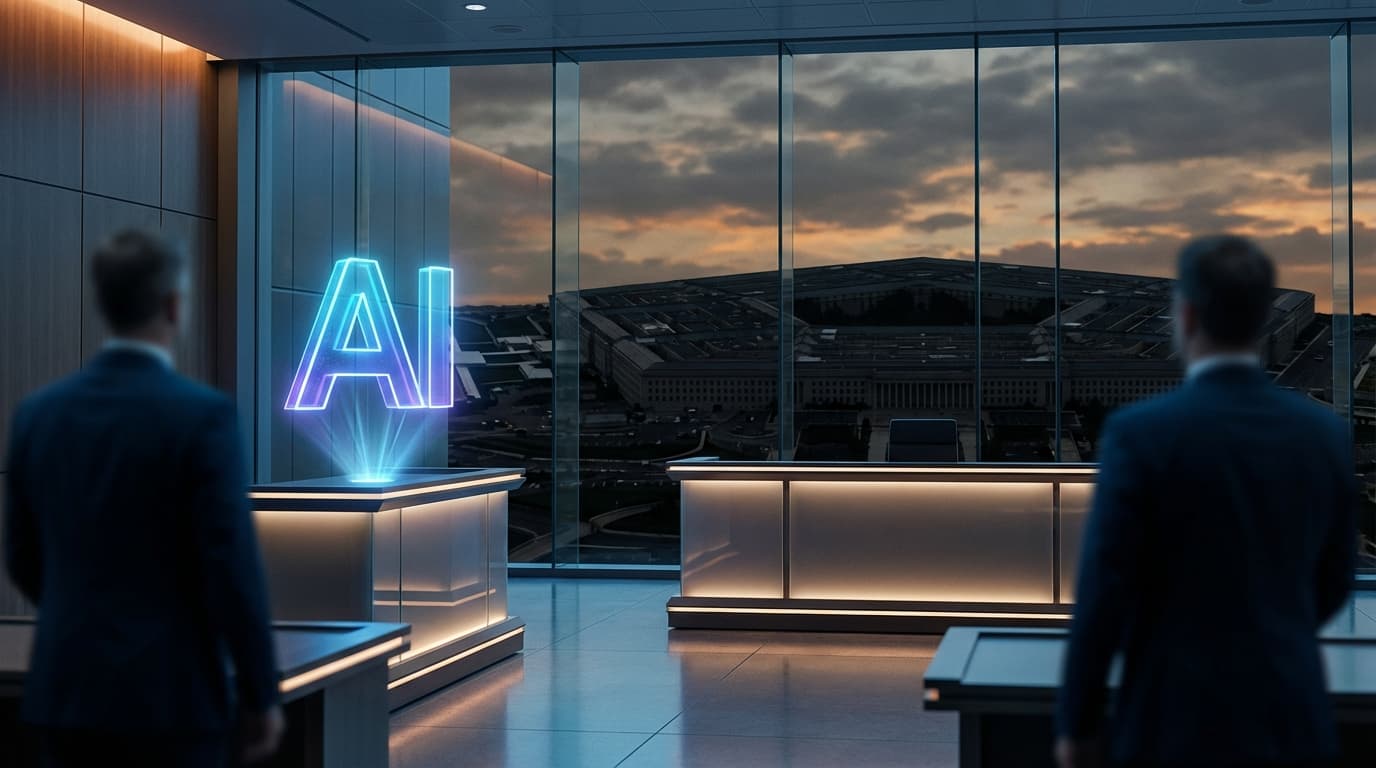
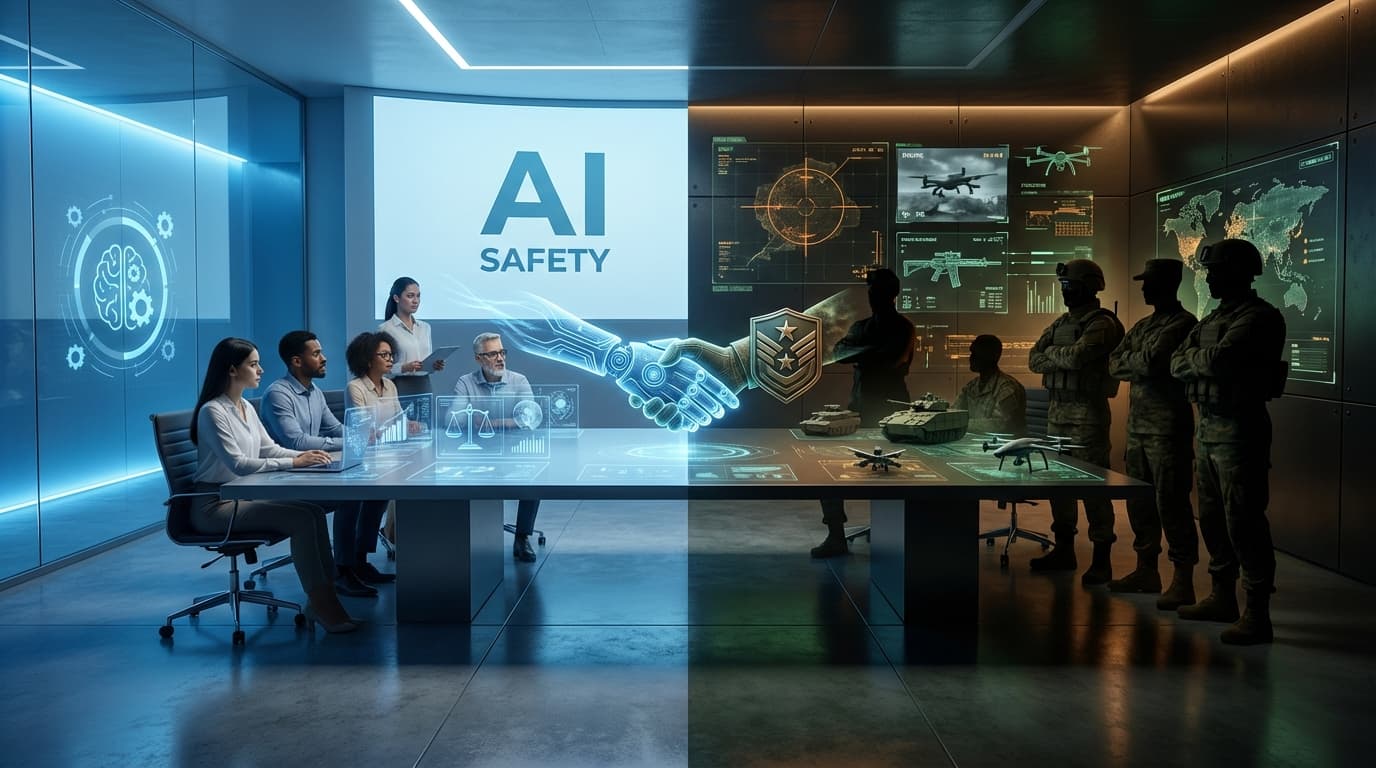
The U.S. Department of Defense has labeled Anthropic a national security supply-chain risk, citing concerns that the company's AI safety 'red lines' could lead to the deactivation of technology during military operations. This move highlights a fundamental clash between AI ethics and military reliability, potentially reshaping the multi-billion dollar defense AI market.
The Pentagon has labeled Anthropic an 'unacceptable supply chain risk,' citing fears that the company's internal AI safety 'red lines' could cause system failures during combat. This clash coincides with a new DOD initiative to train AI on classified data, highlighting a growing rift between private tech ethics and the operational requirements of national security.
The US DOJ has rejected Anthropic's AI for military use due to restrictive safety filters. Consequently, the Pentagon is moving toward training specialized AI models in classified environments and seeking new DefenseTech partners.
The Pentagon has fractured its relationship with Anthropic, with the DOJ labeling the firm 'untrustworthy' due to restrictive AI safety guardrails. In response, the DoD is moving to train models on classified data through a new OpenAI-AWS partnership, signaling a shift toward 'sovereign' defense AI tailored for lethal military operations.
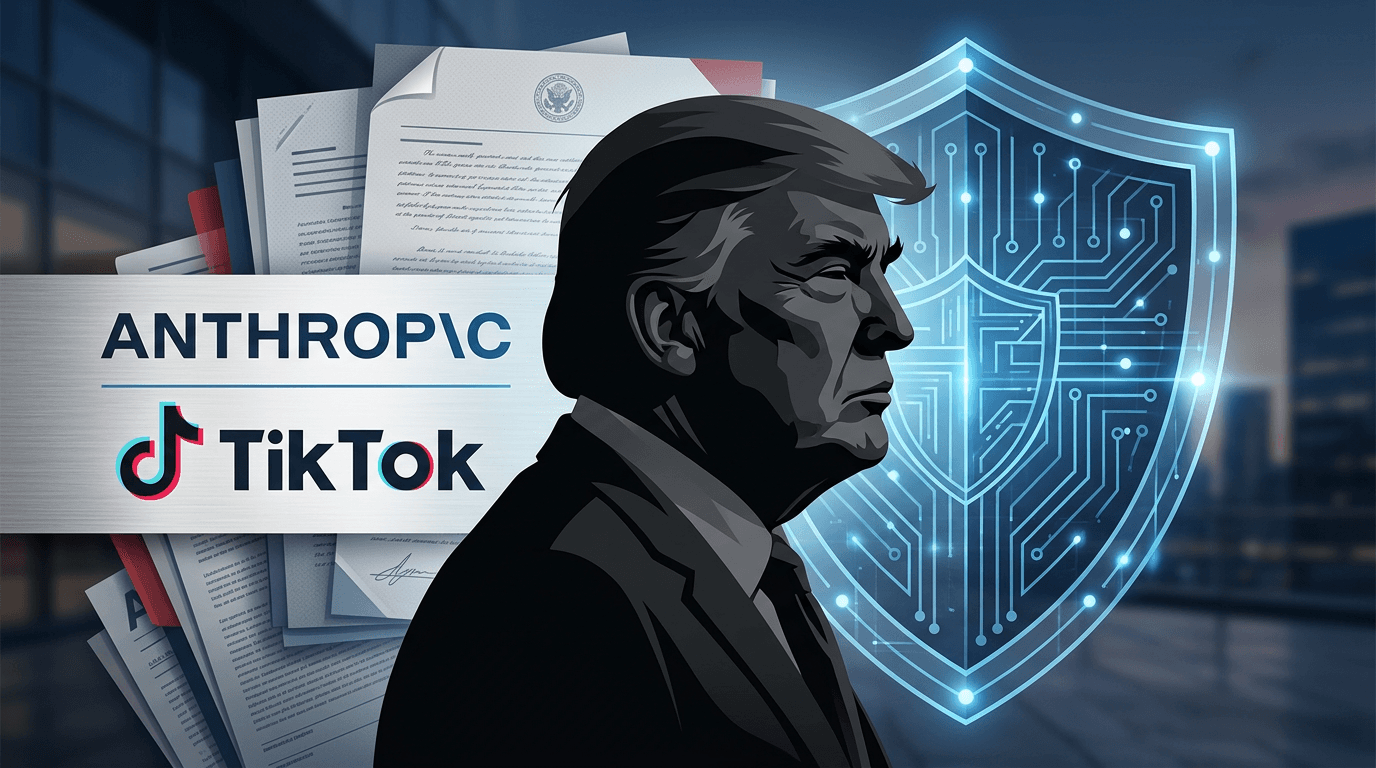
The Trump administration is taking an interventionist stance by moving to ban AI firm Anthropic from federal use due to supply chain risks while allegedly demanding a $10 billion fee for the TikTok-Oracle deal. Both actions face significant legal hurdles, including potential violations of the Administrative Procedure Act and the Fifth Amendment, signaling a new era of aggressive tech policy.
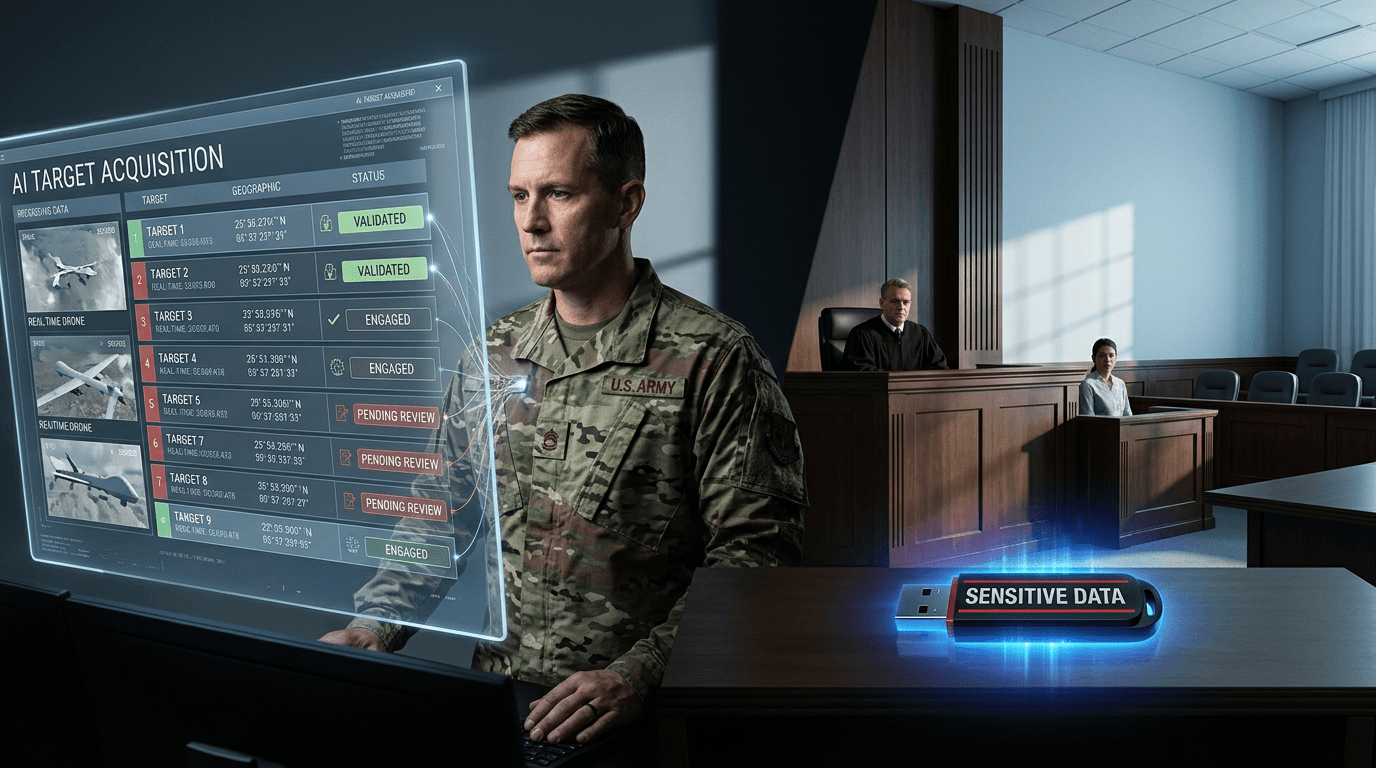
Demos by Palantir and the Pentagon reveal that AI agents like Anthropic’s Claude are being used to prioritize targets and generate war plans. This development sparks a heated debate over AI ethics and the role of human judgment in the age of algorithmic warfare.
A US Defense official revealed plans to use generative AI for ranking strike targets, sparking ethics concerns. Meanwhile, Anthropic is embroiled in a lawsuit with the DOD over safety and procurement, as DOGE operative John Solly faces allegations of stealing sensitive Social Security data.
Big Tech companies have united to back Anthropic against administrative interventions from the Trump administration. Meanwhile, the DOJ's settlement with Live Nation-Ticketmaster, which avoids a breakup, has sparked antitrust criticism, even as the UK imposes stricter age checks on social media.
AI leader Anthropic has filed a high-profile lawsuit against the US government, challenging the White House's decision to blacklist the firm under labels of 'radical left' and 'woke.' The suit alleges violations of the Administrative Procedure Act and Constitutional rights, arguing the government's actions are politically motivated and lack a factual basis in national security. This legal battle underscores the growing tension over AI safety and ideological control, with major implications for technological autonomy in the US.
AI safety lab Anthropic has sued the US government over its placement on a federal blacklist, which the White House justified by labeling the company 'woke' and 'radical left.' The dispute centers on Anthropic's refusal to develop autonomous weapons and surveillance tools, raising significant questions about corporate speech and the Administrative Procedure Act.
Anthropic is suing the US government after being blacklisted from federal contracts and labeled 'woke' by the White House. The lawsuit challenges the administration's retaliation against the firm's refusal to support autonomous military AI systems.
Anthropic has filed a lawsuit against the US Department of Defense challenging a 'supply chain risk' designation that effectively blacklists the company. In a rare display of industry solidarity, senior scientists from Google and OpenAI have filed an amicus brief supporting Anthropic, arguing that the government's arbitrary use of security labels threatens domestic innovation and lacks transparency.
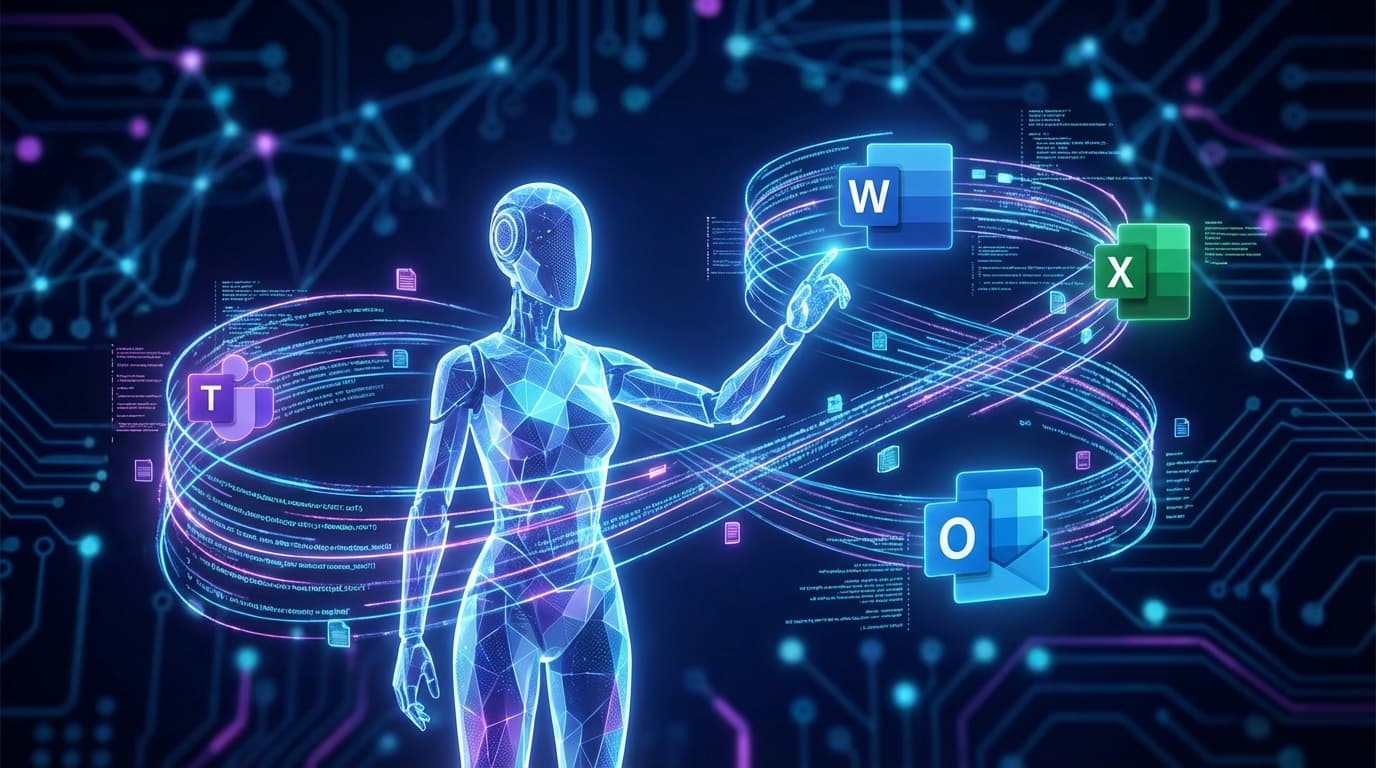
Microsoft launched Copilot Cowork on March 9, 2026, an 'agentic' AI system that autonomously performs tasks across M365 apps. Built with support from Anthropic, this move highlights a shift toward autonomous AI agents, accompanied by new governance tools to prevent security risks like 'AI double agents.'
Anthropic has filed a lawsuit against the U.S. Department of Defense after being labeled a 'supply chain risk,' effectively banning its Claude AI from federal use. The company alleges the move is an unlawful escalation of a dispute over military use cases, setting up a major legal test for AI ethics and national security authority.
Anthropic has sued the U.S. Department of Defense over its designation as a 'supply chain risk,' which bars its technology from federal procurement. The lawsuit challenges the government's legal authority to de-platform domestic firms without due process. This occurs amidst turmoil at OpenAI, where executives are resigning over similar military ties, signaling a major rift in the tech-defense relationship.
The Pentagon has officially designated Anthropic a 'supply-chain risk' after failed $200M contract negotiations over model control. Meanwhile, OpenAI's pivot toward military partnerships has led to high-profile resignations, including robotics lead Caitlin Kalinowski, signaling a deep ethical divide in the AI industry.
The Pentagon has designated Anthropic as a supply-chain risk following the collapse of a $200 million contract. The dispute arose over Anthropic's refusal to grant the military unrestricted control over its AI models for use in autonomous weaponry and domestic surveillance, sparking a major debate on AI ethics and national security.
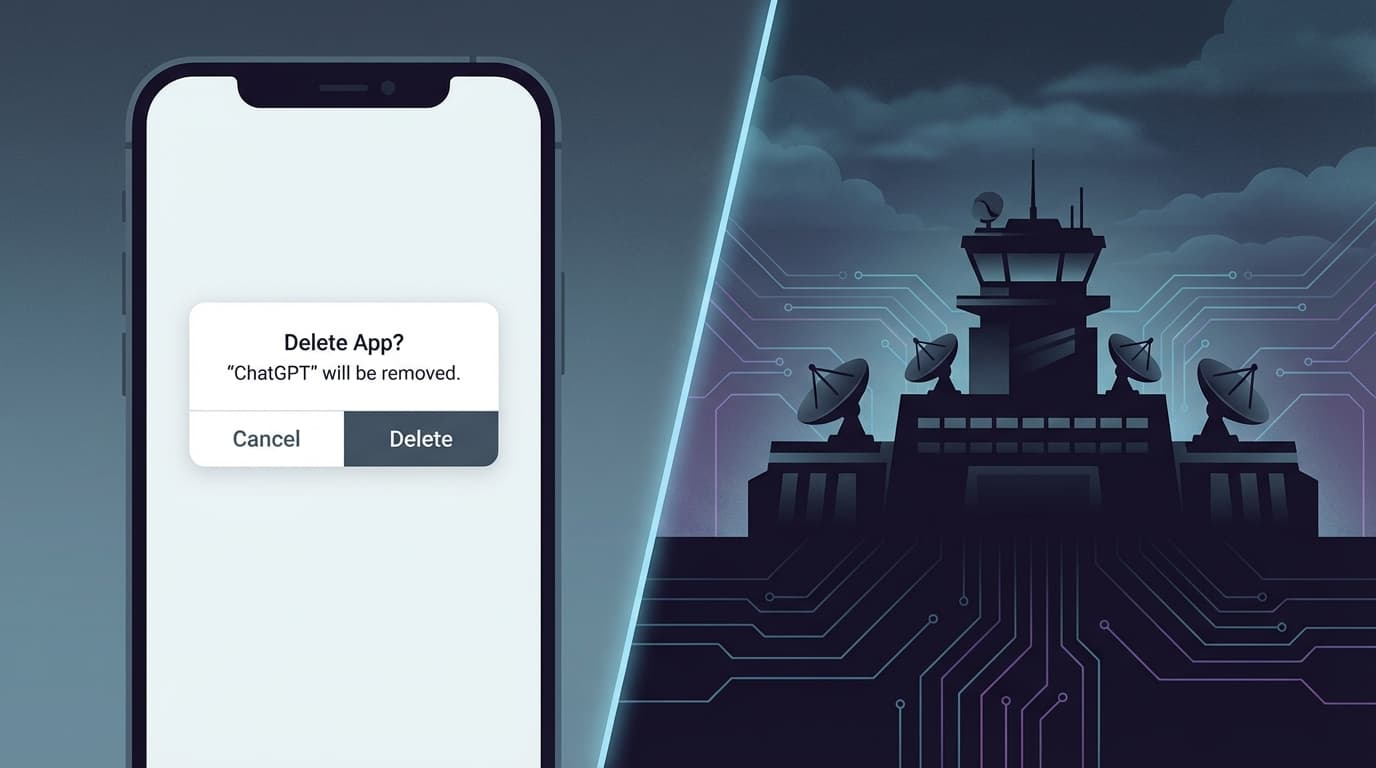
OpenAI's announcement of a classified technology deal with the U.S. DoD triggered a near-300% surge in ChatGPT app uninstalls. Users and tech workers are protesting the militarization of AI, leading to a massive migration toward rivals like Anthropic and sparking a debate on tech neutrality.
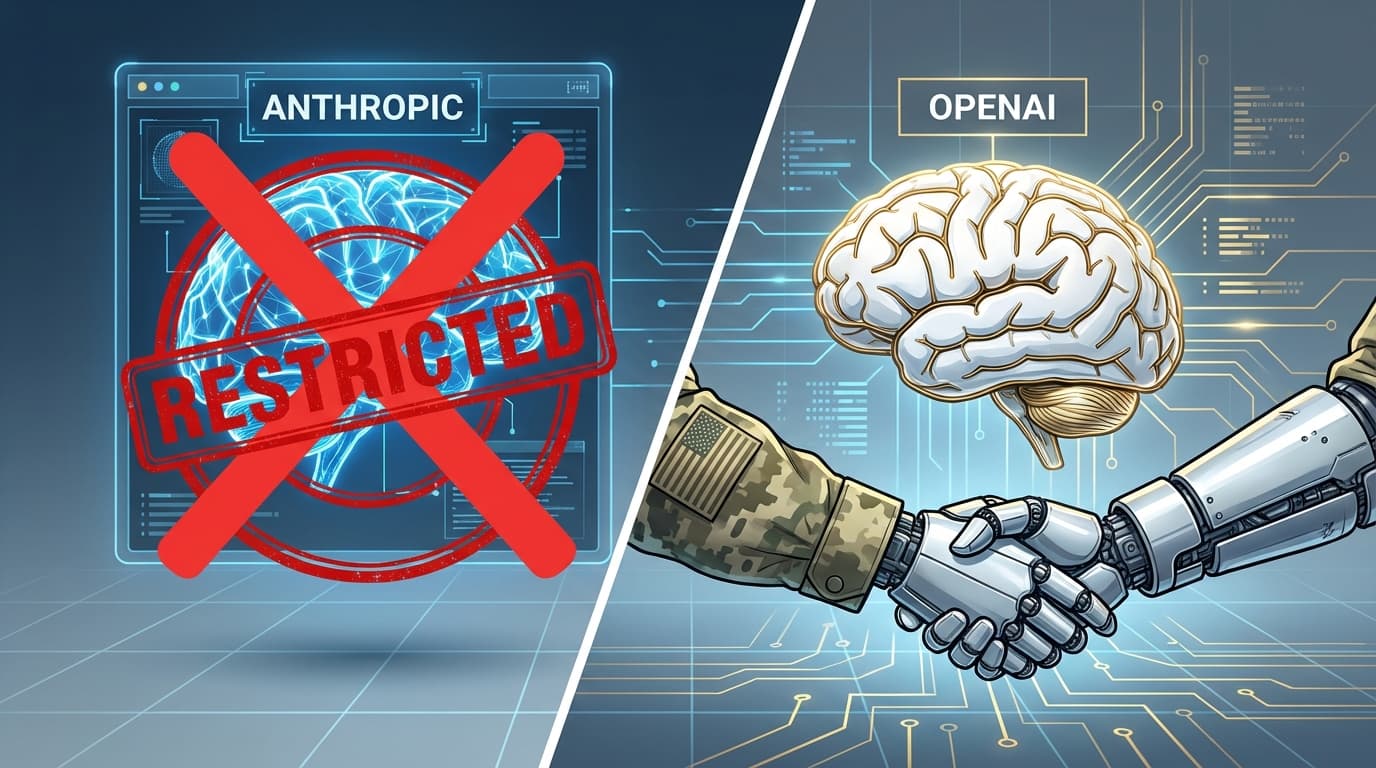
OpenAI has finalized a strategic Pentagon contract with technical safeguards, while Anthropic faces a federal ban for refusing to lift military-use restrictions on its AI models. The dispute has sparked a national debate on AI safety, leading to a surge in Claude's popularity in the App Store.
The Trump administration has officially blacklisted Anthropic, designating it a 'supply chain risk' after the company refused to drop AI safety restrictions for military use. Anthropic plans to challenge the 'legally unsound' ban in court, highlighting a massive rift between Silicon Valley's safety culture and the Pentagon's defense requirements.
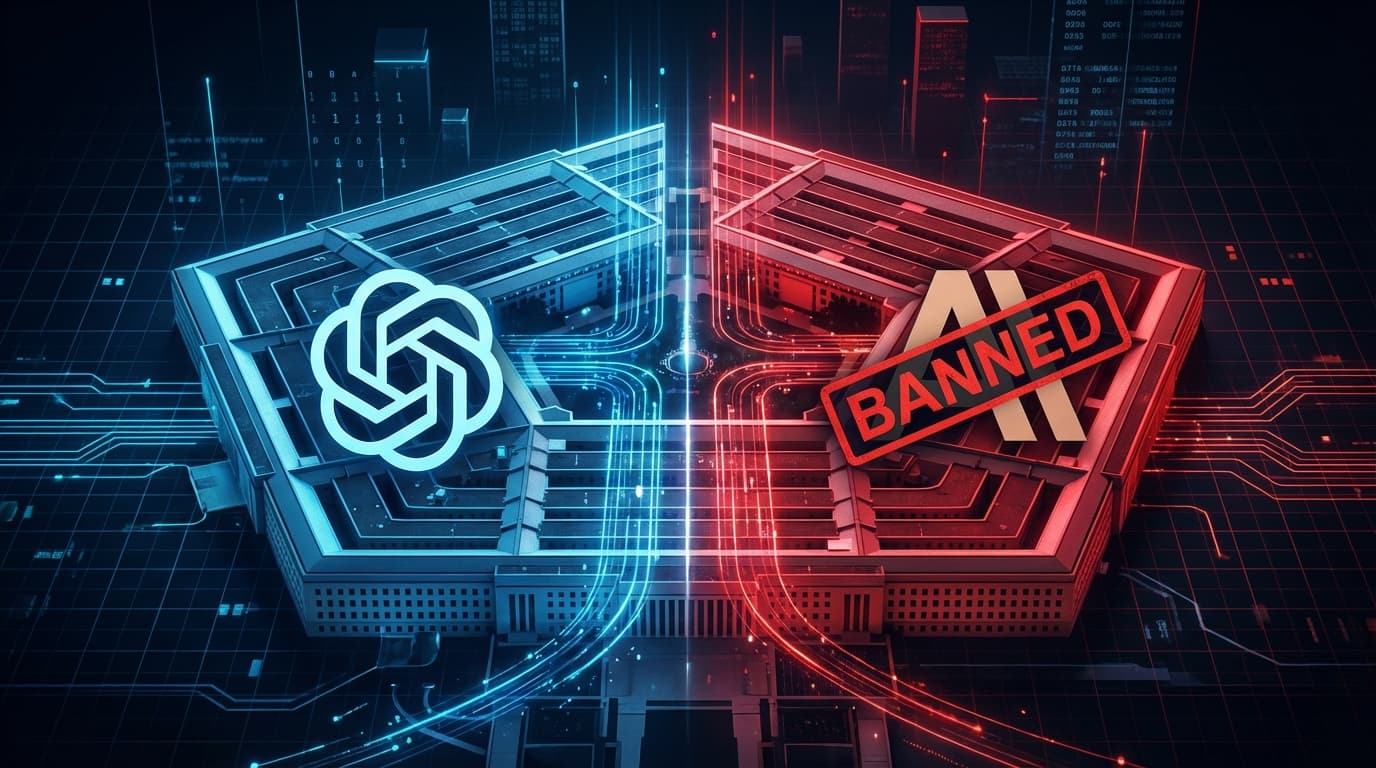
The Trump administration has blacklisted Anthropic, labeling it a 'supply chain risk' after the company refused to drop military use restrictions. OpenAI has stepped into the void, signing a massive deal with the Pentagon to provide AI models with specific safeguards. This development marks a major shift in the relationship between Silicon Valley and national security, creating a divide between ethical labs and state-aligned tech giants.
Anthropic CEO Dario Amodei has refused a Pentagon ultimatum to drop AI safeguards for military use. Defense Secretary Pete Hegseth threatened to blacklist the firm from supply chains, marking a major clash over AI military ethics.