New Regulatory Chapter for Chinese E-commerce: Curbing Price Wars during 618
Chinese regulators have warned major e-commerce platforms to curb aggressive price-war tactics during the 618 shopping festival, aiming to foster fair market competition.
AI regulation, biotech oversight, international policy, intellectual property
Chinese regulators have warned major e-commerce platforms to curb aggressive price-war tactics during the 618 shopping festival, aiming to foster fair market competition.
The FBI disabled 13 websites linked to Chinese intelligence, which used AI-generated content to target and recruit U.S. government officials. The event highlights AI's growing role in modern cognitive warfare and espionage.
The European Commission has issued an interim measure requiring Meta to restore free access for rival AI assistants to the WhatsApp Business API, citing the need to prevent irreparable competitive damage under the Digital Markets Act.
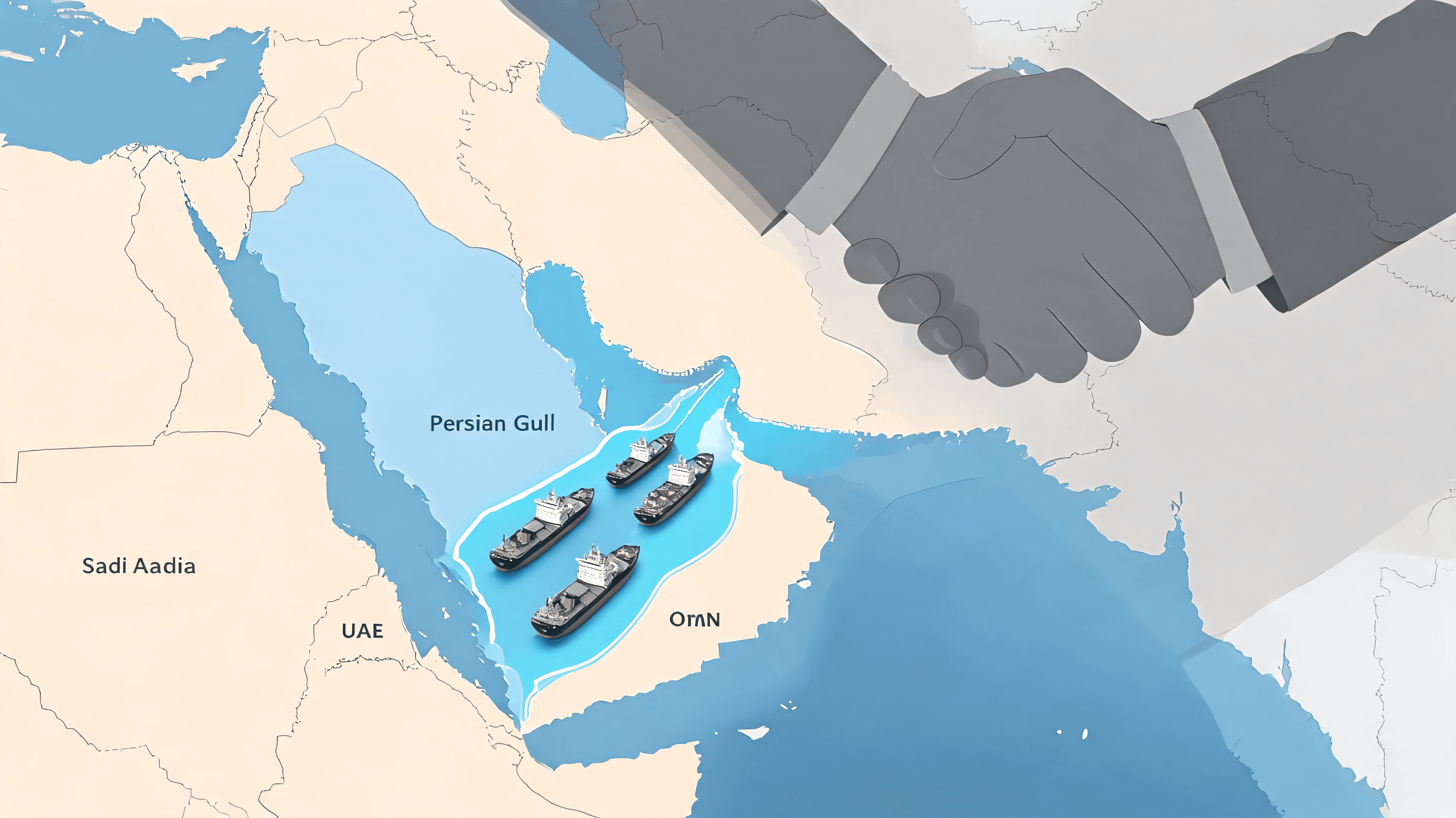
The US military launched retaliatory strikes on Iran following the downing of a helicopter in the Strait of Hormuz. President Trump signaled that a diplomatic deal remains possible, while legal experts debate the necessity and proportionality of the self-defense claim.
Tech leaders at NY Tech Week discussed the 'Great AI Divide,' emphasizing the challenges of maintaining technological agility amid U.S. and Chinese strategic rivalry.
The Seattle City Council is set to vote on a one-year moratorium on new data centers, with support from tech employees concerned about the impact on urban infrastructure and power.
The EU is actively pursuing 'digital sovereignty' through the Digital Markets Act and open-source strategies, aiming to reduce reliance on US Big Tech. By combining regulation with industrial support, Europe seeks to enhance its autonomous control over global digital markets.
The Trump administration is evaluating an equity stake in OpenAI to allow the public to share in AI profits, sparking regulatory concerns and potentially changing the landscape of US AI governance.
The Pentagon has raised the threat level of Israeli spying on U.S. assets to its highest point. The move highlights significant friction in bilateral intelligence and defense cooperation between the two allies.
The Trump administration is exploring an equity stake in OpenAI to bolster U.S. AI strategy. However, the proposal faces legal hurdles, concerns about conflicts of interest, and market anxiety regarding the potential politicization of AI.
The Trump administration has announced a $425 million investment to modernize 12 existing coal plants and fund two new ones, aimed at ensuring "Energy Dominance." The move faces sharp criticism and potential legal challenges from environmental groups.
The U.S. and Iran have engaged in direct military strikes in the Persian Gulf; the U.S. targeted Iranian drone and radar sites, while Tehran retaliated against U.S. bases in Kuwait and Bahrain, risking further escalation.
The U.S. Department of Energy has allocated $425 million to extend the life of 12 coal plants and fund two new facilities, aiming for 'energy dominance' despite potential legal and environmental challenges.
The S&P 500 has reiterated its strict profitability requirements, rejecting calls to expedite the inclusion of high-valuation but unprofitable tech giants like SpaceX, OpenAI, and Anthropic.
U.S. political leaders are exploring government equity stakes in private AI firms to bolster technological sovereignty, though this faces significant legal and market hurdles.
The New York Legislature has passed a one-year moratorium on new data center permits, marking the first such state-level freeze in the US due to concerns over energy consumption.
New York state legislature passes a one-year moratorium on new data center permits, the first in the U.S., as concerns over AI energy consumption grow.
Meta's Oversight Board criticizes the company for lacking due process and transparency in account bans, citing over-reliance on opaque AI moderation.
Despite various pesticide control measures in California, the usage of the dangerous carcinogen 1,3-D continues to rise, sparking concerns among local communities regarding regulatory efficacy and health risks.
Leading AI labs, including OpenAI and Anthropic, have written to lawmakers demanding enhanced digital screening mechanisms to prevent the malicious use of AI in biological weapon development.
The Supreme Court's narrowing of federal wetlands protection has left many areas vulnerable, directly exacerbating flood risks and causing a significant, long-term increase in flood insurance claim costs.
Voter frustration over high energy prices in Alabama has led to electoral shakeups for utility regulators, while concurrent litigation over election process restructuring adds legal complexity to administrative oversight.
Illinois has passed a major bill strengthening oversight of industrial air polluters in environmental justice communities, requiring rigorous cumulative impact assessments and marking a shift from social advocacy to codified law.
Rising energy consumption in data centers has triggered public and employee protests. Tech giants are responding by testing innovative solutions like virtual power plants to navigate energy constraints and regulatory pressure.
President Trump signed an AI executive order to bolster safety, but experts warn that government downsizing under DOGE may leave agencies without the personnel to enforce it.
The U.S. and UK are implementing strict AI regulations: the U.S. is pushing for safety reviews before model release, while the UK is mandating that tech giants allow content publishers to opt out of AI search training, setting a new benchmark for digital content rights.
The UK's CMA has ruled that Google must provide an opt-out mechanism for publishers to protect their content from being used in AI training and AI Overviews, setting a major precedent for digital copyright.
The U.S. Supreme Court faces major constitutional challenges in its 2026 summer docket, including redistricting controversies in Alabama and procedural limitations on judicial review of capital punishment. These cases impact interpretations of the VRA and the Eighth Amendment, highlighting deep philosophical divisions among the Justices.
The U.S. and the Philippines recently held a joint maritime cooperative activity, deepening defensive coordination. The exercise underscores U.S. strategic resolve to maintain a free and open Indo-Pacific, focusing on enhancing domain awareness to counter regional gray zone activities and stabilize maritime supply chains.
The U.S. military launched self-defense strikes on Iran's Qeshm Island in response to Middle East threats, sparking widespread discussion on international law and regional stability.
The Trump administration revised its AI executive order, changing pre-release reviews for advanced models to a voluntary basis, aiming to address industry concerns that over-regulation could hinder innovation.
The migrant detention center known as 'Alligator Alcatraz' faces a federal lawsuit alleging that its massive diesel-generator operations violate the Clean Air Act, threatening public health.
The Trump administration's internal friction has led to the cancellation of a key AI executive order, leaving US AI governance in a state of flux and creating policy uncertainty for the industry.
The Florida Attorney General has filed a landmark lawsuit against OpenAI and CEO Sam Altman, alleging that ChatGPT played a role in violent crimes. The case challenges the application of Section 230 to generative AI, signaling a shift in regulatory focus from performance optimization to legal and social responsibility.
Florida AG James Uthmeier has filed a landmark lawsuit against OpenAI and Sam Altman, alleging their AI system contributed to violent incidents, potentially setting a precedent for AI product liability.
China's export of AI-driven surveillance and facial recognition technology to African nations is raising significant international concerns regarding human rights, digital sovereignty, and the potential for misuse to suppress political dissent.
The Atlantic Council's new report highlights energy, supply chain stability, and institutional governance as the three pillars for US leadership in AI, recommending multilateral cooperation and infrastructure upgrades.
Conflict in the Middle East has intensified, with reciprocal strikes between the U.S. and Iran and Israeli military operations in Lebanon. Satellite data reveals significant damage to critical U.S. military infrastructure, posing severe geopolitical risks to global energy and shipping supply chains.
India and the UAE have formed a computing power partnership, planning to deploy U.S.-designed supercomputers in India. The move signals a rising global demand for "AI sovereignty" to reduce reliance on foreign cloud giants, sparking discussions on export controls and technological autonomy.
U.S. Secretary of War Pete Hegseth reaffirmed the U.S. strategic commitment to the Indo-Pacific at the Shangri-La Dialogue, emphasizing 'integrated deterrence' as the core of national defense strategy to maintain regional stability.
Greenpeace plans to sue JBS over its lack of transparency regarding a new major industrial beef operation in Nigeria, highlighting the growing international scrutiny on corporate ESG compliance and environmental due diligence.
Greenpeace is preparing legal action against meat giant JBS regarding its expansion plans in Nigeria, citing a lack of transparency and potential breaches of environmental impact assessment procedures.
AI-powered drones are being deployed in Ukraine for precision strikes against supply lines, representing a shift toward software-defined warfare and sparking international debate on the ethics and regulation of autonomous weapons.
AUKUS nations are expanding their partnership on underwater drone technology to protect critical undersea infrastructure and enhance naval monitoring and hybrid warfare capabilities.
The scientific community is in uproar over proposed US federal funding rules that allow for arbitrary grant cancellation, posing a significant threat to academic freedom.
At the Shangri-La Dialogue, U.S. Secretary of War Hegseth announced a shift in Indo-Pacific strategy, urging allies to boost autonomous defense capabilities and emphasizing the strategic importance of autonomous warfare technology.
New proposed OMB rules allowing for the summary cancellation of federal science grants have sparked widespread outcry, with academics fearing political bias and the erosion of research independence.
OpenAI fired an employee for insider trading, highlighting the regulatory grey areas and ethical risks inherent in prediction markets within the AI sector.
The Trump administration's rollback of EPA chemical refrigerant regulations aims to lower consumer prices, but manufacturers warn of market instability, higher prices, and increased greenhouse gas emissions.
The EU is considering adopting Section 301-style trade tools to counter Chinese industrial overcapacity and is tightening regulations on Chinese e-commerce through enforcement actions like the recent Temu fine.
The framework for a US-Iran ceasefire deal nears completion, leading to a drop in global oil prices and increased market volatility on Wall Street.
A Google engineer is under investigation by the FBI for allegedly using internal search data to secure $1.2 million in profits from bets on the prediction market Polymarket.
U.S. military personnel are being targeted by adversaries using commercial mobile location data, prompting urgent calls from lawmakers to regulate the adtech industry as a national security risk.
Illinois has enacted the first state-level mandatory AI safety testing law, establishing a new benchmark for AI regulation while sparking debates over the tension between state and federal oversight.
The OPM's proposal for mandatory NDAs for federal employees has sparked concerns among experts about political loyalty purges and the erosion of transparency and whistleblower protections.
The U.S. Department of Defense is modernizing its operational capabilities through cyber-defense training in Estonia, hardware upgrades for A-10C aircraft, and the commissioning of new Coast Guard vessels to enhance readiness.
The USDA has extended its loan freeze on biogas energy projects due to high delinquency rates and financial losses. This highlights the technical and economic challenges green energy projects face in commercialization, prompting policymakers to re-evaluate federal credit subsidy and regulatory frameworks.
Reports of potential US-Iran peace negotiations have caused volatility in global oil prices, with the status of the Strait of Hormuz being a critical point of contention. Experts warn that while optimism exists, the negotiation process is complex and governed by international maritime law.
Peace negotiations between the US and Iran are advancing, with a focus on reopening the Strait of Hormuz. Global oil prices have declined as market fears of supply disruption ease, while the US remains focused on long-term stability.
U.S. force posture shifts have stirred anxiety among European allies, while the Atlantic Council urges the formation of a 'counter-drone-as-a-service' coalition. Meanwhile, internal disputes over the 'Golden Dome' missile system reflect broader strategic uncertainty.
New York is considering weakening its 2019 climate law emission targets, sparking concerns among activists, while community leaders in Florida report that reduced FEMA assistance is hindering post-disaster recovery.
The U.S. Secretary of War addressed West Point’s 2026 graduating class, emphasizing their readiness to bear the trust of the nation and lead in an era requiring resilience and tech-adaptability.
The Trump administration's AI safety efforts have stalled after tech CEOs boycotted an executive event. Additionally, FCC scrutiny over the definition of 'news' is raising constitutional and regulatory concerns.
Diplomatic efforts between the US and Iran have reached a breakthrough, with a deal nearing completion to reopen the vital Strait of Hormuz, easing regional tensions.
US tech firms shared names of Dutch regulators with the Senate, drawing criticism and threatening to exacerbate tensions between international regulators and tech corporations. The incident raises questions about privacy violations and diplomatic conduct.
Governor Hochul plans to weaken New York's landmark Climate Leadership and Community Protection Act by delaying emissions targets. The proposal faces intense backlash due to public health concerns and creates policy uncertainty for the clean energy sector.
The FBI is seeking real-time access to national ALPR databases, triggering backlash from privacy advocates concerned about mass surveillance and the erosion of Fourth Amendment protections in the digital age.
The EU mandates that all new vehicles be breathalyzer-ready to help eliminate drunk-driving deaths by 2050, impacting manufacturing standards and raising data privacy questions.
Internet users have misused AI to reconstruct the voices of deceased pilots, prompting the NTSB to restrict access to its investigation files to prevent further ethical and privacy violations.
Google has appealed the federal antitrust ruling that labeled it a search monopolist, arguing its market success is merit-based. Meanwhile, its integrated AI search features face public scrutiny over accuracy and reliability issues.
Google has officially appealed the federal ruling declaring it an illegal search monopolist, arguing that its market dominance is the result of fair competition. The case is a critical bellwether for U.S. antitrust regulation in the technology sector.
OpenAI has hired veteran crisis expert Chris Lehane to pivot its global PR and policy strategy, aiming to shape a more favorable regulatory landscape and steer the discourse toward AI's economic productivity.
More than 30 US states have petitioned for the breakup of Live Nation-Ticketmaster, requesting the divestiture of major venues and restrictions on bundling practices, in a landmark antitrust test for modern market competition enforcement.
Big Tech is facing a wave of backlash, from students heckling AI-advocating CEOs to legal settlements over youth mental health and FTC crackdowns on fraudulent ad-tech, signaling a tightening of accountability.
The Trump administration has delayed a proposed AI security executive order, citing concerns that its language could hinder technological innovation. The move highlights the influence of industry lobbying as tech giants navigate the evolving regulatory and reputational landscape.
Workplace surveillance tools, or 'bossware,' are exposing sensitive employee data to third-party ad brokers. This creates major legal and privacy risks, requiring urgent enterprise audits.
The Coalition for Independent Technology Research has sued the Trump administration, challenging its regulatory efforts as an attempt to stifle academic investigation into disinformation and harassment online. The suit, grounded in First Amendment protections, aims to set legal precedents for the extent to which the government can coerce or discriminate against independent technology researchers.
Samsung Electronics has reached a tentative labor agreement, averting a 18-day strike involving 47,000 workers and securing the stability of its memory chip production, a critical development for the global semiconductor supply chain.
A new report exposes how AI companies and data brokers use 'dark patterns' to hinder user opt-outs, prompting increased regulatory scrutiny from the FTC and under EU GDPR frameworks.
A jury has rejected Elon Musk’s lawsuit against OpenAI, finding his claims lacked merit. The verdict reinforces the legality of the hybrid governance models now standard in the AI industry.
A jury dismissed Elon Musk's lawsuit against OpenAI, finding his claims weak. The trial, which exposed internal tensions, marks a pivotal moment for AI industry governance.
The "Take It Down Act" is now fully effective in the US, requiring tech platforms to quickly remove nonconsensual intimate imagery (NCII) and deepfakes. The law aims to protect victims but has triggered debates over potential censorship and platform over-compliance.
NYC Health + Hospitals has confirmed a data breach affecting 1.8 million patients, with medical and biometric data, including fingerprints, stolen. The incident poses significant legal and regulatory risks.
The US CFTC is implementing AI-driven surveillance to combat insider trading in prediction markets, reflecting a shift toward automated regulatory enforcement in financial spaces.
Snap, YouTube, and TikTok have settled a landmark lawsuit over social media addiction and its impact on student mental health, signaling a shift in legal focus toward product design liability.
Snap, YouTube, and TikTok have settled a landmark lawsuit over the mental health impact of social media addiction on students, marking a shift in how algorithmic design is held accountable in court.
Snap, TikTok, and YouTube have reached a settlement in a landmark lawsuit, marking a turning point where schools are collectively pushing back against social media platforms for 'public nuisance' behaviors that fuel student addiction and strain school budgets. This case establishes a legal path for school districts to claim administrative costs associated with student mental health, potentially setting the stage for more class-action suits regarding product design accountability.
Snap, YouTube, and TikTok have settled a landmark lawsuit alleging their addictive algorithms harmed students and strained public school budgets.
Snap, YouTube, and TikTok settled a landmark lawsuit over social media addiction and its impact on schools, bypassing legal immunity by arguing 'design defects,' setting a new legal precedent for tech accountability.
The CFTC is deploying AI-driven tools to detect insider trading in prediction markets like Polymarket, marking a significant step toward modernizing regulatory oversight in the digital era.
Snap, YouTube, and TikTok have settled lawsuits alleging their addictive algorithms caused mental health crises in students and disrupted public schools, marking a historic legal turning point for platform liability.
The US Commodity Futures Trading Commission (CFTC) is increasingly relying on AI to detect and prosecute insider trading in prediction markets, signaling a tougher, tech-driven regulatory stance.
California's new legislation seeks to force game publishers to provide offline play patches or refunds when shutting down online games, setting a potentially global standard for digital asset preservation.
The 2026 WHO report indicates global failure to meet health targets set in 2015, underscored by the lethal Ebola outbreak in Central Africa highlighting fragile healthcare responses.
California is advancing legislation that would block publishers from shutting down online game servers, potentially forcing them to offer offline play patches or refunds, sparking a debate over digital property rights.
The CFTC is using AI tools to monitor prediction markets like Polymarket for illegal insider trading. Chairman Michael Selig stated that traditional anti-manipulation laws apply fully to these digital platforms.
President Trump has recruited tech leaders like Tim Cook, Jensen Huang, and Elon Musk for the upcoming Xi summit, indicating potential shifts in U.S.-China chip export policy and trade dynamics.
The massive energy demands of AI data centers are clashing with local power grids, leading to supply conflicts with residents and prompting regulatory calls for stricter infrastructure impact mandates.
A Gallup survey shows that 70 percent of Americans oppose local AI data center construction, with many finding these facilities more objectionable than nuclear plants, posing a threat to future AI infrastructure expansion.
Ahead of the US-China summit, the US administration is seeking advice from tech giants like Apple, Nvidia, and Tesla. The meeting is expected to influence policies on semiconductor export controls, signaling a potential shift in US-China tech relations.