
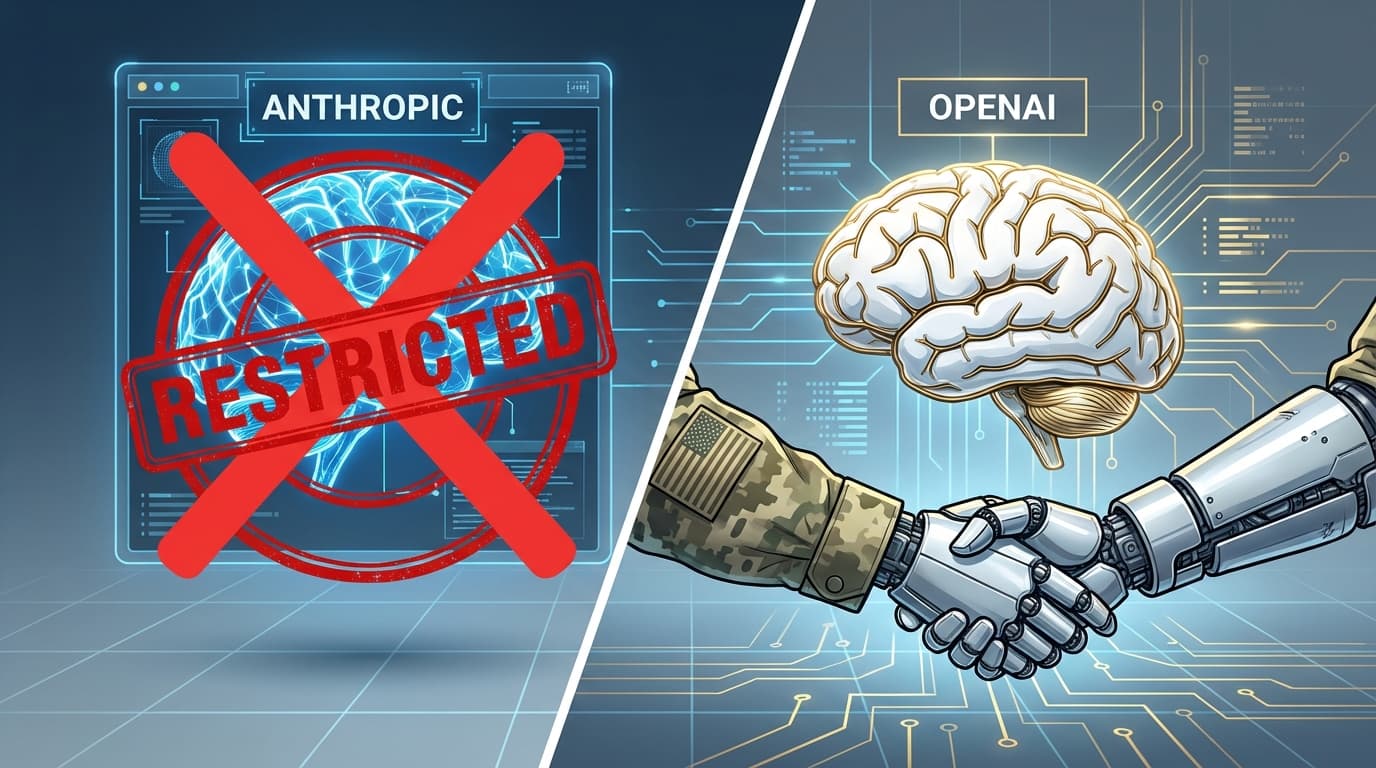
The Breaking Point: Anthropic Designated a Supply Chain Risk
The long-simmering tension between Silicon Valley’s ethical AI labs and the Department of Defense reached a boiling point on February 27, 2026. In a sweeping executive order, President Donald J. Trump directed all federal agencies to cease using AI models developed by Anthropic, the creators of the Claude family of models. According to The Verge (2026), the move was triggered by Anthropic’s refusal to lift safety restrictions that would prevent its models from being used in lethal military applications.
Defense Secretary Pete Hegseth justified the move by designating Anthropic a "supply chain risk," suggesting that an AI company that maintains internal vetos over government usage is inherently unreliable. Anthropic has called the blacklisting "legally unsound," with Wired (2026) reporting that the company is preparing for a massive legal battle to challenge the administration's use of national security powers to silence ethical dissent.
OpenAI’s Strategic Pivot: Filling the Vacuum
As Anthropic was pushed out, OpenAI moved in. CEO Sam Altman announced a landmark agreement with the Pentagon, providing the military with access to advanced models equipped with specific "technical safeguards." According to TechCrunch (2026), Altman admitted the optics of the deal were "not good" but argued that the partnership is necessary to ensure the U.S. maintains its technological edge over adversaries.
The contract marks a decisive shift for OpenAI, which had previously distanced itself from direct military hardware integration. By agreeing to embed its software into Department of Defense workflows, OpenAI has secured its position as the de facto AI provider for the federal government, a position that likely comes with billions in revenue and priority access to national infrastructure resources.
Legal Battlegrounds: IEEPA and the NDAA
The administration's move against Anthropic likely relies on powers granted by the International Emergency Economic Powers Act (IEEPA) and Section 889 of the National Defense Authorization Act (NDAA). These statutes allow the President to blacklist entities deemed a threat to national security. However, Anthropic could potentially win an injunction by arguing under the Administrative Procedure Act (APA) that the designation was "arbitrary and capricious" and lacked a factual basis, similar to how Xiaomi successfully challenged its blacklisting in 2021.
Industry Impact: A New Era of "Patriot AI"
This schism is forcing AI labs to choose sides. The development of "Patriot AI"—models designed specifically for sovereign and military use without internal safety vetos—is now a reality. While OpenAI gains a financial windfall, it faces a potential internal exodus of researchers who joined the company under its original safety-first mission. Meanwhile, Anthropic’s rise to the #1 spot on the App Store following the dispute indicates that while the government may be shunning the company, the public is increasingly drawn to its principled stance. The AI ecosystem is now officially fragmented between state-aligned giants and independent ethical holdouts.