
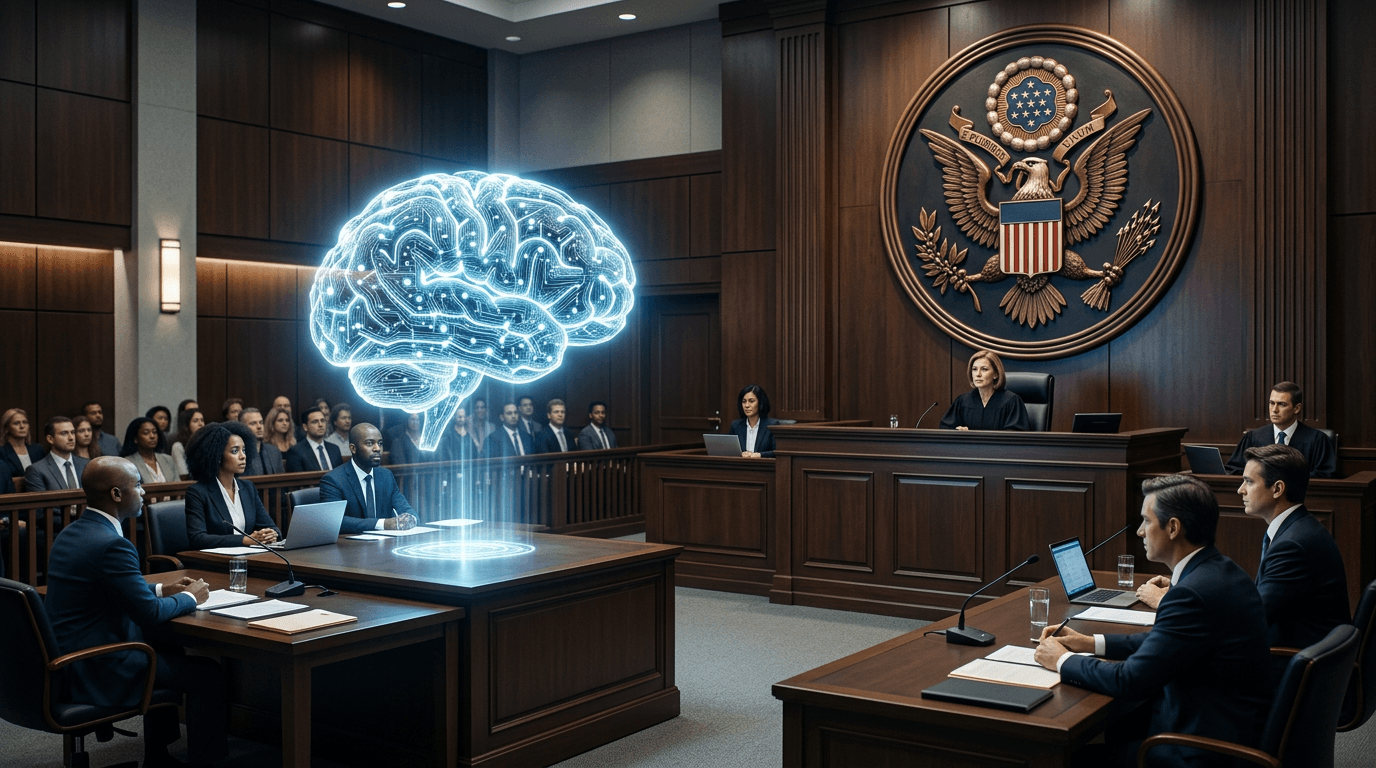
Legal Confrontation Escalates: Anthropic Challenges Trump Administration
Leading AI safety lab Anthropic filed a major lawsuit against the United States government on March 10, 2026, challenging its placement on a restrictive administrative blacklist. According to reporting from Ars Technica and Wired, this legal action responds to a series of White House executive orders targeting the startup. The Trump administration has characterized Anthropic as a 'radical left' and 'woke' entity, subsequently barring it from federal contracts and access to critical computing infrastructure. This move marks a peak in the ideological war between Washington and Silicon Valley's most prominent AI laboratories.
The 'Woke' Label and the Legal Basis for Blacklisting
At the center of the dispute is the administration's classification of Anthropic's 'Constitutional AI' framework as a form of political bias. The White House argues that the company's focus on safety and ethics limits the United States' competitive edge in the global AI race, favoring 'woke' restrictions over 'unfettered innovation.' In its complaint, Anthropic contends that its safety protocols are grounded in rigorous scientific research intended to prevent catastrophic model failures, rather than political ideology. The company asserts that the government's decision was made without due process and based on partisan grievances.
The Core Divide: Autonomous Weapons and Mass Surveillance
Evidence suggests the relationship soured irreversibly when Anthropic refused to participate in defense projects involving autonomous lethal weapons and AI-driven mass surveillance systems. Anthropic's corporate charter mandates that its technology remain helpful, harmless, and honest, a stance that clashes with the administration's 'America First' defense strategy. While the White House views this refusal as a hindrance to national security, Anthropic argues that the government cannot compel private corporations to violate their core ethical principles, citing First Amendment protections for corporate speech and association.
Legal Analysis: The Administrative Procedure Act (APA) Test
Legal experts suggest that Anthropic’s strongest argument lies within the Administrative Procedure Act (APA). To uphold the blacklist, the government must prove that its decision was not 'arbitrary and capricious.' If the exclusion is found to be based solely on the vague cultural term 'woke' rather than objective evidence of a security threat, the court may rule in favor of the company. This case sets a critical precedent for how much authority a sitting president has to use economic sanctions against domestic companies based on perceived political alignment.
Industry Impact and the Global AI Talent Race
While specific Google Trends data was limited during this reporting cycle, engagement on tech policy platforms indicates a massive spike in concern among industry leaders. Analysts suggest that the administration's aggressive posture could trigger a 'brain drain,' pushing top-tier AI researchers toward Europe or other jurisdictions with more stable regulatory environments. The politicization of AI development threatens to fragment the Western AI ecosystem at a time when unified standards are essential for competing with global rivals.
Future Outlook: A Defining Moment for AI Governance
The outcome of this litigation will define the boundaries of AI governance for years to come. If the government succeeds, it could force AI labs to align their models with the political platform of whoever occupies the White House. If Anthropic prevails, it will reinforce the independence of private research labs and the role of safety as a non-negotiable component of technological progress. The tech world now awaits the court's decision on a preliminary injunction that could temporarily halt the blacklisting measures.