

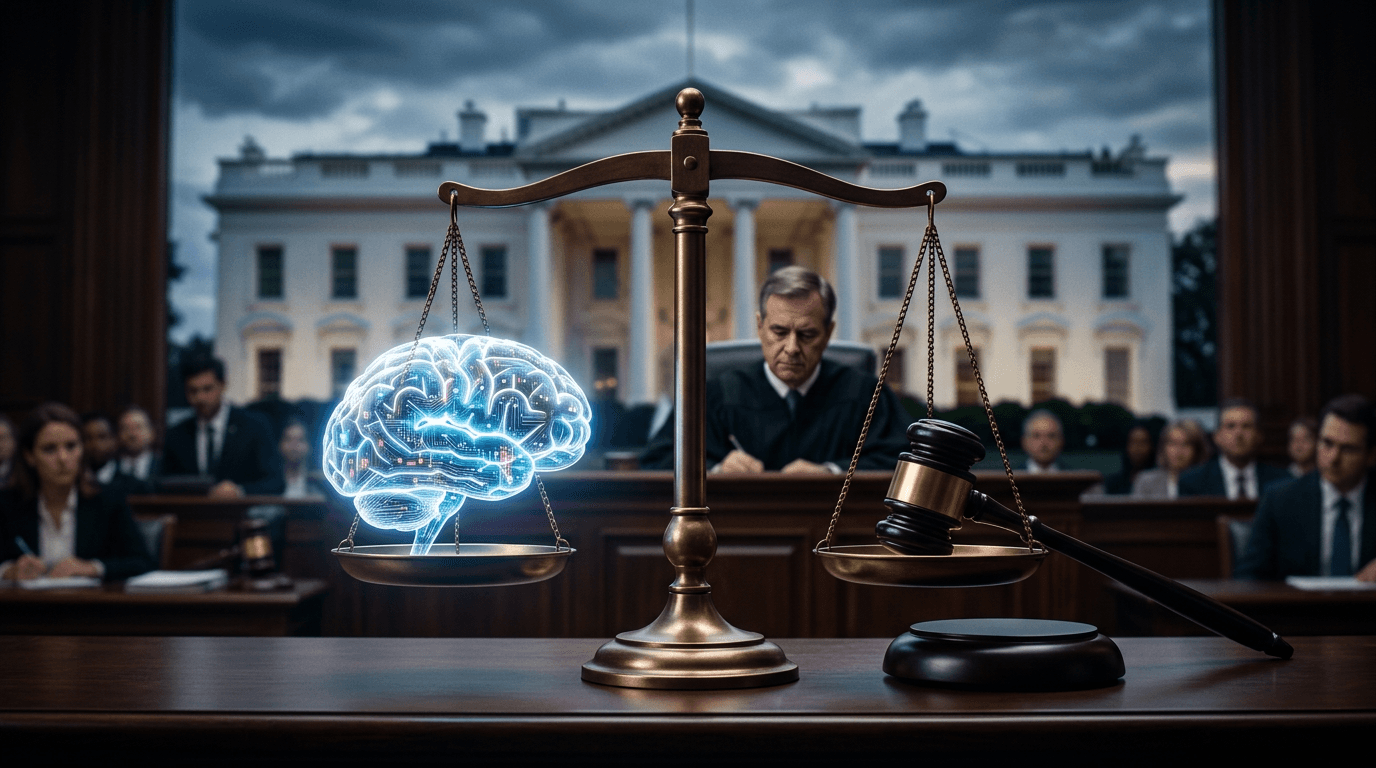
Legal Warfare Erupts: AI Safety Meets High-Stakes Geopolitics
In March 2026, the AI powerhouse Anthropic filed a major lawsuit against the United States government, specifically targeting the White House and executive agencies. The legal action follows the Trump administration's decision to blacklist the firm, accompanied by public accusations that Anthropic represents a "radical left" and "woke" ideological agenda. According to Ars Technica, the White House is currently drafting an executive order specifically aimed at curtailing Anthropic’s operations, even as the company's previous challenges reach a critical point in the judicial system. Anthropic’s leadership argues that the government's actions are devoid of legal merit and are driven by political discrimination rather than genuine national security concerns.
The Core of the Suit: APA Violations and Due Process
Legal analysts suggest that Anthropic’s strategy centers on the Administrative Procedure Act (APA). The lawsuit contends that the blacklisting is "arbitrary, capricious, and an abuse of discretion." Anthropic argues that the administration has failed to provide any factual evidence that its AI alignment protocols—designed to ensure model safety—constitute a national security threat. Furthermore, the firm alleges violations of the First Amendment, citing discrimination based on perceived political viewpoints, and the Fifth Amendment’s Due Process Clause, arguing that the government deprived the company of its business opportunities and government contracts without a fair hearing or transparent justification.
The Ideological Battle: Defining 'Safe' AI
This dispute highlights a deep ideological chasm within the U.S. regarding the future of artificial intelligence. Anthropic was founded on the principle of "Constitutional AI," an approach that uses a set of core values to guide model behavior and prevent the generation of harmful content. However, this safety-first approach has been characterized by some political factions as a form of "woke" censorship embedded in code. White House officials, as cited in Wired, have expressed concerns that such guardrails might hinder American competitiveness or bake "political correctness" into fundamental technology. Anthropic counter-argues that its safety measures are essential to prevent the misuse of AI in designing weapons of mass destruction, launching cyberattacks, or creating biological threats—objectives that should transcend partisan politics.
Market Chills and Industry Reactions
The lawsuit has sent a "regulatory chill" through Silicon Valley. AI startups are increasingly worried that their safety research and ethical guardrails might be weaponized against them if they do not align with the prevailing political climate. While Google Trends data on specific search queries faced technical 429 errors, industry discussion on platforms like LinkedIn and X has reached fever pitch. The central question among investors and founders is whether the future of AI regulation will be based on objective technical standards or the fluctuating political winds of the executive branch. The outcome of this case will likely define the boundaries of technical autonomy for decades to come.
What to Watch: Judicial Rulings on AI Freedom
The verdict in this case will have profound implications for the American AI industry. A victory for Anthropic would reinforce the legal principle that the executive branch cannot impose restrictive measures on private technology companies based solely on ideological labels. Conversely, a government victory could signal an era where partisan politics directly dictate the direction of technological innovation. Anthropic has stated its commitment to a long-term legal battle to defend its scientific mission. Meanwhile, some members of Congress are calling for more transparent, fact-based criteria for AI blacklisting to ensure that national security tools are not co-opted for domestic political ends. This case is not just about one company; it is about the very nature of "technological free speech" in the age of intelligence.