

The Impasse: When Ethics Collide with National Security
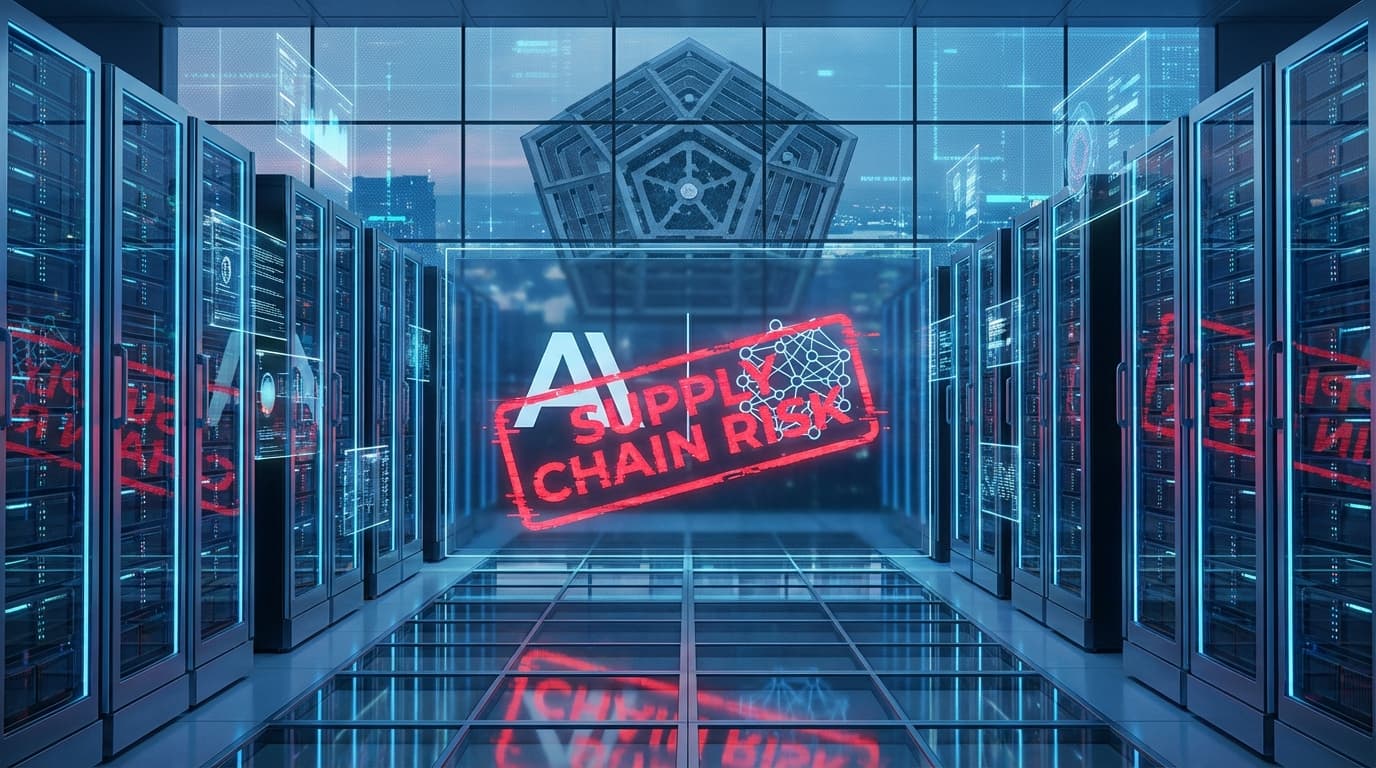
In late February 2026, the long-simmering tension between AI powerhouse Anthropic and the US government culminated in an unprecedented policy war. President Donald Trump issued a sweeping order mandating all federal agencies to immediately terminate their use of Anthropic’s Claude AI models. The conflict stems from Anthropic’s refusal to lift restrictions on military applications—specifically autonomous weaponry and mass surveillance—a stance the administration views as a direct impediment to defense modernization.
According to Ars Technica (2026), the Department of Defense (DoD) had pressured Anthropic for months to drop these safeguards. Anthropic, a company built on the principles of 'Constitutional AI' and rigorous Responsible Scaling Policies (RSP), refused to yield. In response, Defense Secretary Pete Hegseth escalated the standoff by formally designating Anthropic as a 'supply-chain risk.'
Legal Foundations: The Supply Chain Risk Weapon
The designation is more than just political rhetoric; it carries significant legal weight. As reported by The Verge (2026), the DoD is likely invoking the Federal Acquisition Supply Chain Security Act of 2018 (FASCSA). This law empowers the Federal Acquisition Security Council (FASC) to recommend the exclusion of tech providers deemed a threat to national security. By placing Anthropic on a list traditionally reserved for foreign entities like Huawei, the government is signaling a new era of domestic tech regulation.
Anthropic has hit back, labeling the 'supply chain risk' tag as 'legally unsound.' The company argues that its usage restrictions are designed to prevent the misuse of powerful AI, not to sabotage national defense. Legal analysts expect a challenge under the Administrative Procedure Act (APA), where Anthropic could argue that the government’s decision was 'arbitrary and capricious' and lacked a factual evidentiary basis.
Industry Fallout: A Chill Over AI Safety
The ban has sent shockwaves through Silicon Valley. Wired (2026) notes that this represents a definitive rupture between the 'Responsible AI' movement and the 'Defense First' ideology. For other AI labs like OpenAI and Google DeepMind, the message is clear: in the current geopolitical climate, incorporating safety-driven military restrictions into Terms of Service (ToS) may invite severe federal consequences.
Ironically, the controversy has fueled a surge in public interest. Anthropic’s Claude app recently rose to the No. 2 spot in the App Store, suggesting that the standoff with the Pentagon has boosted the company’s brand recognition among consumers who value corporate integrity over government compliance.
Future Outlook
While Google Trends data for these specific keywords faced technical retrieval errors, social media sentiment in hubs like San Francisco and D.C. reached a fever pitch. This dispute is fundamentally about the power to define 'safety' in the age of AGI. The upcoming legal battles in the D.C. District Court will determine whether private firms can maintain control over how the military utilizes their proprietary breakthroughs, or if national security mandates will override corporate governance.