Frontier Intelligence
LIVEFeatured

Latest Articles

Microsoft's Project Helix Vision: Unifying Windows 11 and Xbox for a Seamless Cross-Platform Future

The AI Unicorn Renaissance: Replit and Quince Lead a Massive Surge in Mid-2026 Startup Valuations

The Identity Crisis of Generative AI: Grammarly Faces Class Action Over Unauthorized 'Expert' Cloning
More Stories

Digital Frontlines: Iran Targets US Tech Giants as Hormuz Strait Standstill Threatens Global Markets
The Iran-US conflict has escalated into digital and economic spheres, with Tehran threatening US tech giants like Google and Microsoft. A pro-Iran hacktivist group claimed an attack on Stryker, while a standstill in the Strait of Hormuz threatens global supply chains. Legal experts are debating the status of digital infrastructure under international law as consumer prices brace for potential spikes due to maritime logistics paralysis.

Nvidia's $26 Billion Strategic Pivot: Nemotron 3 Super and the Rise of Open-Weight Sovereignty
Nvidia has committed $26 billion to build open-weight AI models and infrastructure, launching the 120-billion-parameter Nemotron 3 Super. This hybrid model combines SSM and Transformer architectures to deliver superior throughput for enterprise tasks. The move represents a strategic shift toward "Sovereign AI," positioning Nvidia as a software leader while driving demand for its high-end GPUs.

WhatsApp Launches Parent-Linked Accounts for Pre-Teens to Balance Youth Connectivity and Digital Safety
WhatsApp has launched parent-linked accounts for children under 13, featuring contact approval and communication blackout controls. Designed to comply with US COPPA and EU GDPR regulations, the product promises to isolate children's data from advertising systems. While providing a safer communication alternative for pre-teens, the move has reignited debates over early social media dependency and the psychological impact of digital parental surveillance.

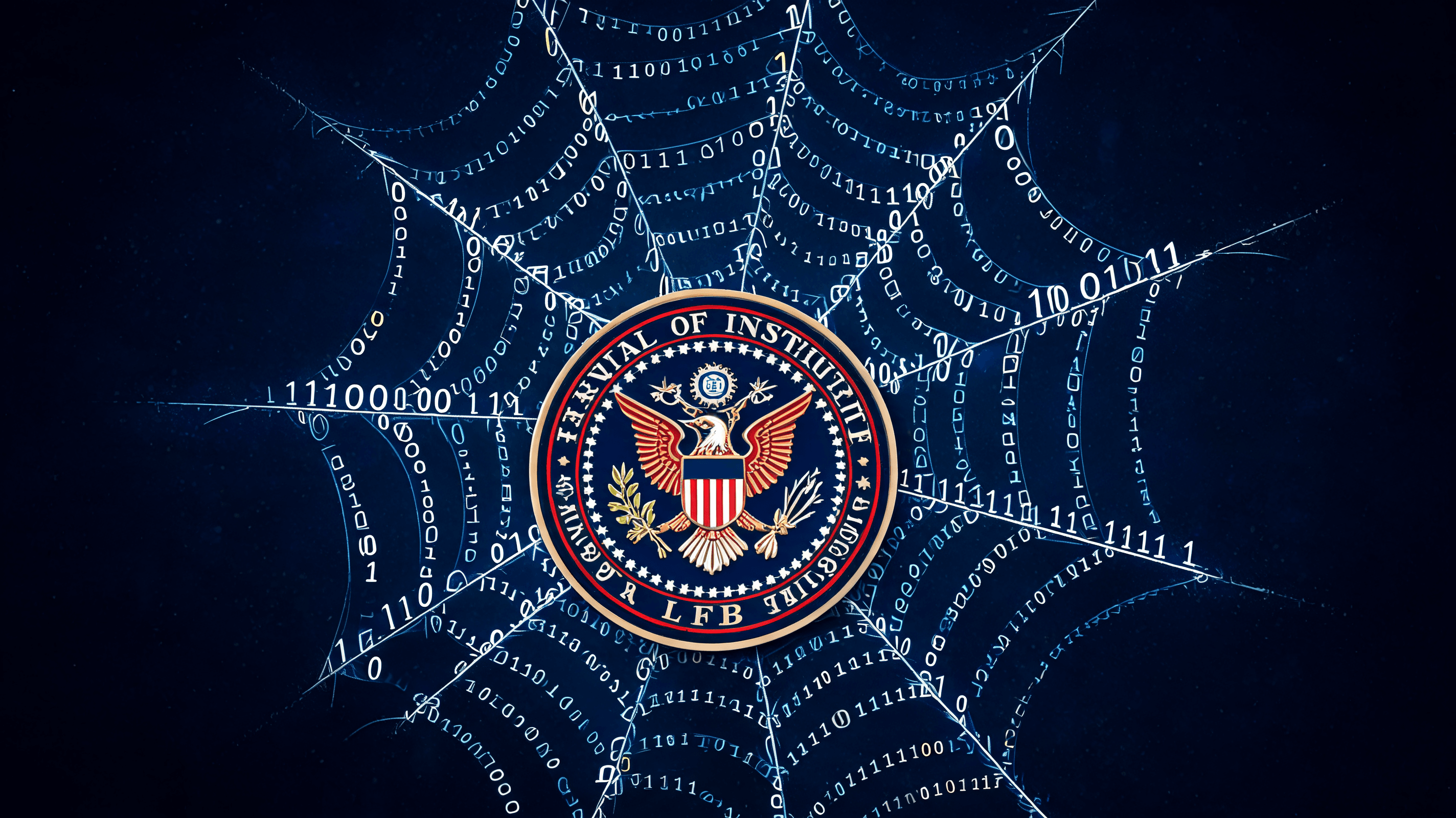
Sensitive FBI Files on Jeffrey Epstein Investigation Compromised in Major Server Breach
A foreign hacker has breached an FBI server containing sensitive investigation files related to Jeffrey Epstein, including witness depositions and private logs. The hacker reportedly did not initially know the target was a federal agency. The breach raises significant legal questions under the Privacy Act of 1974 and could potentially derail ongoing judicial proceedings. As the FBI works to contain the damage, the incident is triggering calls for emergency congressional hearings on national security data protection.

The Dawn of the Agentic Web: Meta’s Moltbook Acquisition and OpenAI Sora Integration Redefine Digital Interaction
Meta's acquisition of Moltbook and OpenAI's integration of Sora into ChatGPT signal the official emergence of the 'Agentic Web.' This paradigm shift suggests that future digital interactions will be handled by autonomous AI agents representing human users across social, commercial, and industrial sectors. With Mind Robotics securing $500M in funding, these autonomous capabilities are also moving into physical manufacturing, raising urgent questions about data integrity and copyright in an automated world.

Meta Unveils 4 New MTIA Chips to Power AI Recommendation Engines and Slash Nvidia Dependence
Meta has introduced four new custom MTIA AI chips designed to power its recommendation engines and Llama model fine-tuning. This strategic launch aims to reduce the company's multi-billion dollar reliance on Nvidia GPUs and improve data center efficiency. While Meta continues to buy Nvidia hardware for massive training tasks, it expects custom silicon to handle 40% of its inference load by 2027. This move highlights the accelerating trend of 'hyperscalers' becoming major players in semiconductor design.

Anthropic Sues US Government Over 'Radical Left' Ideological Blacklisting and Regulatory Bias
AI leader Anthropic has filed a high-profile lawsuit against the US government, challenging the White House's decision to blacklist the firm under labels of 'radical left' and 'woke.' The suit alleges violations of the Administrative Procedure Act and Constitutional rights, arguing the government's actions are politically motivated and lack a factual basis in national security. This legal battle underscores the growing tension over AI safety and ideological control, with major implications for technological autonomy in the US.

Google Finalizes Historic $32 Billion Acquisition of Wiz to Redefine Cloud Security
Google has finalized its historic $32 billion all-cash acquisition of cybersecurity firm Wiz, marking the largest deal in the tech giant's history. The move is designed to bolster Google Cloud's security infrastructure against rivals like Microsoft and AWS. While the deal is closed, it remains under the microscope of U.S. and EU antitrust regulators focused on ecosystem dominance. This acquisition signals a strategic pivot toward 'native security' in cloud computing and is expected to revitalize the cybersecurity M&A market.

Apple Launches $599 MacBook Neo: iPhone Processor Reshapes Budget Laptop Strategy
Apple has launched the MacBook Neo, its most affordable laptop yet at $599. Powered by an iPhone-class A-series chip and featuring a hybrid chassis, the device targets the budget and education markets previously dominated by Chromebooks.

Anduril Acquires ExoAnalytic to Dominante Space Surveillance and 'Golden Dome' Defense
Anduril has acquired ExoAnalytic Solutions to bolster its space surveillance capabilities and support its 'Golden Dome' defense system. This occurs amidst a technical dispute between NASA and SpaceX over manual controls for lunar landers. The acquisition faces significant antitrust and ITAR regulatory oversight.

Iran Electronic Warfare Spreads: Global GPS Disruption and Threats to Tech Infrastructure
Electronic warfare near Iran is causing massive GPS disruptions, crippling delivery and navigation apps across the region. The conflict is also driving up electricity costs for data centers due to energy price hikes. In a separate scientific breakthrough, researchers discovered that bumblebee queens can survive underwater for long periods.

Privacy Scandals: DOGE Member Accused of Data Theft as DHS Ousts Critical Privacy Officers
Federal privacy protections are under threat as a DOGE member is accused of stealing millions of Social Security records, and DHS leaders reportedly ousted privacy officers who objected to illegal record-hiding orders. These scandals highlight a growing tension between the administration's efficiency mandates and legal data protections.

Productivity War: Google Gemini Gains Multi-App Integration as ChatGPT Adds Interactive Visuals
Google and OpenAI have launched significant productivity updates. Google Gemini now features multi-app integration within Workspace, while OpenAI introduced interactive visualizations for math and science in ChatGPT. Additionally, Google added a toggle to Google Photos allowing users to revert to classic search methods.

Anthropic Sues US Government Over 'Woke' Blacklisting and AI Safety Feud
AI safety lab Anthropic has sued the US government over its placement on a federal blacklist, which the White House justified by labeling the company 'woke' and 'radical left.' The dispute centers on Anthropic's refusal to develop autonomous weapons and surveillance tools, raising significant questions about corporate speech and the Administrative Procedure Act.

Electronic Warfare in Iran: GPS Spoofing and Rising Costs Threaten Global Tech Infrastructure
Electronic warfare in the Iran conflict is causing massive GPS disruptions for global logistics apps. Simultaneously, rising energy prices are driving up data center operational costs, highlighting the vulnerability of global tech infrastructure to regional wars.

Anthropic Sues US Government Over 'Radical Left' Blacklisting and Contract Bias
Anthropic is suing the US government after being blacklisted from federal contracts and labeled 'woke' by the White House. The lawsuit challenges the administration's retaliation against the firm's refusal to support autonomous military AI systems.

Apple's $599 MacBook Neo: A Game-Changer for the Entry-Level Laptop Market
Apple has launched the MacBook Neo, a budget-friendly laptop priced at $599. Powered by the iPhone's A18 Pro processor, it targets students and casual users with high portability and excellent battery life, despite a fixed 8GB RAM configuration.

Meta Acquires Moltbook: The Strategic Pivot Toward an AI-Agent Social Network
Meta has acquired Moltbook, a social platform where AI agents interact and share content. The acquisition focuses on Moltbook's novel 'always-on-directory' for autonomous agent-to-agent communication.

Google Workspace's AI Evolution: Gemini Now Synthesizes Data Across Docs, Sheets, and Drive
Google has announced a major Workspace update that enables Gemini AI to synthesize information across Gmail, Docs, Sheets, and Drive, allowing for automated cross-app document creation and data analysis.

Invisible Battles: How GPS Jamming and AI Disinformation Are Reshaping the Iran Conflict
Conflict near Iran has triggered widespread GPS jamming, disrupting navigation and delivery apps across the Middle East. Meanwhile, AI-generated disinformation is flooding X, with the platform's Grok AI failing to verify fake war footage. Researchers are turning to geomagnetic navigation as a backup, while tech giants expand deepfake detection to combat the 'invisible war.'

Yann LeCun’s AMI Labs Secures $1B to Pivot AI Toward Physical World Understanding
Turing Prize winner Yann LeCun’s new startup, AMI Labs, has raised $1.03 billion to develop 'World Models' that understand the laws of physics. With strategic backing from Nvidia and a focus on the Joint-Embedding Predictive Architecture (JEPA), LeCun aims to move beyond the limitations of text-only AI toward human-level physical reasoning.

Apple’s New Budget Play: $599 MacBook Neo and iPhone 17e Redefine Entry-Level
Apple has launched its most affordable hardware yet: the $599 MacBook Neo and the iPhone 17e, signaling a major move into the budget market. Simultaneously, the flagship M5 Max chip demonstrated massive performance gains in benchmarks. With one in four iPhones now made in India, Apple’s supply chain shift is enabling more competitive pricing for mass consumers.

A New Chapter for Superconductors? Record-Breaking Claim at Atmospheric Pressure
A new study reported by Science News claims that a copper-based compound can achieve superconductivity at atmospheric pressure after a sudden release of extreme pressure. While this could potentially be the 'Holy Grail' of material science, leading to lossless power grids and affordable maglev trains, the scientific community remains skeptical, awaiting independent replication to verify the results.

Flying Cars in American Skies: US Government Greenlights Summer 2026 eVTOL Pilot Program
The US government has greenlit a pilot program for the summer of 2026 to allow eVTOL (electric vertical takeoff and landing) aircraft and ultralight vehicles to operate in American skies. By bypassing traditional full FAA certification in designated 'Innovation Zones,' the program aims to accelerate the urban air mobility industry and gather critical safety data for the future of flying cars.

Apple M5 Max Benchmarks: A New Performance Ceiling and the Shift Toward 'Ultra' Products
Initial benchmarks for Apple's M5 Max chip reveal a significant performance jump, driven by a new architecture for its performance cores. Apple is pivoting its strategy toward a more premium 'Ultra' product tier to target high-end professionals. While hardware performance is peaking, the company has delayed its rumored smart home display until Fall 2026 to coincide with the release of iOS 27 and further AI refinements.

Yann LeCun Raises $1 Billion for AMI: A Bold Pivot to Physical-World AI
Turing Award winner Yann LeCun has raised $1 billion for his new startup, AMI, focusing on 'World Models' that understand the physical laws of the universe rather than just language. This signals a strategic shift in AI research, as LeCun aims to overcome the limitations of LLMs by building systems that learn through observation and physical interaction, targeting a new era of robust, common-sense AI.

Beyond Chatbots: Nvidia, Microsoft, and Karpathy Launch Next-Gen Agentic AI Platforms
The AI industry is rapidly pivoting from chatbots to autonomous AI agents. Key developments include Andrej Karpathy's 'autoresearch' script for automating scientific experiments, Microsoft's new cross-app Copilot Cowork, and Nvidia's upcoming OpenClaw platform. This shift toward 'agentic' systems represents a major step toward AGI, enabling AI to execute complex tasks and self-evolve without constant human supervision.

Anthropic Sues Pentagon Over 'Supply Chain Risk' Blacklist and Federal Ban
Anthropic has filed a lawsuit against the US Department of Defense challenging a 'supply chain risk' designation that effectively blacklists the company. In a rare display of industry solidarity, senior scientists from Google and OpenAI have filed an amicus brief supporting Anthropic, arguing that the government's arbitrary use of security labels threatens domestic innovation and lacks transparency.

Geopolitical Tech Conflict: GPS Jamming in the Gulf and the Prediction Market Legal Crisis
Geopolitical tensions are increasingly manifesting through technology. Widespread GPS jamming in the Persian Gulf is creating severe hazards for aviation and shipping. Simultaneously, the prediction market Kalshi is facing a class-action lawsuit over disputed payouts following the death of Iran's Supreme Leader, highlighting the legal risks of wagering on geopolitics. Furthermore, Dutch intelligence has warned of global Russian hacking attempts on Signal and WhatsApp users, proving that data and communication signals are the primary invisible weapons of 2026.

Apple 2026 Performance Review: M5 Max Benchmarks Outperform Previous Silicon; Studio Display XDR Targets Pros
Apple's 2026 hardware refresh is here, featuring the M5 Max chip which delivers a nearly 25% multi-core performance boost in the latest 16-inch MacBook Pro. Reviews also praise the new Studio Display XDR for its professional-grade 5K visuals, despite a premium price tag. Meanwhile, rumors suggest that Apple's smart home display has been delayed until fall 2026 to coincide with iOS 27, as the company prioritizes its high-end Mac and iPad performance for the first half of the year.

Live Nation Reaches Surprise Settlement with DOJ, Avoiding Breakup and Sparking State Outrage
The DOJ has reached a surprise settlement with Live Nation and Ticketmaster, dropping its pursuit of a corporate breakup in favor of behavioral remedies. This unexpected move blindsided state attorneys general, who were co-plaintiffs and are now seeking a mistrial. The states argue that the DOJ's withdrawal undermines the case and they are considering continuing the legal fight under state-level antitrust laws. The settlement ensures Live Nation's vertically integrated model remains intact, despite widespread public and state-level opposition.

US Federal Pilot Program Greenlights Electric Air Taxis in 26 States; Urban Air Mobility Moves to Real-World Testing
The U.S. federal government has greenlit a massive pilot program for electric vertical takeoff and landing (eVTOL) aircraft, with tests planned across 26 states starting this summer. Eight proposals were selected to fly even ahead of full FAA certification to accelerate urban air mobility. This national effort aims to prevent fragmented state-level regulations and synergize with ground-based autonomous tech like Zoox's robotaxis, though concerns over noise and privacy remain key public hurdles.

The Agentic AI Surge: Nvidia and Microsoft Launch Agent Platforms as Karpathy Open-Sources 'Autoresearch'
The Agentic AI wave is sweeping through 2026, with Nvidia and Microsoft launching major platforms for autonomous agents. Andrej Karpathy has open-sourced 'autoresearch,' a tool designed to automate the scientific method using AI agents. Market data from Morgan Stanley suggests that 10-20% of commerce could be agent-driven by 2030, totaling nearly $385 billion. Meanwhile, security concerns have led Microsoft to warn about 'double agent' risks, and OpenAI to acquire security startup Promptfoo to fortify its agentic ecosystem.

Trump Orders UFO File Release as CDC Pivots to 'Shared Decision-Making' for Vaccines
In March 2026, the Trump administration made two pivotal moves: ordering the release of classified UFO/UAP files and pivoting the CDC toward a 'shared decision-making' model for vaccines. These actions challenge established scientific authority and institutional secrecy, sparking intense legal and public debates over government transparency and public health policy.

OpenAI Robotics Lead Resigns Over Pentagon Deal as Qualcomm Surges in AI Chips
Caitlin Kalinowski, OpenAI’s head of robotics hardware, resigned on March 7, 2026, in protest of a Pentagon deal. Meanwhile, Qualcomm is expanding its robotics footprint with the new IQ10 processor and a Neura Robotics partnership, as AI infrastructure firm Nscale secures $2 billion in funding to support the surge in embodied AI development.

Apple iPhone 17e Strategy: Why MagSafe and Storage Boost Matter for Entry-Level Tech
Apple has launched the iPhone 17e, significantly boosting its entry-level appeal by adding MagSafe support and doubling base storage to 128GB. This move targets the competitive mid-range market as rivals like Google and Sony also pivot toward high-value discounts, signaling a broader 2026 trend of 'premium features on budget devices.'

Nscale Hits $14.6B Valuation: Massive AI Infrastructure Bets and the Future of Venture Capital
British AI infrastructure startup Nscale has raised $2 billion at a $14.6 billion valuation, with backing from Nvidia. High-profile figures Sheryl Sandberg and Nick Clegg are joining the board. This massive investment comes as the venture capital industry debates whether AI will eventually automate investment decisions, highlighting the strategic value of hardware layers.

The 2027 Chevy Bolt Revival: Affordable EVs Counter Luxury Market Contraction
The 2027 Chevrolet Bolt was officially unveiled on March 9, 2026, marking a revival of the affordable EV nameplate with new LFP battery technology. As luxury brands like Lamborghini pull back on full-EV plans, the Bolt's return signals a major industry pivot toward mass-market affordability and practical electric mobility.

Chevrolet 2027 Bolt Returns: Can LFP Batteries Win the Affordable EV War?
Chevrolet has unveiled the 2027 Bolt EV, featuring a significant move to LFP (Lithium Iron Phosphate) battery technology for better cost and safety. Built on the Ultium platform, the new Bolt offers faster charging and aims to capture the sub-$30,000 market, competing with upcoming models like the Rivian R2.

Global Cyber Warfare: 'Salt Typhoon' Breaches Telecoms While Russia Targets Signal & WhatsApp
In March 2026, two major cyber warfare fronts were identified: the China-linked 'Salt Typhoon' has successfully breached global telecom giants, while Russian state hackers are running a massive campaign targeting Signal and WhatsApp users. Dutch intelligence warns these operations aim for long-term surveillance and disruption of secure Western communications.

Salt Typhoon Breaches US Telecoms: The Escalating Global Cyber Espionage Crisis
The cyber-espionage group 'Salt Typhoon' has breached the lawful intercept systems of major US telecom providers, posing a severe threat to national security. Concurrently, Dutch intelligence warned of Russian state-sponsored attacks targeting Signal and WhatsApp users globally. Regulators are responding with stricter enforcement under CIRCIA, mandating 72-hour incident reporting.

Microsoft Debuts Copilot Cowork: Agentic AI Powered by Multi-Model Collaboration
Microsoft launched Copilot Cowork on March 9, 2026, an 'agentic' AI system that autonomously performs tasks across M365 apps. Built with support from Anthropic, this move highlights a shift toward autonomous AI agents, accompanied by new governance tools to prevent security risks like 'AI double agents.'

Microsoft Redefines Enterprise Automation with Copilot Cowork and Agent 365
Microsoft has launched Copilot Cowork and Agent 365, pushing its AI suite into the 'Agentic AI' era. While 85% of firms aspire to use AI agents for end-to-end tasks, 76% are not operationally ready. Microsoft aims to bridge this gap with Agent 365, a $15/month governance tool designed to prevent AI agents from becoming security risks.

Anthropic Sues Pentagon Over 'Supply Chain Risk' Label and Federal Ban
Anthropic has filed a lawsuit against the U.S. Department of Defense after being labeled a 'supply chain risk,' effectively banning its Claude AI from federal use. The company alleges the move is an unlawful escalation of a dispute over military use cases, setting up a major legal test for AI ethics and national security authority.

Anthropic Sues US Government: The Legal War Over AI National Security
Anthropic has sued the U.S. Department of Defense over its designation as a 'supply chain risk,' which bars its technology from federal procurement. The lawsuit challenges the government's legal authority to de-platform domestic firms without due process. This occurs amidst turmoil at OpenAI, where executives are resigning over similar military ties, signaling a major rift in the tech-defense relationship.

Quantum Computing 2024-2025: From Lab to Industry as US-China Rivalry Enters the Logical Qubit Era
In 2024-2025, quantum computing transitioned to industrial validation, shifting focus from qubit counts to error correction and logical qubits. While IBM, Google, and Microsoft hit hardware milestones, China consolidated its 'National Team' to lead in patent volume and localization. Key legal rulings have also secured patent protection for hybrid quantum algorithms.

Powering Through the Grid: Why Pure Sine Wave UPS is a Must for Taiwan’s High-End Creators and Gamers
This research explores the threat of unstable power in Taiwan's aging communities to high-end PCs. It analyzes why Pure Sine Wave UPS is essential for Active PFC PSUs and compares CyberPower, APC, and Eaton. It also reveals the buying triggers and media habits of gamers, creators, and traders.

Beyond Static Screens: The Rise of Agentic UI (A2UI) and ModRetro’s $1B Ambition
The tech world is witnessing a dual evolution: Agentic UI (A2UI) is revolutionizing software by creating dynamic, real-time interfaces for AI agents, while Palmer Luckey’s ModRetro has reached a $1 billion valuation by mastering high-end retro hardware. This trend reflects a market seeking both ultimate digital automation and tactile, high-quality physical experiences.

Industrial Wonders of the AI Era: 'Man Camps' for Data Centers and the Automation of VC
The AI boom is driving a surge in physical infrastructure, leading developers to use remote 'man camps' for data center construction workers. Simultaneously, the venture capital industry is facing disruption as AI agents begin to automate investment decisions traditionally based on human intuition. These shifts mark AI's transition into a heavy industrial and automated financial force.

The Shadows of Surveillance: CBP's Ad-Data Phone Tracking and Ring's Privacy Battle
CBP has been exposed for purchasing commercial advertising data to track phone locations, effectively bypassing Fourth Amendment warrant requirements. Meanwhile, Ring faces backlash over facial recognition, and global state actors are increasingly hijacking consumer cameras for espionage. Legislators are now racing to pass the 'Fourth Amendment Is Not For Sale Act' to close these surveillance loopholes.

Apple’s Bifurcated Strategy: New 'Ultra' Lineup to Follow Budget MacBook Neo
Apple is adopting a bifurcated product strategy, following the launch of the budget MacBook Neo with a new lineup of high-end 'Ultra' products. Reports indicate at least three premium devices are in the works, featuring elite M5 Ultra silicon and exotic materials, aimed at professional users willing to pay a significant premium for peak performance.

Escalation in the Gulf: US and Israel Launch Coordinated Strikes Against Iran
The US and Israel have executed a major joint air strike against Iranian military facilities, targeting drone and missile production. Gulf nations are currently employing THAAD and Patriot systems to intercept retaliatory strikes. The escalation has caused a surge in oil prices and threatens to ignite a full-scale regional conflict.

Handheld Renaissance: Palmer Luckey’s ModRetro Seeks $1 Billion for High-End Nostalgia
Oculus founder Palmer Luckey’s retro gaming startup, ModRetro, has reached a $1 billion valuation. Its flagship 'Chromatic' handheld offers premium hardware compatibility for original Game Boy cartridges, signaling a massive shift toward luxury retro gaming and the enduring value of physical media in a digital-first world.

From Neo to Ultra: Deciphering Apple’s New High-Low Barbell Strategy for 2026
Apple is adopting a 'barbell strategy' by following its budget MacBook Neo with three new ultra-high-end products. Reports suggest an 'Ultra' iPad, Mac mini, and Studio Display are in development, aiming to capture both the budget-conscious and the professional elite with a dual-tiered approach to performance and pricing.

Beyond the 90%: Karpathy and Industry Leaders Tackle the ‘March of Nines’ in AI Production
Andrej Karpathy’s 'March of Nines' concept warns that the distance between 90% AI reliability and production-grade software is an exponential engineering challenge. Industry leaders like LangChain’s CEO are advocating for 'harness engineering' and ontological guardrails (such as FIBO) to stabilize AI agents and overcome the production bottleneck.

Black Monday Warning: Oil Hits $100 as Middle East Tensions Send Global Markets Into Freefall
Global markets plunged as oil prices surged past $100 per barrel due to escalating tensions in the Middle East. US stock futures and Bitcoin fell in tandem as investors fled to traditional safe havens, while the Gulf’s air-defense networks face real-time tests from missile and drone threats.

The Cost of Defense: OpenAI’s Robotics Chief Caitlin Kalinowski Resigns Over Pentagon Ties
OpenAI’s hardware and robotics lead, Caitlin Kalinowski, has resigned in protest of the company’s new defense contract with the Pentagon. Her departure highlights a growing ideological divide in Silicon Valley over the militarization of AI and the tension between corporate charters and lucrative government partnerships.

Battling for Corporate Accountability: Grammarly Faces Identity Theft Charges in AI Training While Nintendo Sues US Government
Grammarly is under fire for using expert identities for AI feedback without consent, raising major 'Right of Publicity' concerns. Meanwhile, Nintendo is suing the U.S. government for tariff refunds, and Elon Musk has failed to block a California transparency law. These cases signal a major push for legal accountability in AI ethics, international trade, and data transparency.

Energy Amidst Conflict: Bill Gates’ TerraPower Wins Rare Nuclear Approval as US-Iran Tensions Reshape Geopolitics
Bill Gates’ TerraPower has received the first U.S. nuclear construction permit in a decade, signaling a strategic shift toward advanced energy as conflict with Iran disrupts global markets. The war has led to massive internet outages in Iran and a pause in commercial satellite imagery, highlighting the new intersection of energy security and digital warfare.

Hardware Divergence: Apple Withdraws SKUs Amid RAM Shortage While Global Push for $40 Smartphones Gains Steam
The hardware market is splitting as Apple withdraws entry-level Mac Studio models due to a RAM shortage, while a global coalition pushes for $40 smartphones to bring 20 million people online. Despite India's booming demand, rising component costs are challenging the efforts to provide affordable technology for the world's unconnected population.

The March of Nines: Andrej Karpathy on Why 90% AI Reliability is the First Step Toward Failure
Andrej Karpathy's 'March of Nines' concept highlights that 90% AI reliability is insufficient for production. Industry leaders like LangChain's CEO are focusing on 'harness engineering' and persistent memory to bridge the gap. With MIT's reported 50x KV cache compaction, the focus is shifting from model size to engineering reliability for enterprise adoption.
Expanding Surveillance: CBP Exposed for Using Ad-Tech Data to Track Locations and Facial Recognition Deals
Wired reveals that CBP is buying commercial ad-tech data to track mobile phones and partnering with Clearview AI for tactical facial recognition. This practice bypasses warrant requirements and raises Fourth Amendment concerns. Meanwhile, hacked consumer security cameras in conflict zones like Ukraine highlight the growing risks of IoT-based surveillance.

The Great Digital Wall: Australia and Indonesia Lead Global Surge in Social Media Bans for Minors
Indonesia and Australia are spearheading a global movement to ban social media for users under 16, citing concerns over mental health and online safety. This surge in regulation is forcing platforms to adopt invasive age-verification technologies while triggering a massive legal debate over the balance between state protection and individual privacy.

The March of Nines: MIT Breakthrough in KV Cache Compression Cuts LLM Memory Usage by 50x
MIT researchers have developed 'Attention Matching,' a technique that slashes LLM KV cache memory usage by 50x without sacrificing accuracy. Coupled with Andrej Karpathy's emphasis on the 'March of Nines' for reliability, this breakthrough signals a major step toward making high-performance AI deployment affordable and stable for enterprise use.

Sundar Pichai Awarded $692M Pay Package as Alphabet Ties CEO Rewards to Waymo's Success
Alphabet has awarded CEO Sundar Pichai a record $692 million compensation package, with key performance metrics tied to the commercial success of Waymo and Wing. This move signals a strategic shift toward robotics and logistics, though the package size has sparked debate amidst recent company-wide cost-cutting measures.

Nintendo vs. Uncle Sam: Gaming Giant Sues U.S. Government for Multi-Billion Dollar Tariff Refund
Nintendo has sued the U.S. government seeking a refund for billions in tariffs paid under executive trade orders. Following a Supreme Court ruling that limited presidential tariff authority, this lawsuit could trigger a massive wave of litigation from other tech giants like Apple and Sony, seeking similar restitution.

Apple Launches Budget-Friendly MacBook Neo as RAM Shortage Forces Product Strategy Shift
Apple has launched the budget-friendly MacBook Neo to target price-sensitive markets. However, the move comes alongside the quiet discontinuation of certain Mac Studio models, highlighting how global RAM shortages are forcing tech giants to streamline hardware and focus on efficiency.

Silicon Valley's Military Rift: Anthropic Clashes with Pentagon as OpenAI's Defense Pivot Triggers Major Resignation
The Pentagon has officially designated Anthropic a 'supply-chain risk' after failed $200M contract negotiations over model control. Meanwhile, OpenAI's pivot toward military partnerships has led to high-profile resignations, including robotics lead Caitlin Kalinowski, signaling a deep ethical divide in the AI industry.

Silicon Scarcity and Next-Gen Ambitions: Apple’s RAM Retreat and the 2026 Console War
Apple has quietly discontinued the 512GB Mac Studio, signaling a strategic retreat due to global RAM shortages. Meanwhile, Microsoft has confirmed its next-gen console 'Project Helix,' and Valve plans to ship its new Steam Machine in 2026, marking a significant escalation in the next-generation console wars.

The Age of Restricted Access: Global Coalition Moves to Ban Social Media for Minors
Indonesia and India's Karnataka state have announced plans to ban social media access for children under 16, following Australia's lead. This global movement aims to curb cyberbullying and addiction, though it faces significant challenges regarding the technical feasibility of age verification and user privacy.

Nintendo vs. The IRS: The Billion-Dollar Fight Over ‘Illegal’ Trump-Era Tech Tariffs
Nintendo has sued the US government to recover hundreds of millions in 'illegal' tariffs following a Supreme Court ruling. The US Customs and Border Protection has cited technical system failures as a reason to delay the massive refunds, sparking outrage across the tech sector.

Mankind’s First Planetary Sculpting: NASA DART Mission Confirms Heliocentric Orbit Shift
A new study in Science Advances confirms that NASA's DART mission successfully shifted the heliocentric orbit of the Didymos-Dimorphos asteroid system. This marks the first time humanity has intentionally altered the orbital path of a celestial body around the Sun, providing a critical validation for planetary defense.

Ending the VRAM Crisis: MIT’s 50x Memory Compression and Google’s Always-On Memory Agent
MIT researchers have introduced 'Attention Matching,' a KV cache compaction technique that slashes LLM memory requirements by 50x. Coupled with Google's newly open-sourced Always On Memory Agent, the AI industry is shifting from external vector databases to native, high-efficiency persistent memory engineering.

The Great AI Schism: Anthropic’s Break with the Pentagon Over Safety and Surveillance
The Pentagon has designated Anthropic as a supply-chain risk following the collapse of a $200 million contract. The dispute arose over Anthropic's refusal to grant the military unrestricted control over its AI models for use in autonomous weaponry and domestic surveillance, sparking a major debate on AI ethics and national security.

Stealth in the Spotlight: The Consumer-Led Revolt Against Always-On Smart Glasses
As smart glasses become widespread, a new app called "Nearby Glasses" has gone viral for its ability to detect nearby recording devices. This consumer-led anti-surveillance movement reflects collective anxiety over eroding privacy and is driving growth in the privacy protection tool market.

Human Hands Only: US Supreme Court Finalizes Rejection of AI-Generated Copyrights
The U.S. Supreme Court has declined to review the Thaler case, solidifying the legal standing that AI-generated works without human authorship cannot be copyrighted. This has sparked global protests from creators, signaling a shift in the copyright battle toward training data compensation.

The Pentagon Pivot: Why OpenAI’s Military Deal Triggered a 300% Exodus
OpenAI's announcement of a classified technology deal with the U.S. DoD triggered a near-300% surge in ChatGPT app uninstalls. Users and tech workers are protesting the militarization of AI, leading to a massive migration toward rivals like Anthropic and sparking a debate on tech neutrality.

Efficiency Over Scale: Cursor’s $2B Milestone and Alibaba’s Edge-Ready Qwen3.5
AI application Cursor has reached a $2 billion revenue milestone, demonstrating strong commercial viability. Simultaneously, Alibaba released the Qwen3.5 series, featuring a 9B model that beats OpenAI's larger models in reasoning while running on standard laptops, signaling the era of localized AI.

GPS Under Siege: Middle East Conflict Triggers Massive Tech Infrastructure Breakdown
The conflict in the Middle East is triggering a global tech fallout: over 1,100 ships have been targeted by GPS spoofing, Amazon facilities have been damaged, and Iran has cut off nationwide internet access. Experts warn that digital and physical supply chains are now primary targets in modern warfare.

Apple’s Budget Blitz: iPhone 17e and M4 iPad Air Redefine the Mid-Range Experience
Apple has introduced the iPhone 17e with an A19 chip and 256GB storage alongside an M4-powered iPad Air with 12GB of RAM. Both starting at $599, these devices aim to democratize high-end AI capabilities across Apple's mid-range lineup.

The Tech Aftershocks of Middle East Conflict: Iran Internet Blackouts and GPS Spoofing Hits 1,100 Ships
The military conflict in Iran has caused major tech disruptions: massive internet outages in Iran, GPS spoofing affecting 1,100 ships, and a $529 million speculative surge on prediction market Polymarket.

Alibaba’s Qwen3.5 Breakthrough: 9B Small Model Outperforms OpenAI’s 120B Giant
Alibaba has released the Qwen3.5 model series, featuring a 9B model that outperforms OpenAI’s 120B parameters model while running on standard laptops. Additionally, Stripe launched a tool to help AI companies monetize model usage fees.

US Supreme Court Finalizes Rule: AI-Generated Art Cannot Be Copyrighted
The US Supreme Court has declined to hear an appeal regarding AI copyright, effectively confirming that works created solely by AI cannot be copyrighted. The decision reinforces human authorship as a mandatory requirement for legal protection.

MWC 2026 Highlights: The Rise of Anti-Big-Tech Hardware and Integrated AI Agents
MWC 2026 highlights two major trends: the resurgence of anti-big-tech hardware like the Linux-based Jolla Phone and the debut of network-level AI call assistants by Deutsche Telekom. Lenovo also unveiled modular laptop and folding gaming handheld concepts.

The Defense AI Schism: OpenAI Clinches Pentagon Deal as Anthropic Faces Federal Ban
OpenAI has finalized a strategic Pentagon contract with technical safeguards, while Anthropic faces a federal ban for refusing to lift military-use restrictions on its AI models. The dispute has sparked a national debate on AI safety, leading to a surge in Claude's popularity in the App Store.

MWC 2026: Robot Phones and Foldable Gaming Handhelds Define a New Era of Hardware
MWC 2026 is defined by radical hardware innovation, featuring Honor's 'Robot Phone' with a movable camera arm and Lenovo's Legion Go Fold, a gaming handheld with a folding POLED screen. Honor also set new standards for foldables with the IP69-rated Magic V6.

AI Silicon Expansion: AMD Brings Ryzen AI to Desktop While Qualcomm Targets Next-Gen Wearables
AMD has launched the Ryzen AI 400 series for desktop AM5 platforms, bringing dedicated NPUs to traditional PCs. Simultaneously, Qualcomm unveiled the Snapdragon Wear Elite, a 'wrist plus' chip designed to power high-end AI wearables and AR gadgets with localized processing capabilities.
UK Proposes Social Media Ban for Under-16s: A New Frontier in Online Safety
The UK government has launched a consultation on banning social media for children under 16. This major policy shift aims to protect child wellbeing but faces challenges regarding privacy and human rights. Platforms like Discord are already seeing user pushback over new age-verification mandates.

The Conflict Tech Landscape: Prediction Markets and Cyber Ops in the Iran-US Crisis
The Iran-US crisis has triggered a massive tech-driven fallout, with Polymarket seeing $529M in conflict bets and Iranian prayer apps being hacked to send 'surrender' messages. Social media platforms like X struggle with a surge of disinformation as technology becomes a central pillar of modern PSYOPS.

NASA Strategic Pivot: 2027 Moon Landing Scrapped in Favor of 2028 Double-Mission Push
NASA has scrapped its planned 2027 lunar landing, re-tasking Artemis III for Low Earth Orbit tests. Under new Administrator Jared Isaacman, the agency is pivoting to a dual-mission strategy for 2028, prioritizing technical readiness for spacesuits and docking procedures to ensure a more successful and sustainable return to the Moon.

Hollywood Megamerger: Warner Bros. Discovery and Paramount Unite as Netflix Exits on Trump's Advice
Warner Bros. Discovery and Paramount have agreed to a historic $111 billion merger, uniting HBO, CBS, and massive IP libraries. Netflix, the previous frontrunner, withdrew from the deal following reported 'advice' from President Trump, raising questions about political interference.

Digital Battlefield: X Overwhelmed by Disinformation and Hacked Apps During Iran Strikes
During the U.S. and Israeli strikes on Iran, digital platforms became a key battlefield. X was flooded with disinformation, while a hacked Iranian prayer app sent psychological warfare messages to users. Meanwhile, Polymarket faced backlash for allowing users to bet on the conflict's outcome.

The Safety-Defense Paradox: Analyzing the US Government’s Total Ban on Anthropic
The Trump administration has officially blacklisted Anthropic, designating it a 'supply chain risk' after the company refused to drop AI safety restrictions for military use. Anthropic plans to challenge the 'legally unsound' ban in court, highlighting a massive rift between Silicon Valley's safety culture and the Pentagon's defense requirements.

The $110B AI Hegemony: OpenAI Secures Triple-Titan Funding and Pentagon Alliance
OpenAI has raised a record-breaking $110 billion from Amazon, Nvidia, and SoftBank, while announcing a strategic partnership with the Pentagon. With ChatGPT reaching 900 million weekly active users, the company is leveraging its new AWS collaboration to build persistent, 'stateful' AI agents for enterprise and government use.

US-Israel Strike Iran: Disinformation and Digital Warfare Flood X Platform
The US and Israel have launched joint military strikes against Iran, accompanied by a massive wave of digital psychological operations. A hacked prayer app sent 'surrender' notifications to Iranian citizens, while platform X struggled with a flood of AI-driven disinformation, highlighting the central role of information warfare in modern conflict.

The $111B Hollywood Quake: Paramount Acquires Warner Bros. Discovery as Ellison Family Takes Control
Paramount is set to acquire Warner Bros. Discovery for $111 billion, creating a media behemoth under the control of the Ellison family. The deal, which saw Netflix withdraw after alleged political influence, now faces significant antitrust scrutiny from the Department of Justice.
Get updates on topics you care about
Choose your interests and we'll email you when new articles or landing pages are published.
Set Interest Preferences3 minutes every morning to stay ahead of AI
Subscribe to Frontier Morning Brief for the most important AI, tech, and science updates.