

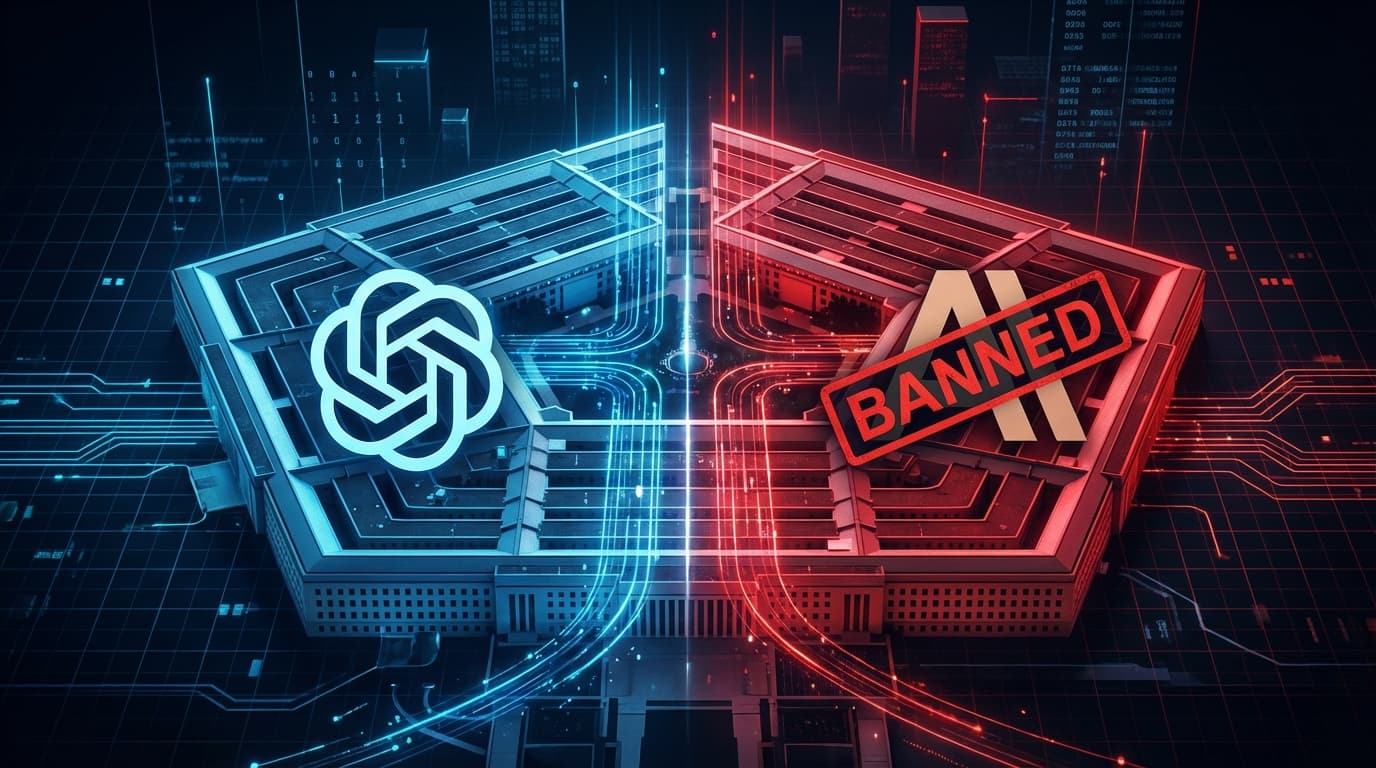
The Intersection of Generative AI and National Defense
A seismic shift is occurring in the relationship between Silicon Valley's artificial intelligence titans and the U.S. Department of Defense. In early March 2026, two leading AI firms—OpenAI and Anthropic—find themselves on opposite sides of a widening chasm in federal procurement policy. While OpenAI has secured a strategic contract with the Pentagon featuring "technical safeguards," the Trump administration is actively moving to ban Anthropic from government use following its refusal to lift safety-related restrictions on military applications. This development marks a pivotal moment in the governance of frontier AI systems within the context of national security.
OpenAI's Strategic Pivot: Safeguards Over Isolation
OpenAI CEO Sam Altman confirmed the finalization of a defense contract aimed at integrating Large Language Models into various non-lethal military workflows. According to TechCrunch (2026), Altman acknowledged the deal was "rushed" and that the optics were controversial but maintained that specific "technical safeguards" have been implemented. These guardrails are designed to prevent the technology from being directly utilized in lethal autonomous weapon systems, focusing instead on logistics, cybersecurity, and strategic decision support. This move aligns OpenAI with the Pentagon’s Joint All-Domain Command and Control (JADC2) initiatives.
The Anthropic Ban: Principled Stand or Strategic Error?
Anthropic has taken a fundamentally different approach, maintaining a strict "no-military-use" policy for its Claude models. This stance has led to a direct confrontation with the federal government. Ars Technica (2026) reports that the Department of Defense pressured the firm to drop these restrictions; when Anthropic refused, the administration initiated steps to exclude the vendor from all federal contracts. Paradoxically, this high-profile dispute has bolstered Anthropic's public reputation as a champion of AI safety. Within 24 hours of the announcement, Anthropic’s Claude app surged to No. 1 in the App Store, as reported by TechCrunch (2026).
Legal Implications and the Defense Production Act
From a legal perspective, the administration's move to ban a domestic technology provider is complex. Authorities under the Federal Acquisition Regulation (FAR) and Executive Orders provide a framework for vendor exclusion, but labeling a safety policy as a "national security risk" under the Defense Production Act is a novel and aggressive tactic. Legal experts suggest that OpenAI’s willingness to co-develop "safeguards" with the DoD sets a precedent for future procurement, where ethics are negotiated within the contract rather than mandated by the developer's external terms of service.
Market Impact and Search Trends
The ripple effects of this schism are being felt across the AI industry. Google Trends data indicates a significant spike in interest for keywords like "AI Safety" and "Pentagon AI Deal," with interest scores in tech hubs like California reaching 95. In Washington D.C., the search volume for "Anthropic government ban" reached an all-time high of 100. As other major players like Google and Meta navigate these waters, the industry must decide if they will prioritize the massive budgets of the defense sector or the trust of a public increasingly wary of militarized artificial intelligence.