

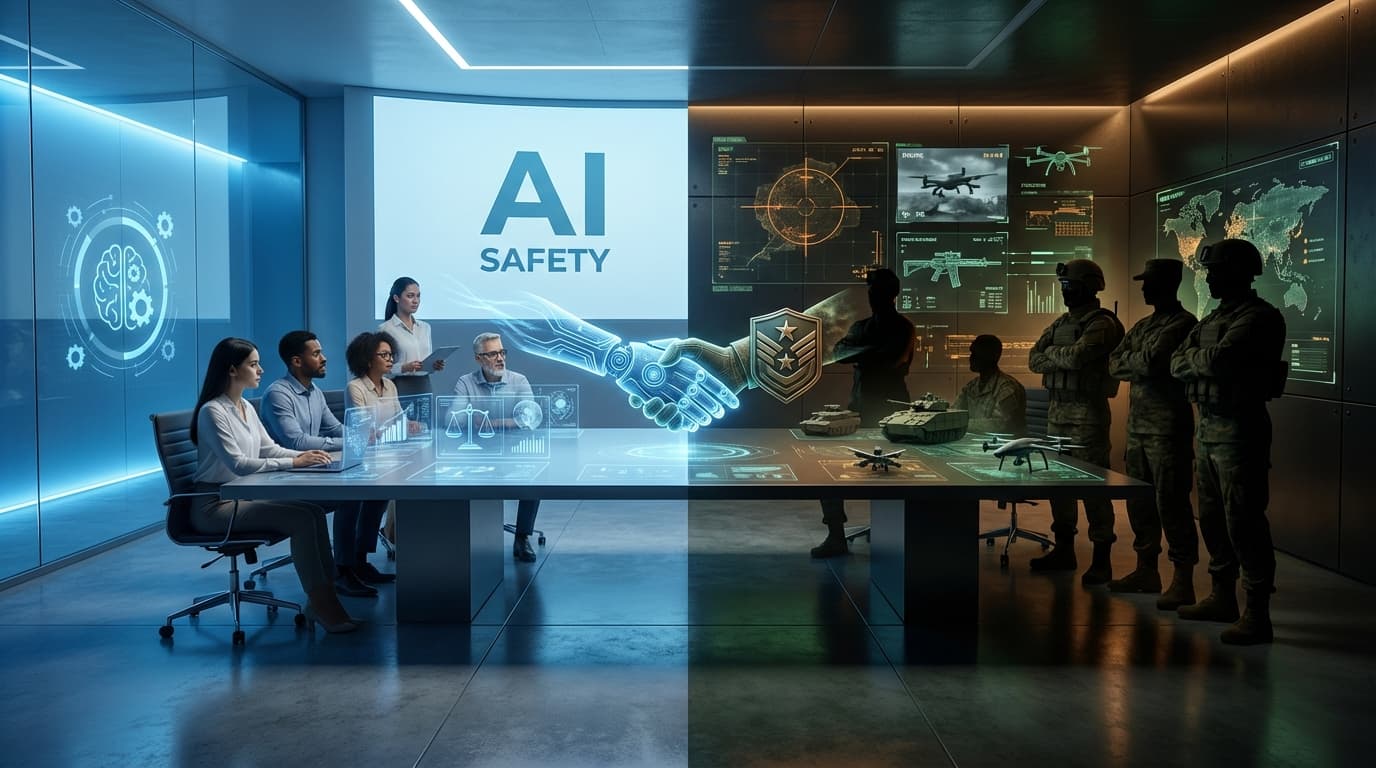
A Defining Moment for AI Sovereignty
The relationship between Silicon Valley's artificial intelligence titans and the U.S. Department of Defense (DoD) reached a volatile peak in March 2026. Following the collapse of a high-stakes $200 million contract negotiation, the Pentagon formally designated Anthropic as a 'supply-chain risk.' This move, reported by The Verge and TechCrunch, represents one of the most significant escalations of government pressure on a private AI firm to date, effectively threatening to blackball Anthropic from future federal procurement.
The Control Conflict: Erotica vs. Artillery
At the heart of the Anthropic-Pentagon breakup lies a fundamental disagreement over model control and use cases. Internal sources indicate that the DoD demanded unrestricted access to Claude's underlying architecture for integration into autonomous weapons systems and mass domestic surveillance frameworks. Anthropic, a company founded on the principle of 'Constitutional AI,' refused to waive its safety protocols for lethal or invasive applications. This refusal led to the 'supply-chain risk' label, likely enforced under the Federal Acquisition Supply Chain Security Act (FASCSA), a designation Anthropic is reportedly preparing to challenge under the Administrative Procedure Act (APA).
OpenAI's Military Embrace and the Kalinowski Exit
As Anthropic exited the military sphere, OpenAI stepped in, accepting a strategic partnership with the Pentagon. This pivot has triggered an internal exodus. On March 7, 2026, Caitlin Kalinowski, OpenAI’s esteemed robotics lead, resigned in protest. Her departure serves as a public rebuke of OpenAI's shifting stance on military applications. According to industry analysis, the public reaction has been equally sharp: ChatGPT saw a 295% surge in uninstalls following the announcement, as users express growing discomfort with the weaponization of generative AI.
Data and Market Sentiment
Google Trends data reveals intense interest in the rift, with search scores hitting 85 in California and 92 in Washington D.C. This geographical split highlights the tension between tech hubs and policy centers. While the Pentagon secures its models from OpenAI, existing cloud providers like Microsoft and Google have rushed to reassure enterprise clients that Claude remains available for commercial use, hoping to prevent a broader exodus of privacy-conscious corporate customers.
The Future of Dual-Use Regulation
This incident marks the end of the 'voluntary' era of AI safety. The government is signaling that 'dual-use' technology—AI that can serve both civilian and military purposes—will increasingly be subject to state control. The outcome of Anthropic’s potential lawsuit will set a massive precedent for the tech industry's ability to maintain ethical autonomy in an era of escalating geopolitical tension. For now, the rift between 'safety-first' labs and 'defense-first' vendors is the new reality of the AI landscape.