Semiconductor Market Correction: Doubts Emerge on AI Spending Sustainability
U.S. semiconductor stocks experienced a significant selloff as investors began questioning the sustainability of the ongoing AI-driven spending boom.
TSMC CEO C.C. Wei confirmed that the company is struggling to meet the intense global demand for AI semiconductor production, highlighting critical capacity bottlenecks.
Samsung Electronics has reached a tentative labor agreement, averting a 18-day strike involving 47,000 workers and securing the stability of its memory chip production, a critical development for the global semiconductor supply chain.
Over 47,000 Samsung Electronics employees are planning an 18-day strike following the breakdown of bonus negotiations, threatening global memory chip supplies at a critical time.
Cerebras Systems debuted on the Nasdaq with a market valuation briefly reaching $100 billion, signaling the move of specialized AI chip architectures into large-scale commercial success and market competition.
AI chipmaker Cerebras Systems saw its stock nearly double on its Nasdaq debut, reaching a $100 billion market cap, signaling high industry demand for specialized AI infrastructure.
Cerebras Systems saw its stock nearly double on its Nasdaq debut, reaching a $100 billion market valuation and marking a significant milestone for AI hardware infrastructure in 2026.
Cerebras Systems made a strong debut on the Nasdaq, with its stock nearly doubling to push its market valuation past $100 billion, signaling robust investor confidence in its specialized AI processing hardware.
Apple and Intel have reached a preliminary deal for Intel to manufacture chips for Apple, marking a strategic pivot in supply chain management and a significant win for Intel's foundry services division.
The AI market is pivoting toward infrastructure and enterprise application-layer dominance, evidenced by Cerebras's planned IPO and Sierra's massive $950M funding round.
Samsung Electronics is facing a potential 18-day strike by its workforce next month. As a leader in memory chip production, any prolonged interruption to operations threatens global supply stability for smartphones, servers, and AI infrastructure.
Google previews its 8th-gen TPUs, optimized for agentic AI workloads, aiming to reduce hardware dependency while offering new air-gapped, private deployment options for enterprises.
AI chip startup Cerebras has filed for an IPO, highlighting its strategic partnerships with major players like Amazon Web Services and OpenAI as it seeks to scale in the AI hardware market.
Persistent DRAM shortages are projected to last until 2030 as production struggles to keep pace with AI-driven demand, creating long-term structural supply chain challenges.
High-performance AI chip startup Cerebras has filed for an IPO, supported by major strategic partnerships with OpenAI and AWS, positioning it as a key competitor in the AI hardware space.
Nvidia-backed chip designer SiFive has hit a $3.65 billion valuation. By promoting the open-source RISC-V architecture, SiFive offers highly customizable designs for AI chips, challenging traditional industry models.
Nvidia-backed chip startup SiFive has reached a $3.65 billion valuation, highlighting growing interest in open-source RISC-V architecture for AI hardware.
Nvidia-backed SiFive reached a $3.65 billion valuation, as its open-standard RISC-V chip designs gain momentum against traditional architectures in the AI hardware race.
Intel is prioritizing advanced chip packaging as a central strategy to capture market value in the AI hardware boom, aiming to enhance computational performance for AI workloads.
Nvidia’s GTC keynote projected a $1 trillion AI chip market by 2027, but the bold vision met Wall Street skepticism. Investors are increasingly wary of an AI bubble and are questioning whether massive hardware spending can yield commensurate commercial returns.
Future tech infrastructure is undergoing three major shifts: glass substrates will boost AI chip compute density, 6G networks will integrate sensing capabilities with AI, and quantum-ready platforms are helping enterprises prepare for the next computing paradigm. These technologies will reshape the global landscape between 2026 and 2030.
The semiconductor industry is shifting to glass substrates, with Absolics planning commercial production to power next-gen AI chips. Apple has introduced the MacBook Neo, its most modular laptop yet, while Intel launched its fastest gaming processors. Research from 2026 highlights that 'continuous batching' software combined with these hardware gains can boost efficiency by 20%.
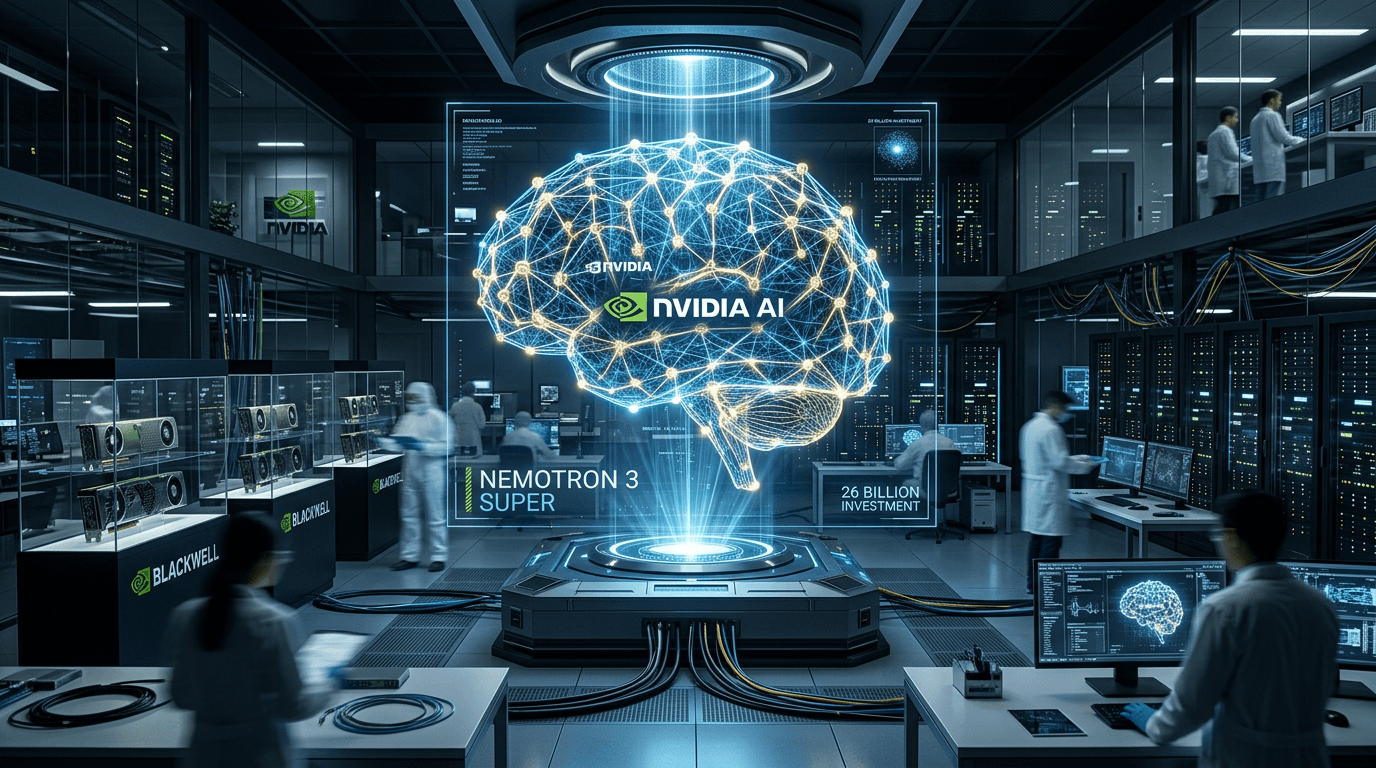
Nvidia has committed $26 billion to build open-weight AI models and infrastructure, launching the 120-billion-parameter Nemotron 3 Super. This hybrid model combines SSM and Transformer architectures to deliver superior throughput for enterprise tasks. The move represents a strategic shift toward "Sovereign AI," positioning Nvidia as a software leader while driving demand for its high-end GPUs.
Meta has introduced four new custom MTIA AI chips designed to power its recommendation engines and Llama model fine-tuning. This strategic launch aims to reduce the company's multi-billion dollar reliance on Nvidia GPUs and improve data center efficiency. While Meta continues to buy Nvidia hardware for massive training tasks, it expects custom silicon to handle 40% of its inference load by 2027. This move highlights the accelerating trend of 'hyperscalers' becoming major players in semiconductor design.
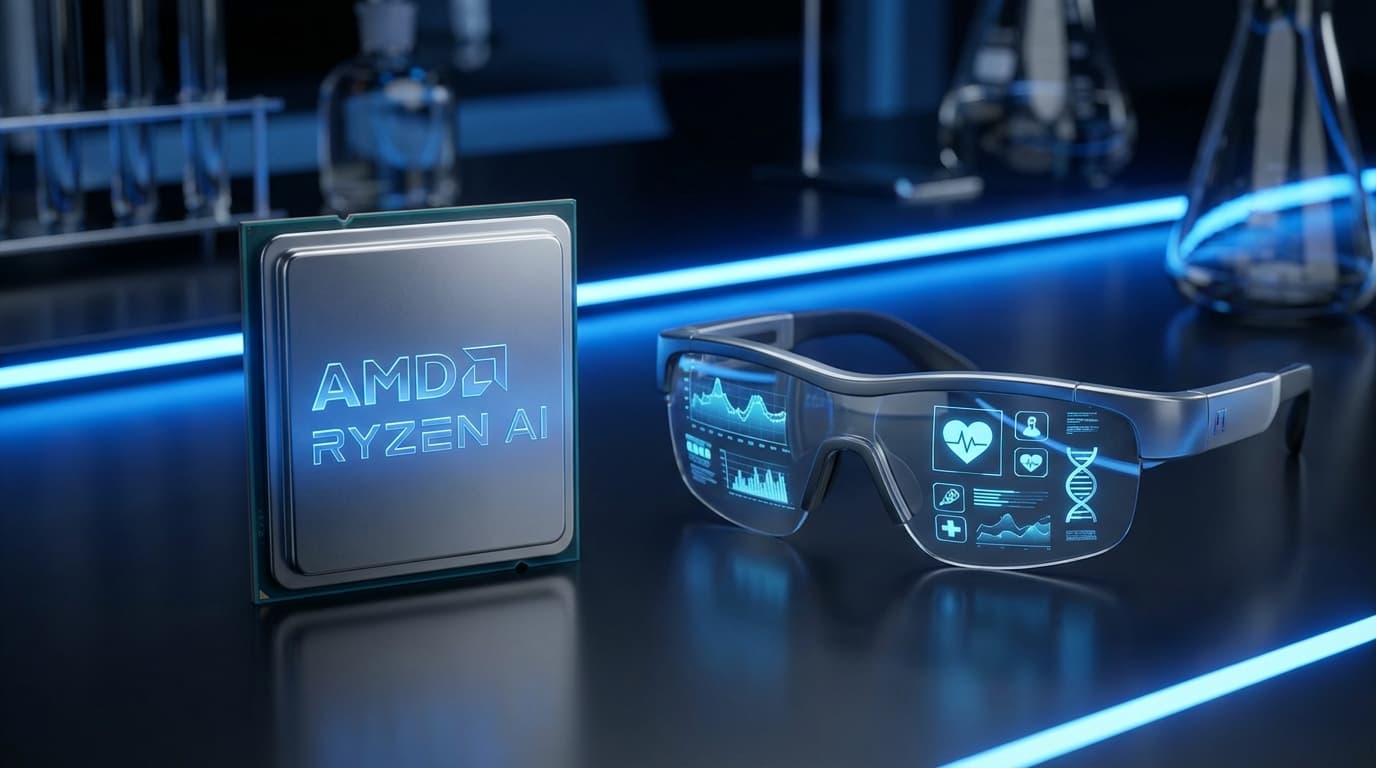
AMD has launched the Ryzen AI 400 series for desktop AM5 platforms, bringing dedicated NPUs to traditional PCs. Simultaneously, Qualcomm unveiled the Snapdragon Wear Elite, a 'wrist plus' chip designed to power high-end AI wearables and AR gadgets with localized processing capabilities.
A global memory shortage is predicted to drop smartphone shipments to 1.12 billion units, with HP reporting RAM costs have surged to 35% of total PC material costs.
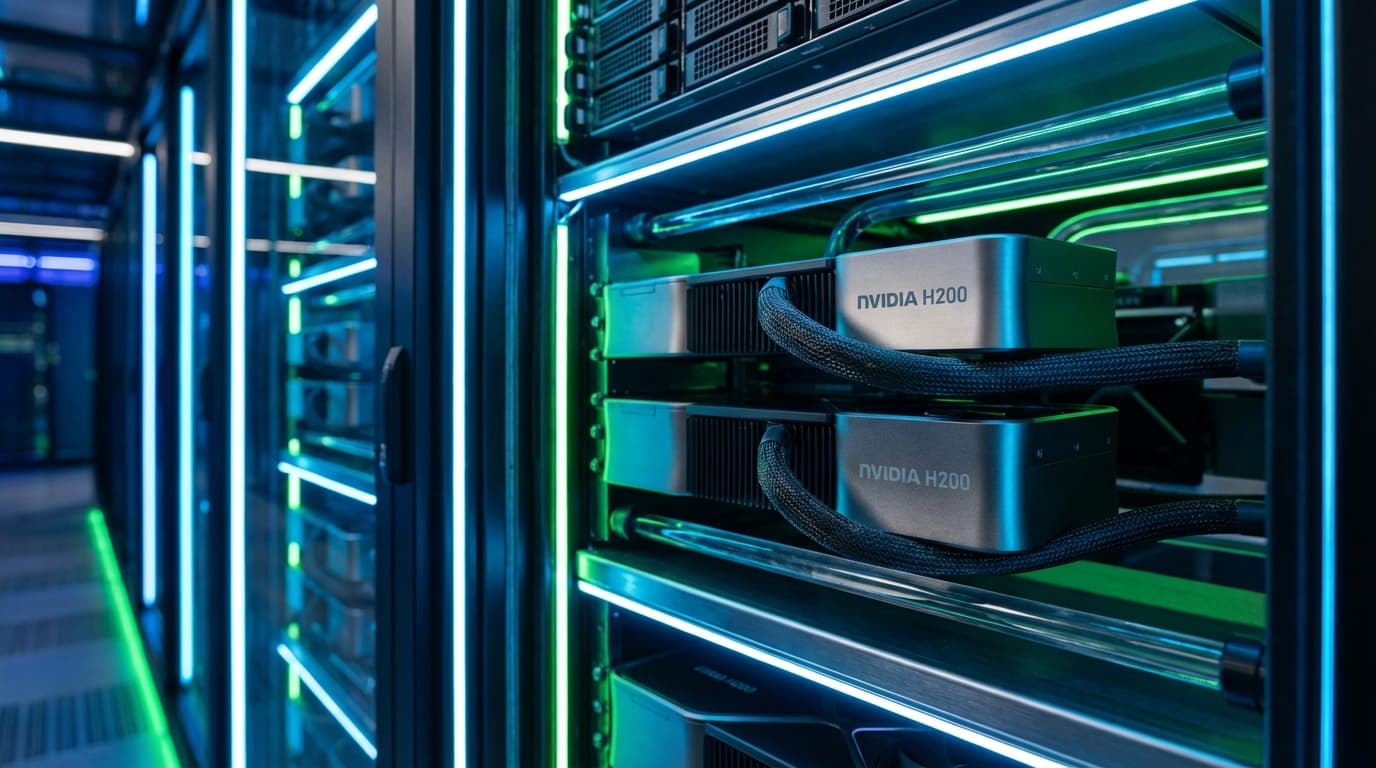
NVIDIA's H200 GPU has reached a mass deployment milestone across global cloud providers. CEO Jensen Huang frames this as the dawn of the AI industrial revolution, as the H200's HBM3e memory nearly doubles inference speeds for LLMs, solidifying NVIDIA's moat and boosting the Taiwan-based hardware supply chain.