
The Substrate Revolution: Why Glass is the Future of AI
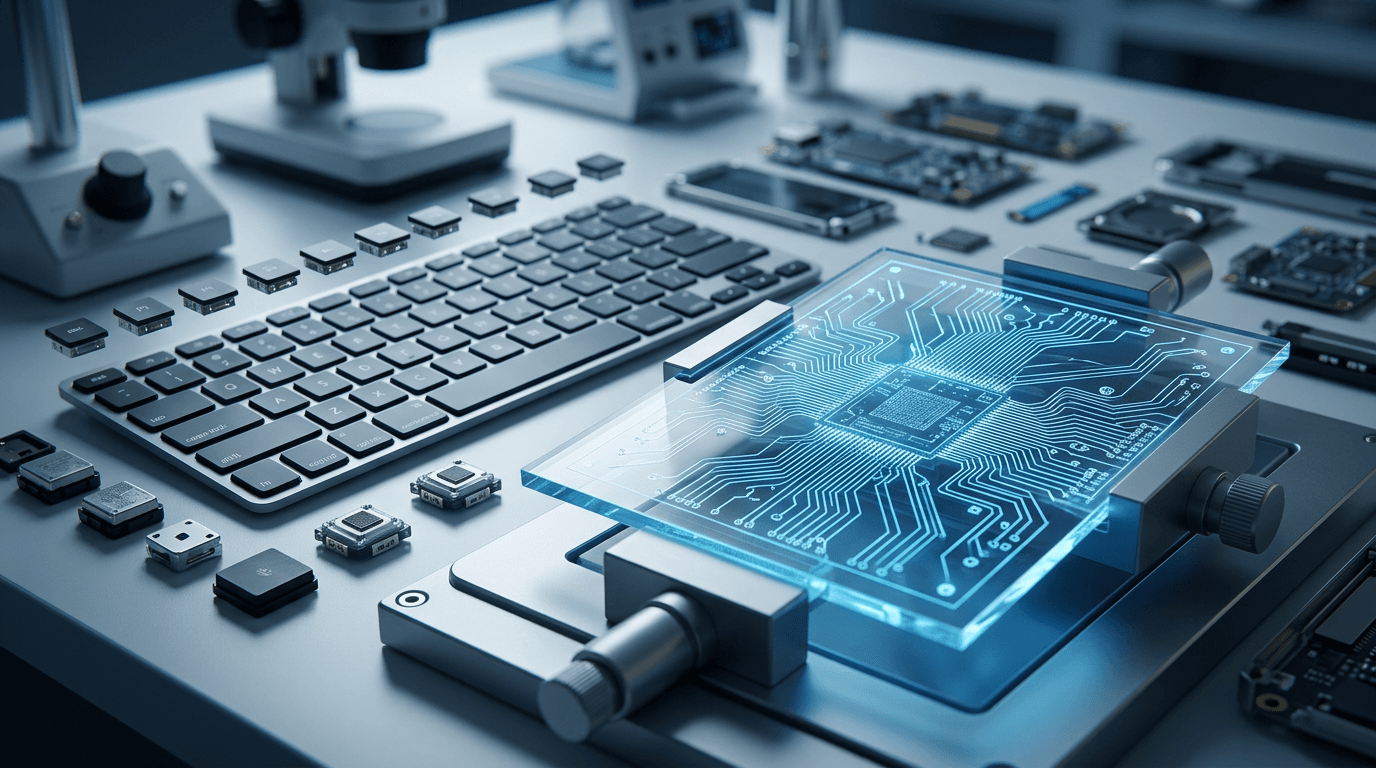
In the relentless pursuit of computing power, the semiconductor industry is turning to a material thousands of years old: glass. MIT Technology Review reports that South Korean company Absolics is set to begin commercial production of specialized glass substrates for next-generation AI chips. Unlike traditional organic substrates, glass offers superior thermal stability and electrical performance, allowing for denser packing of transistors and better heat management. This breakthrough is poised to become the new standard for the massive data centers powering the latest frontier AI models.
Apple’s Pivot: The Modular MacBook Neo
Apple has long been criticized for its 'closed' ecosystem and difficult-to-repair hardware. However, the new MacBook Neo marks a significant departure. According to Ars Technica, the Neo is the first MacBook in over a decade to feature a truly modular design, specifically an easily replaceable keyboard and internal components. This move is seen as a strategic response to growing 'Right to Repair' legislation globally and Apple's own 2030 carbon neutrality goals. The Neo proves that high-end performance can coexist with circular economy principles.
Intel’s Dominance: The Core Ultra 'Plus' Series
On the desktop performance front, Intel has announced the Core Ultra 270K Plus and 250K Plus, labeling them as the 'fastest gaming desktop processors ever.' Reported by The Verge, these chips are optimized for the dual demands of 8K gaming and local AI inference. As more AI tasks move from the cloud to the edge, Intel's focus on high-performance desktop silicon aims to solidify its position among enthusiasts and creative professionals who require raw localized power.
Efficiency at Scale: GPU Utilization Research
As hardware capabilities grow, so does the need for efficient resource management. Academic research titled Dynamic Micro-Batch and Token-Budget Scheduling (February 2026) suggests that software-level innovations are just as critical as hardware. By utilizing continuous batching techniques, large-scale clusters can minimize 'pipeline bubbles' and GPU idle time. This research, published in Sensors, shows that such optimizations can boost inference efficiency in large clusters by up to 20%, complementing the thermal benefits of new glass-based substrates.
Future Outlook: A New Hardware Paradigm
The dual focus on performance (via glass substrates and Intel's new chips) and repairability (via Apple's Neo) signals a maturing hardware market. We are moving away from the era of disposable high-tech toward high-performance, long-lasting, and energy-efficient systems. As we look toward Jensen Huang's Nvidia GTC 2026 keynote, the industry expects further announcements regarding how new materials and modular architectures will define the next decade of computing.