
The Trillion-Dollar Bet: Jensen Huang’s Vision
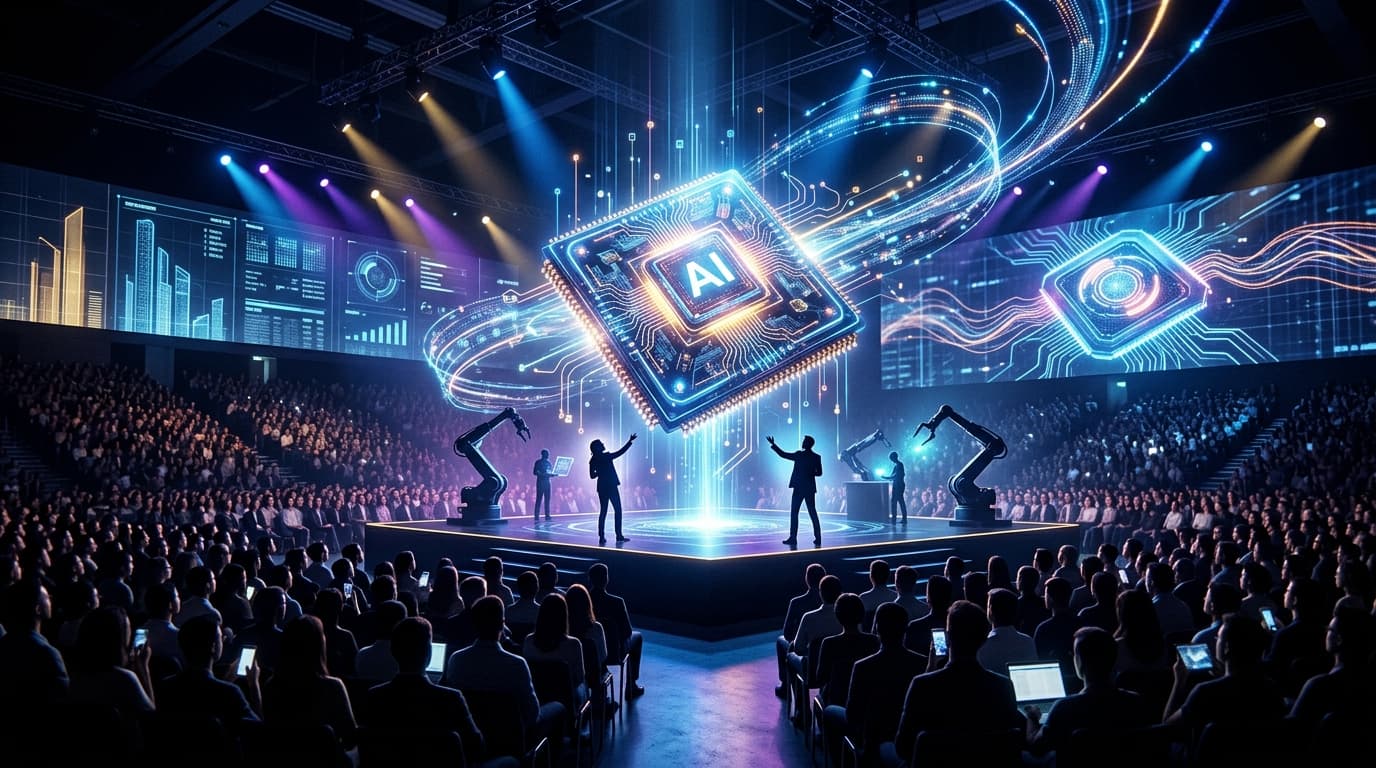
At the recent Nvidia GTC conference, CEO Jensen Huang took the stage in his signature leather jacket to deliver a two-and-a-half-hour keynote. The message was unmistakable: Nvidia is positioning itself as the digital alchemist of the AI era. Huang projected that by 2027, the market for AI-related chips would reach a staggering $1 trillion. This wasn't just a number; it was a high-stakes gamble on the total reinvention of global industry.
During his address, he introduced the concept of an 'OpenClaw' strategy—an essential framework for companies to navigate the oncoming AI wave. To demonstrate technical prowess, he showcased everything from NEMOClaw to an awkward moment with a 'Robot Olaf' that suffered microphone issues. These demonstrations were intended to convey a singular message: Nvidia is not just a hardware vendor; it is the essential provider of the underlying computing architecture for the future of AI.
Market Reaction: Why Wall Street Isn’t Convinced
Despite the grandeur, Huang’s vision didn't fully win over Wall Street. While Nvidia’s technical leadership is undisputed, the fear of an AI bubble remains pervasive among investors. Wall Street analysts have largely maintained a cautious stance, questioning whether such massive sales projections are achievable in the current economic climate and whether the exorbitant costs of AI infrastructure can ever deliver commensurate Return on Investment (ROI).
Market data suggests that investor anxiety did not dissipate after GTC. This isn't just about Nvidia’s stock volatility; it reflects a broader skepticism about whether the tech arms race driven by AI has already peaked. When Huang spoke of his $1 trillion vision, Wall Street saw potential hardware overcapacity and concerns that customers buying these chips are failing to generate high-value commercial applications.
Analysis: Tech vs. Capital in the AI Gold Rush
The core of the AI gold rush is 'infrastructure building.' Currently, Nvidia is the most successful 'shovel seller' in this gold rush. However, as the shovel seller anticipates a tenfold market expansion, investors are beginning to rethink: if downstream enterprises fail to find real gold after buying the shovels, how long can this capital-intensive party last?
GTC revealed Nvidia’s attempt to expand its ecosystem through software and robotics platforms—such as Omniverse and various AI agent frameworks—to prove that its products are more than just expensive hardware; they are smart tools capable of solving real-world physical problems. But market feedback indicates that Wall Street currently prioritizes short-term balance sheets and profitability over long-term technical visions.
Future Outlook: Indicators to Watch
In the coming quarters, watch for a few key indicators: first, whether the capital expenditure (CapEx) budgets of Nvidia’s largest customers (Microsoft, Google, Amazon, etc.) begin to cool; second, the actual deployment data of enterprise-level AI applications rather than just laboratory prototypes; and finally, the percentage of Nvidia’s revenue derived from software-as-a-service, which will determine its success in transitioning from a semiconductor giant into a software and platform powerhouse.
FAQ
Why is Nvidia’s GTC keynote considered a 'high-stakes gamble'? CEO Jensen Huang predicted that the AI chip market will reach $1 trillion by 2027, an ambitious projection that assumes total global industrial AI adoption, which investors fear may not materialize into sustained demand.
Why is Wall Street skeptical? Investors fear an AI bubble, questioning whether the massive capital investments in hardware are generating sufficient commercial returns to justify the current stock valuations.
What is the 'OpenClaw' strategy? It is a concept Huang introduced during GTC, representing the essential AI computing and processing framework companies need to adopt; however, its practical application remains to be seen.
What are Nvidia’s main challenges right now? Nvidia must prove the commercial value of its software platforms and AI agents beyond hardware sales to maintain its high valuation and ensure customers do not cut AI-related capital expenditures.
What indicators should we watch going forward? Monitor the AI CapEx budgets of Big Tech companies, the actual adoption rate of enterprise AI, and the percentage of Nvidia’s revenue coming from software services.