Anthropic Reports 80% of Production Code Authored by Claude AI
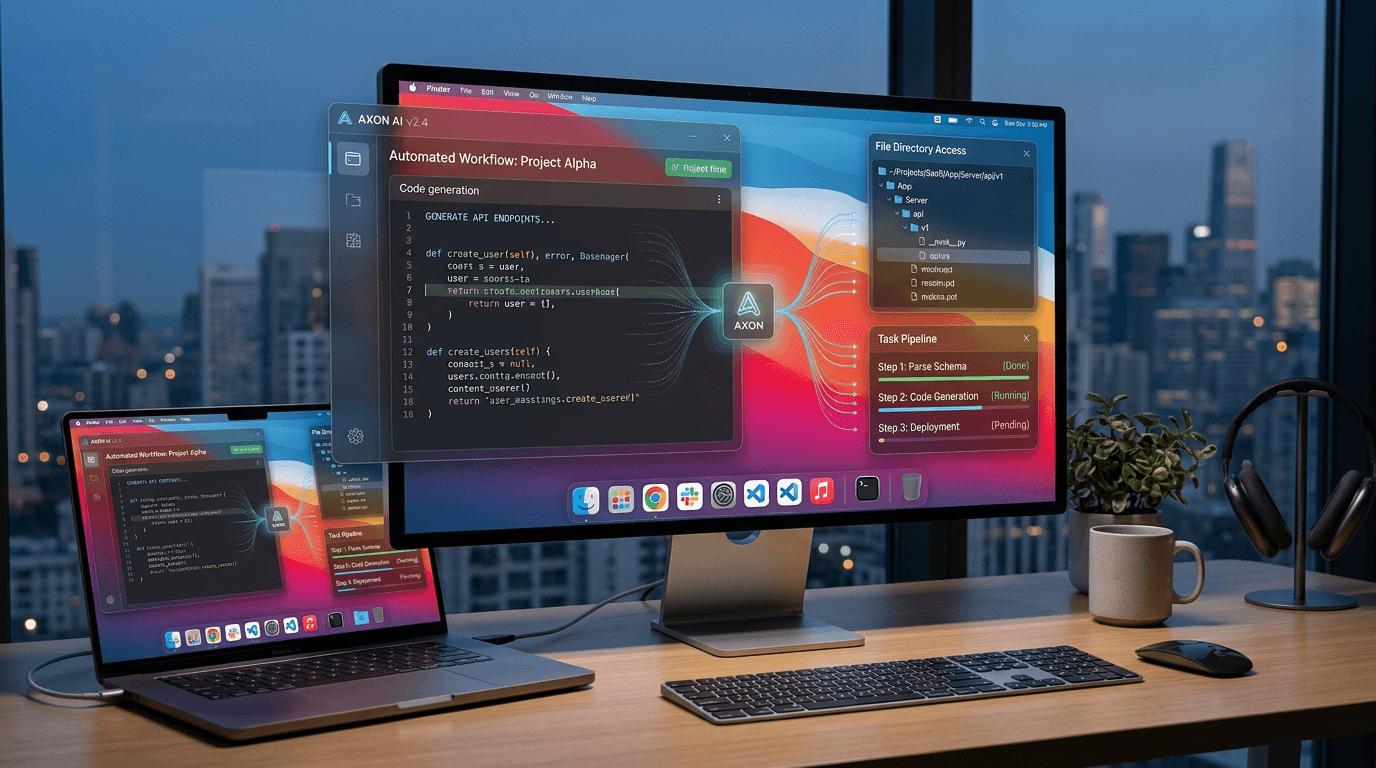
Anthropic reports that 80% of its production code is now written by Claude, leading to an 8x increase in output volume ahead of its upcoming IPO.
Amazon has upgraded its Proteus warehouse robots with conversational AI, allowing employees to interact and schedule tasks via voice, enabling more flexible human-robot collaboration.
Vision-Language-Action (VLA) models are driving a paradigm shift in robotics, integrating multi-modal perception and action planning to overcome traditional limitations in generality and safety. Research highlights the use of human video data and uncertainty-calibrated safety gating to improve robustness.
Corporate obsession with replacing human labor with AI is fueling labor backlash, highlighted by contractor strikes at Meta's European HQ, raising critical ethical and regulatory questions about algorithmic management and labor rights.
Enterprises are reevaluating AI agent strategies as they confront significant bottlenecks in permissioning and system reliability, marking a shift toward more robust, architectural-first deployments.
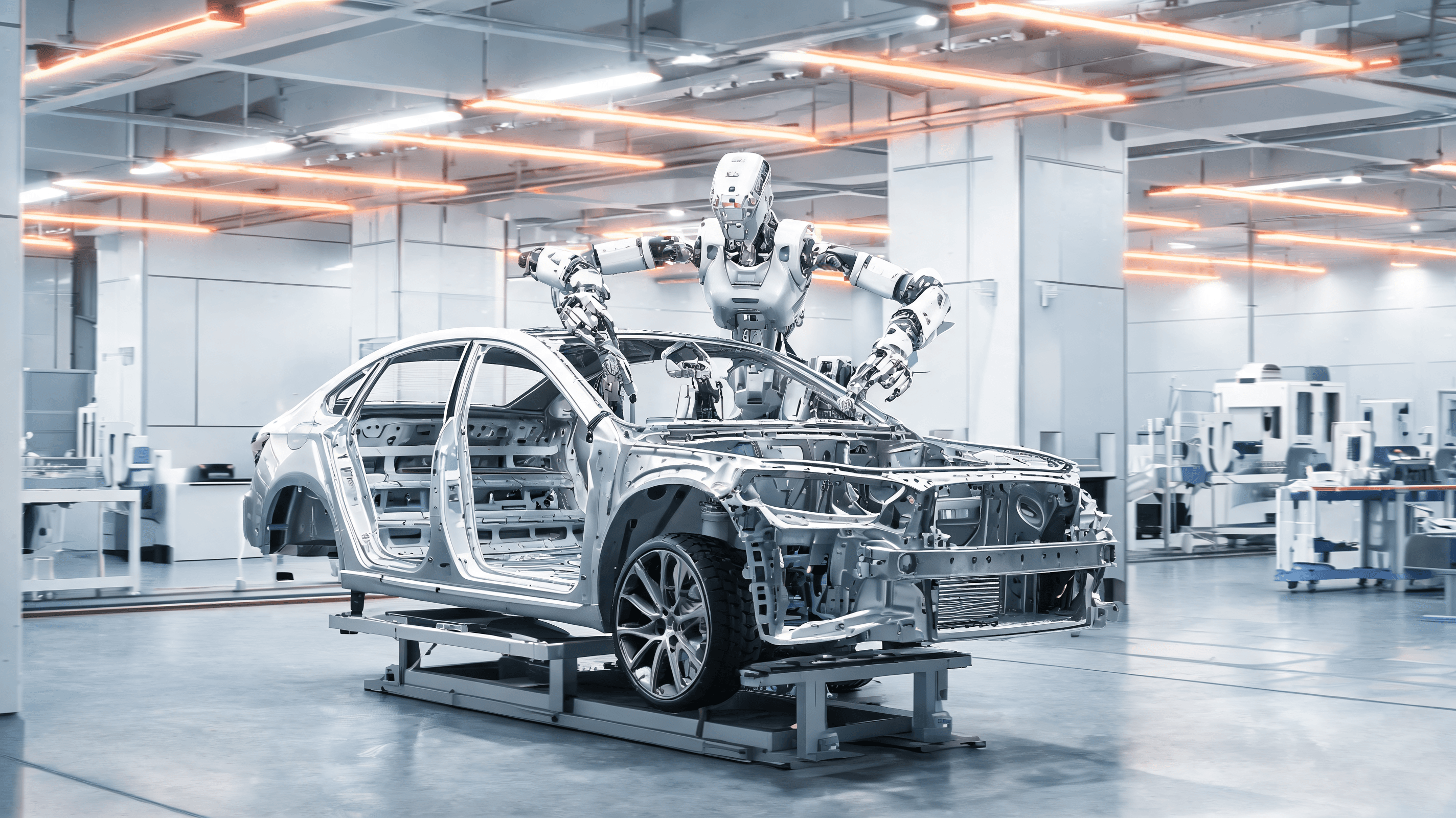
BMW is integrating humanoid robots into its European factories to upgrade intelligent manufacturing, marking a major shift in the automotive industry's labor structure.
BMW is expanding its use of humanoid robots in European car manufacturing facilities, reflecting a broader industry trend toward automating factory floors with dexterous robotic systems.
Robotics is moving from industry to social impact, with robots now assisting in meal preparation in San Francisco. Industry players are utilizing niche strategies to drive maturity, signaling that robotic services may be the future solution to labor shortages.
Tech giants are collaborating on a joint AI startup accelerator to foster industry innovation, while AI agents face bans on professional platforms, highlighting the growing conflict between automation and platform policies.
AI progress relies on expert human feedback; the risk of replacing experts with AI automation could create a critical bottleneck where models lack high-quality supervision and become prone to cumulative errors.
Technological breakthroughs in embedding-space communication and agent-management systems are revolutionizing multi-agent AI efficiency and lowering operational costs for enterprise automation.
The enterprise AI focus is shifting from simple model competition to 'agent orchestration.' Developments like Fin Operator and RecursiveMAS highlight a race to build infrastructure for managing and scaling multi-agent AI systems.
OpenAI has introduced three new models—GPT-Realtime-2, GPT-Realtime-Translate, and GPT-Realtime-Whisper—which bring GPT-5-class reasoning into real-time voice interactions, significantly reducing the orchestration burden and infrastructure overhead for enterprises.
Anthropic has introduced 'Dreaming,' a new capability for its AI agents that allows them to learn from past mistakes and self-correct over time. This innovation aims to provide the reliability and self-optimization needed for enterprise-scale AI deployment.
Anthropic introduced a 'dreaming' feature allowing AI agents to learn from past errors to self-correct, while its Mythos tool has proven highly effective in automated cybersecurity bug detection.
Sakana AI has introduced 'RL Conductor,' a 7B parameter reinforcement learning model that dynamically orchestrates larger LLMs like GPT-5 and Gemini, automating task distribution for better performance.
Robotics is witnessing major shifts this week: Hugging Face launched an App Store for its Reachy Mini robots, democratizing hardware development, while developments in Ukraine underscore the effectiveness of autonomous unmanned systems in conflict, marking a major leap in software-driven physical action.
Enterprise adoption of autonomous AI agents is accelerating, leading to urgent governance requirements. Microsoft's Agent 365 and financial sector security frameworks are leading the response to 'shadow AI' risks.
Writer has launched event-based AI agents capable of autonomously executing multi-step enterprise workflows across platforms, challenging tech giants in the automation space.
Japan Airlines is piloting humanoid robots at Haneda Airport to handle baggage and cabin cleaning, addressing critical labor shortages. The test showcases the potential for robotics to bridge the gap in aviation services.
AI R&D is undergoing a transformation toward automated optimization frameworks, leveraging agentic systems to autonomously adjust model parameters and improve development efficiency.
OpenAI has introduced Workspace Agents, designed for enterprise users to automate workflows across platforms like Slack and Salesforce, marking a shift toward task-oriented autonomous agents.
OpenAI launched Workspace Agents, enabling enterprise users to deploy autonomous bots that connect with platforms like Slack and Salesforce. An on-device Privacy Filter was also released.
OpenAI launches 'Workspace Agents' to automate enterprise workflows across apps, and introduces an on-device 'Privacy Filter' to enhance data security and compliance.
OpenAI and Google are racing to deploy enterprise AI agents to automate workflows, with Google also challenging Nvidia's dominance through new purpose-built TPU chips.
Physical Intelligence has unveiled its π0.7 robotic brain model, which claims to enable robots to autonomously navigate and perform tasks they were not explicitly trained for, marking a step toward general-purpose robotics.
OpenAI has updated its Codex system to support agentic workflows, enabling the AI to operate desktop applications, generate images, and remember past experiences, directly challenging Anthropic's Claude Code.
In response to the potential chaos from autonomous AI agents, Anthropic has launched 'Project Glasswing,' a coalition of major tech and finance companies using its unreleased, high-power cyber model to proactively patch global infrastructure vulnerabilities.
Autonomous AI agents like Block's Managerbot, Poke, and OpenClaw are replacing simple chatbots, proactively managing enterprise workflows. This shift to agentic AI is accelerating automation but also triggering debates over workplace roles, productivity, and the path to AGI.
Block has introduced the proactive 'Managerbot' AI agent, and Amazon has launched 'S3 Files' for AI agents, driving a shift toward agent-first enterprise automation.
Enterprise AI is shifting toward 'Agentic AI,' with new tools like Block’s Managerbot and NeuBird’s Falcon enabling proactive business monitoring and automated software debugging, moving beyond mere pilot projects.
The transition to agentic AI, characterized by autonomous planning and execution in tools like Claude Cowork and OpenClaw, is reshaping efficiency. However, this autonomy brings operational risks and profound questions regarding AI’s ability to influence human behavior.
Enterprises are moving beyond fragmented AI pilots toward scalable production results. Firms like MassMutual are achieving significant productivity gains, while new AI agents like those from NeuBird are addressing the complexity of modern cloud infrastructure.
Japan is moving physical AI from academic labs to real-world industrial deployment to address severe labor shortages. Unlike the Western focus on displacement fears, Japan’s model emphasizes human-AI synergy and the critical need for data standardization to scale automation effectively.
AI is evolving from simple chatbots into task-oriented agents. While this brings significant automation convenience and market interest, it also raises deep anxieties about job security and autonomous execution.
In response to severe labor shortages, Japan is actively deploying experimental physical AI robots into real-world logistics, manufacturing, and agricultural environments. These robots, equipped with sensing and adaptive learning capabilities, aim to fill critical human labor gaps in Japan's aging society.
Faced with an aging population and severe labor shortages, Japan has successfully transitioned Physical AI robots from the lab to real-world deployment. These robots are filling roles that no one wants to do, serving as an automation blueprint for other nations facing demographic crises.
Nvidia unveiled its Agent Toolkit at GTC 2026, an open-source platform designed to accelerate the development of autonomous AI agents. Seventeen enterprises, including Adobe, Salesforce, and SAP, have already announced their adoption of the platform to drive enterprise-grade automation.
At GTC 2026, Nvidia unveiled an open-source Agent Toolkit to facilitate the building and deployment of autonomous AI agents at scale. With 17 major adopters, including Adobe and Salesforce, the platform signals a shift in enterprise AI from conversational tools to task-oriented automation.
Salesforce has introduced 30 AI features to Slack, elevating Slackbot to an 'Enterprise AI Agent' capable of cross-platform task automation and meeting management, signaling a shift toward agent-led productivity.
Waymo's efforts to train AVs to stop for school buses illustrate the limitations of current autonomous systems when faced with unpredictable, human-centric traffic scenarios, highlighting a significant barrier to mainstream adoption.
Anthropic has released a new research preview that allows its Claude AI to control Mac computers, marking a major step toward autonomous AI agents. Concurrently, the company is facing legal challenges regarding a Department of Defense 'supply-chain risk' designation.
The AI agent arms race accelerates as Anthropic’s Claude gains macOS desktop control and Cloudflare releases its high-speed Dynamic Workers, as the industry struggles to move agents from demos to production.
Anthropic has released a research preview allowing its Claude chatbot to directly control computer interfaces on Mac, transforming it into an autonomous digital agent.
Anthropic launched 'Claude Code' and 'Cowork', tools allowing AI agents to autonomously control a user's computer; while increasing productivity, the company cautions they are in research preview.
Enterprises are transitioning AI agents into production environments, facing risks like unintended autonomous financial approvals. While striving to balance automation with oversight, the industry is also grappling with the dehumanizing potential of AI gig work models.
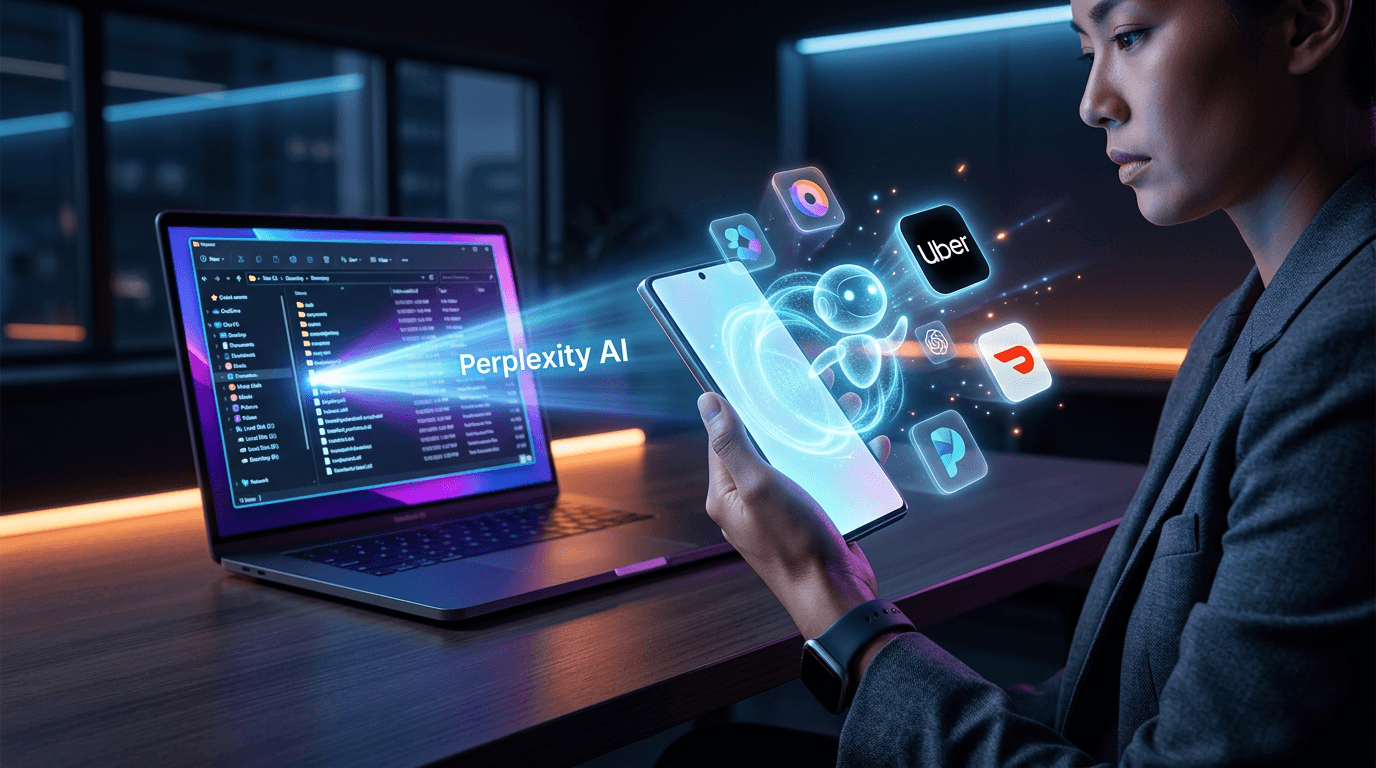
AI is evolving from passive chatbots into active 'desktop operatives' capable of controlling local systems. Key moves include Perplexity's 'Personal Computer' agent and Gumloop's $50M funding for low-code agent builders. Research preprints from March 2026 emphasize the need for new security frameworks as AI gains local file access.
Google and Samsung have launched Gemini-powered task automation for mobile devices, enabling AI to autonomously use apps for ordering food and rides. Meanwhile, Perplexity has introduced local file agents for the PC. This shift toward agentic AI is driving a new focus on vector search as a critical infrastructure component.
Microsoft launched Copilot Cowork on March 9, 2026, an 'agentic' AI system that autonomously performs tasks across M365 apps. Built with support from Anthropic, this move highlights a shift toward autonomous AI agents, accompanied by new governance tools to prevent security risks like 'AI double agents.'
The AI boom is driving a surge in physical infrastructure, leading developers to use remote 'man camps' for data center construction workers. Simultaneously, the venture capital industry is facing disruption as AI agents begin to automate investment decisions traditionally based on human intuition. These shifts mark AI's transition into a heavy industrial and automated financial force.
Perplexity and Read AI have launched autonomous 'agentic' tools capable of orchestrating tasks independently. ServiceNow reports resolving 90% of IT requests via agents, signaling a shift from AI chat to AI action.