
Beyond Retrieval: Gemini Launches Deep Task Automation
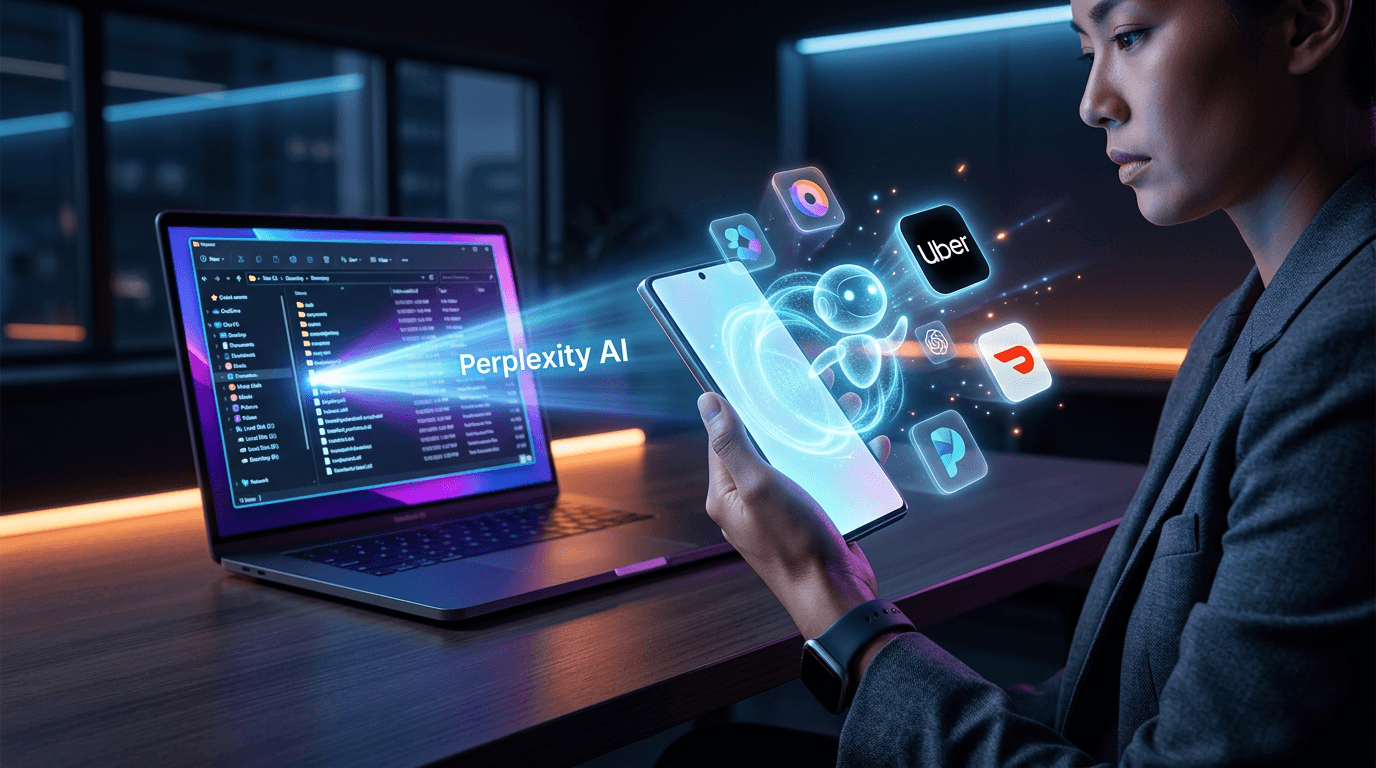
The AI landscape in 2026 has shifted from simple chatbots to proactive assistants. As reported by The Verge, Google and Samsung have unveiled a major evolution for Gemini: task automation. Initially launching on the Galaxy S26 and Pixel 10 devices, this feature allows Gemini to perform complex actions across various third-party apps, such as food delivery and ridesharing services. Users can now command the AI to "order dinner," and Gemini will open a virtual window to select menu items, apply coupons, and process payments autonomously. This move signals Google’s ambition to turn its AI from a knowledge engine into an "Actionable Agent" that acts on behalf of the user.
Perplexity’s Bold Move: AI Agents for the Local Filesystem
Not to be outdone, Perplexity has introduced a feature titled "Personal Computer," which extends the power of its AI agents directly to the user’s local files. According to Ars Technica, this tool allows the AI to search, summarize, and cross-reference documents stored on a PC while maintaining a secure, sandboxed environment. This capability transforms the traditional PC into a collaborative workspace where the AI can handle tedious tasks like analyzing contracts or organizing spreadsheets across different directories. Perplexity is betting that the future of computing lies in local data integration, merging the power of web-scale search with personal context.
Infrastructure Evolution: Why Agents Need Vector Search
The transition to agentic AI is forcing a rethink of underlying data structures. VentureBeat highlights a growing consensus among enterprise architects: vector search is now more critical than ever, surpassing the needs of the RAG (Retrieval-Augmented Generation) era. As AI models move from generating text to executing multi-step workflows, they require a sophisticated form of "agentic memory." Vector databases provide the semantic grounding and persistent memory required for agents to maintain context over long periods and across different tasks. This technological shift is driving massive investments into purpose-built vector infrastructure that can handle real-time agentic queries.
Disruption of the App Economy
The rise of task-automating agents poses a direct threat to the traditional App-centric interface model. If users interact primarily with a single AI layer to book flights, buy groceries, and manage schedules, the individual branding and user interfaces of third-party apps become less relevant. The competition will shift toward backend API reliability and strategic placement within the AI’s recommendation logic. For platforms like Uber or DoorDash, being the "default" choice for a Gemini-driven request is the new battleground for market share. This shift also raises significant antitrust questions regarding how AI providers choose which services to automate for their users.
Future Outlook: The Dawn of Zero-Click Computing
Looking forward, the maturation of AI agents points toward a "Zero-Click" future. Computing is becoming an invisible background process rather than a series of manual inputs. Google Maps is already integrating Gemini to allow for conversational trip planning, where the AI doesn’t just show a route but handles the logistics of finding and booking stops along the way. As vector search matures and agents become more reliable at handling financial transactions, 2026 will be remembered as the year AI gained the agency to navigate the digital world independently. The barrier between human intent and digital execution is rapidly dissolving.