
The New Frontier: Moving Beyond the Chatbot Shell
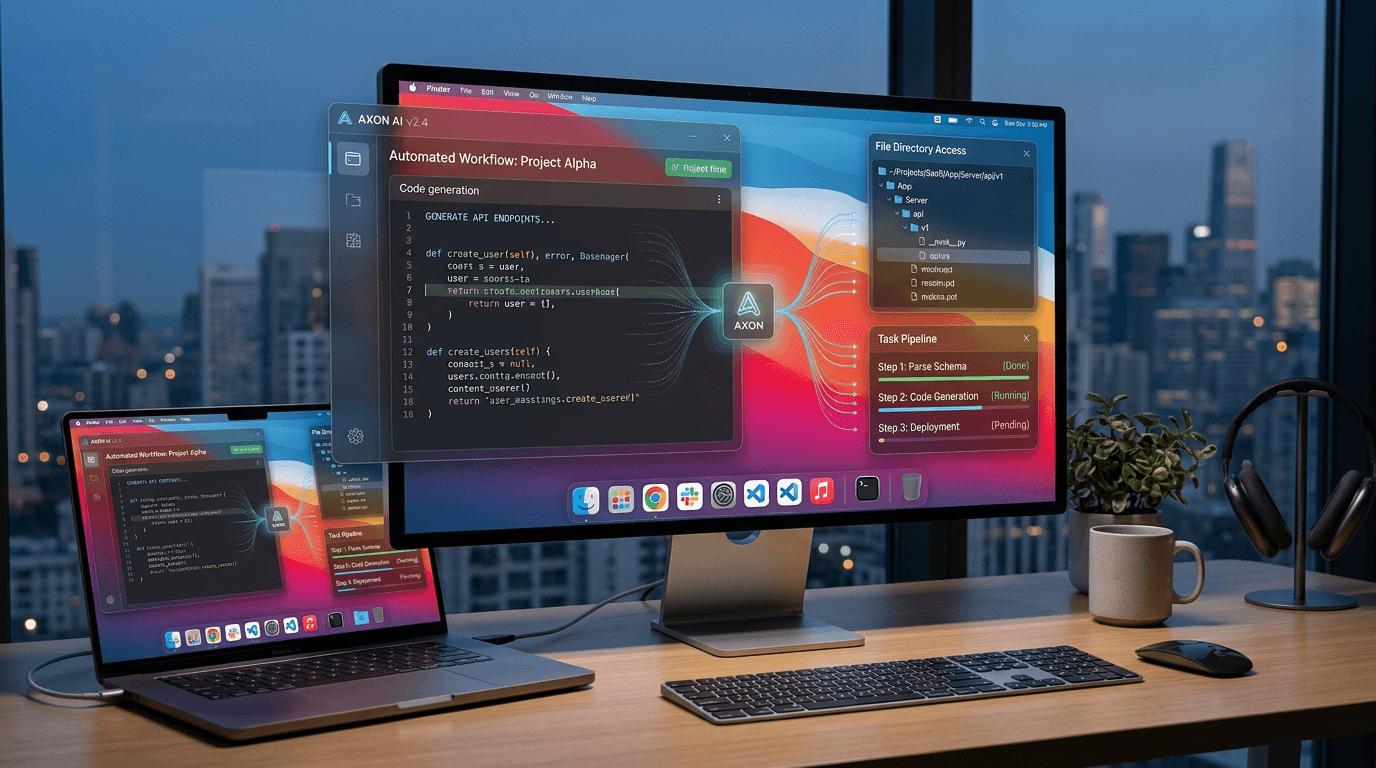
Artificial Intelligence is undergoing a seismic shift in how it interacts with the physical and digital world. For the past two years, the 'chatbot' has been the primary interface for LLMs. However, the industry is now moving toward 'Agentic AI'—systems that don't just talk, but act. According to recent reports from Ars Technica, Perplexity has unveiled its 'Personal Computer' feature, designed to turn a user's Mac into an autonomous AI agent capable of managing local files and executing tasks across various software environments.
Technical Foundations: Operating Within the OS
The transition from a web-based sandbox to a local operating system is a massive engineering hurdle. A research paper titled Security Considerations for Artificial Intelligence Agents (March 2026) highlights that agentic architectures must rethink traditional code-data separation and authority boundaries. Unlike simple RAG systems, these agents require what researchers call 'continuous stream mastery.' As detailed in the OmniStream (2026) preprint, these systems must perceive, reconstruct, and act in real-time streaming environments to be truly effective as desktop operatives.
VC Momentum: Empowering the 'Agent Builder'
Investors are betting heavily on the infrastructure that will allow these agents to scale. TechCrunch reports that Gumloop has secured $50 million in funding led by Benchmark to turn every employee into an AI agent builder through a low-code platform. Simultaneously, Y Combinator-backed Random Labs has launched Slate V1, marketed as the first 'swarm-native' coding agent. Unlike previous tools, Slate is designed to handle tasks requiring long horizons and deep context windows, solving the 'systems problem' that has previously limited AI productivity in software engineering.
Market Impact and Industry Trends
While real-time search trends indicate a temporary technical bottleneck in data fetching, the qualitative trend is undeniable: the 'retrieval-only' era of AI is fading. Industry experts argue that as context windows scale, the need for purpose-built vector search is evolving into a need for agentic memory. Major enterprises are looking for ways to deploy these agents within secure Windows and macOS environments to automate repetitive workflows that previously required human intervention. This move by Perplexity and Gumloop suggests that the next 'iPhone moment' for AI might not be a new device, but a new way of using our existing computers.
Challenges Ahead: Security vs. Autonomy
The ability for an AI to control a local file system brings significant risks. The paper MM-CondChain (2026) notes that while multimodal models are getting better at navigating GUIs, they still struggle with deeply chained compositional reasoning. A single error in navigating a permission dialog could lead to catastrophic data loss or security breaches. As these agents become more 'desktop-native,' the industry must establish rigorous safety benchmarks to ensure that autonomous actions remain within human-defined guardrails.