Semiconductor Market Correction: Doubts Emerge on AI Spending Sustainability
U.S. semiconductor stocks experienced a significant selloff as investors began questioning the sustainability of the ongoing AI-driven spending boom.
TSMC CEO C.C. Wei confirmed that the company is struggling to meet the intense global demand for AI semiconductor production, highlighting critical capacity bottlenecks.
NVIDIA has officially unveiled the RTX Spark chip series, marking its entry into the consumer PC market. Integrating CPU, GPU, and AI acceleration, the series aims to bring powerful local AI inference to laptops and mini-PCs, representing a major innovation in PC architecture.
Samsung Electronics has reached a tentative labor agreement, averting a 18-day strike involving 47,000 workers and securing the stability of its memory chip production, a critical development for the global semiconductor supply chain.
Nvidia CEO Jensen Huang forecasts a $200 billion market for AI agent CPUs. Alongside its record quarterly earnings, the company revealed a $43 billion investment portfolio in AI startups, strengthening its role as the industry’s primary AI infrastructure provider.
Over 47,000 Samsung Electronics employees are planning an 18-day strike following the breakdown of bonus negotiations, threatening global memory chip supplies at a critical time.
Cerebras Systems saw its stock nearly double on its Nasdaq debut, reaching a $100 billion market valuation and marking a significant milestone for AI hardware infrastructure in 2026.
President Trump has recruited tech leaders like Tim Cook, Jensen Huang, and Elon Musk for the upcoming Xi summit, indicating potential shifts in U.S.-China chip export policy and trade dynamics.
Cerebras Systems made a strong debut on the Nasdaq, with its stock nearly doubling to push its market valuation past $100 billion, signaling robust investor confidence in its specialized AI processing hardware.
Cerebras Systems debuted on the Nasdaq with a massive surge, doubling its IPO price and reaching a $100 billion valuation, marking a milestone for AI infrastructure investment.
Nvidia’s market dominance is increasingly attributed not just to its hardware prowess but to the deep, software-based competitive moat created by its CUDA platform.
Intel's stock has surged 490% over the last year, reflecting high investor confidence in its foundry turnaround. Analysts warn that optimism might outpace operational realities as Intel balances massive investment with the need for manufacturing yield improvements.
Apple and Intel have reached a preliminary deal for Intel to manufacture chips for Apple, marking a strategic pivot in supply chain management and a significant win for Intel's foundry services division.
Soaring demand for AI-specific chips has forced TSMC to rapidly integrate wind power as Taiwan grapples with systemic energy supply constraints required to support high-intensity chip manufacturing.
Apple has reportedly reached a preliminary agreement for Intel to manufacture chips for its hardware. This strategic pivot highlights Apple's need for supply chain diversification in a constrained semiconductor market and offers a significant boost to Intel’s foundry business.
The AI market is pivoting toward infrastructure and enterprise application-layer dominance, evidenced by Cerebras's planned IPO and Sierra's massive $950M funding round.
Apple reported record sales, but faces a severe supply chain crisis as unexpected AI-driven demand has led to long-term component shortages for its Mac lineup.
Samsung's smartphone division faces a potential first-ever annual loss due to surging hardware costs from AI-driven memory shortages and production disruptions caused by ongoing labor unrest.
Samsung Electronics is facing a potential 18-day strike by its workforce next month. As a leader in memory chip production, any prolonged interruption to operations threatens global supply stability for smartphones, servers, and AI infrastructure.
Google previews its 8th-gen TPUs, optimized for agentic AI workloads, aiming to reduce hardware dependency while offering new air-gapped, private deployment options for enterprises.
Interest in AI is higher in Taiwan (score 62) than in California (score 44). Taiwan’s interest is driven by semiconductor industrial growth and practical workplace AI tools, while California focuses on AI's societal, educational, and workforce impacts.
AI chip startup Cerebras has filed for an IPO, highlighting its strategic partnerships with major players like Amazon Web Services and OpenAI as it seeks to scale in the AI hardware market.
Persistent DRAM shortages are projected to last until 2030 as production struggles to keep pace with AI-driven demand, creating long-term structural supply chain challenges.
High-performance AI chip startup Cerebras has filed for an IPO, supported by major strategic partnerships with OpenAI and AWS, positioning it as a key competitor in the AI hardware space.
Intel is updating its non-Ultra Core CPU lines with new silicon, bringing latest technical advancements to mainstream processors for the first time in recent years.
Nvidia-backed chip designer SiFive has hit a $3.65 billion valuation. By promoting the open-source RISC-V architecture, SiFive offers highly customizable designs for AI chips, challenging traditional industry models.
Nvidia-backed chip startup SiFive has reached a $3.65 billion valuation, highlighting growing interest in open-source RISC-V architecture for AI hardware.
South Korean AI chip startup Rebellions has raised $400 million at a $2.3 billion valuation, positioning itself as a challenger to NVIDIA ahead of a planned IPO.
Memory chip giant SK hynix is planning a U.S. IPO aiming to raise $10-$14 billion to boost production capacity and mitigate the global memory shortage, known in the industry as 'RAMmageddon'.
Memory chip giant SK Hynix plans a massive $10-$14 billion U.S. IPO to expand capacity and alleviate the global 'RAMmageddon' memory chip shortage.
Global memory leader SK Hynix is planning a U.S. IPO with an target raise of $10-$14 billion to expand production capacity and mitigate the global memory chip shortage.
Arm has broken its 35-year tradition of only licensing chip designs to launch its first in-house AI inference CPU, with Meta as the first customer.
Elon Musk has unveiled the "Terafab" project, a joint semiconductor manufacturing facility in Austin, Texas, designed to supply chips for Tesla and SpaceX's AI and robotics hardware.
Elon Musk has unveiled plans for a joint chip-manufacturing facility in Austin, Texas, named 'Terafab,' aimed at scaling production for AI, robotics, and space-based data centers.
Elon Musk has unveiled plans for a 'Terafab' chip manufacturing plant in Austin, Texas, to be jointly operated by Tesla and SpaceX, aiming to support their AI and robotics efforts while mitigating supply chain bottlenecks.
Elon Musk has announced plans to build a 'Terafab' chip manufacturing plant in Austin, Texas, to vertically integrate chip production for Tesla and SpaceX's AI, robotics, and data center needs.
Nvidia’s GTC keynote projected a $1 trillion AI chip market by 2027, but the bold vision met Wall Street skepticism. Investors are increasingly wary of an AI bubble and are questioning whether massive hardware spending can yield commensurate commercial returns.
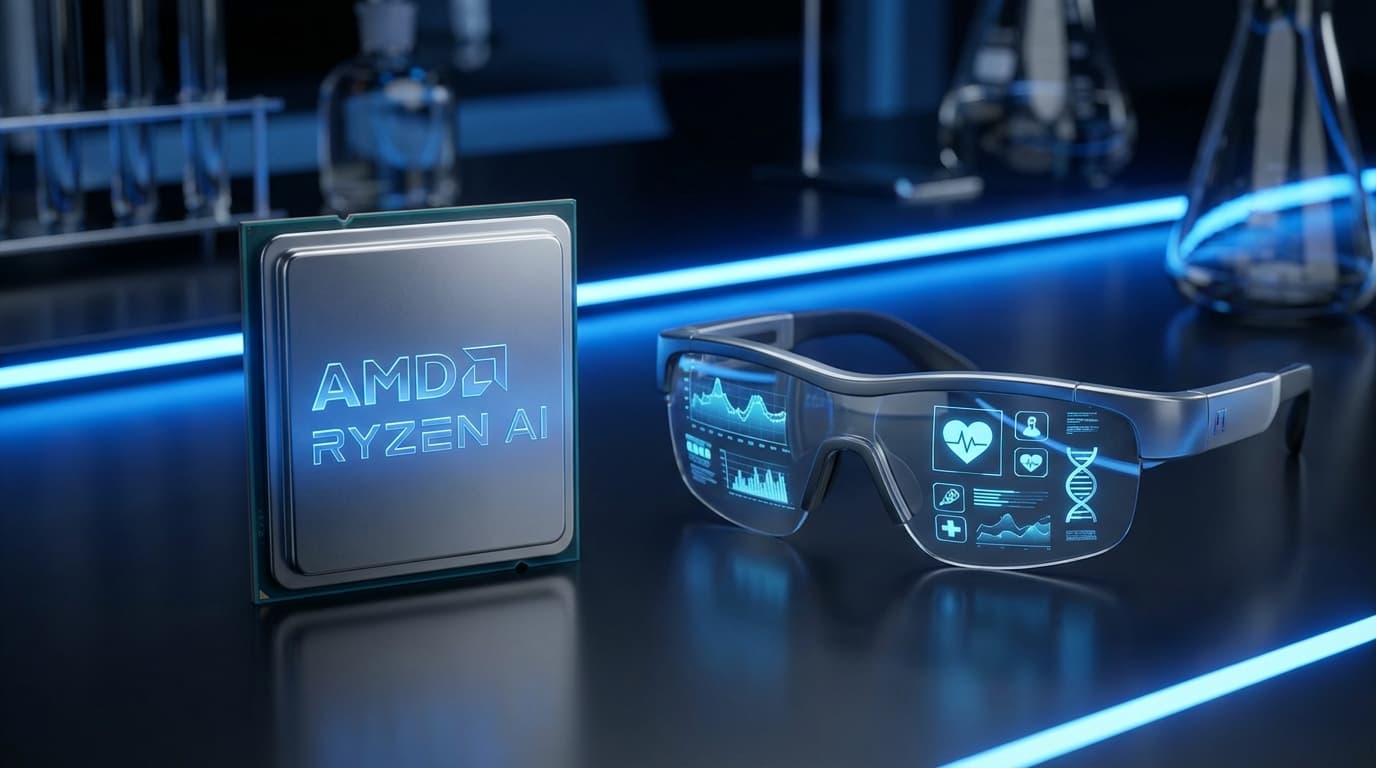
AMD has launched the Ryzen AI 400 series for desktop AM5 platforms, bringing dedicated NPUs to traditional PCs. Simultaneously, Qualcomm unveiled the Snapdragon Wear Elite, a 'wrist plus' chip designed to power high-end AI wearables and AR gadgets with localized processing capabilities.