Xbox Launches 'Return of Xbox' Strategy with Significant Game Pass Changes
Microsoft is rebranding its gaming division as 'Return of Xbox,' adjusting Game Pass pricing, and moving away from day-one access for major titles like Call of Duty.
Microsoft has launched its first voluntary retirement buyout program for U.S. employees, potentially impacting 7% of the workforce. Amidst executive turnover and restructuring, the company emphasizes compliance with ADEA and OWBPA requirements to ensure voluntary participation.
Microsoft is restructuring Xbox Game Pass by lowering subscription prices while ending 'day-one' access to new Call of Duty titles, opting to delay them by approximately one year.
Microsoft’s Copilot Studio is facing a critical indirect prompt injection vulnerability (CVE-2026-21520). Despite patching efforts, security researchers found data exfiltration remains possible, marking a significant shift in how AI-agent platform security is treated by the industry.
Microsoft is discontinuing its Surface Hub collaborative display series and canceling the Surface Hub 4, marking a strategic pivot in its hardware and enterprise collaboration portfolio.
Tech giants are integrating AI into consumer workflows, with Google introducing reusable 'Skills' in Chrome and Microsoft releasing a lower-cost, high-speed image model to secure its stake in the AI stack.
Microsoft has increased the prices of its Surface Pro 11 and Surface Laptop 7 by $500, citing the ongoing global RAM shortage. The starting price has shifted from $999 to $1,499.
Prominent open-source developers face account locks from Microsoft, disrupting critical software updates and raising concerns about developer reliance on major cloud providers.
Microsoft’s sudden lockouts of prominent open-source developers, including the makers of WireGuard and VeraCrypt, have halted critical software updates and exposed risks in the Windows supply chain.
Generative AI is mired in controversies over copyright and trust, highlighted by legal challenges against Suno and Microsoft Copilot's liability disclaimers. Tech giants' "entertainment-only" stance leaves users and creators vulnerable as courts debate whether AI training on existing works constitutes infringement.
Microsoft launched three in-house foundational AI models (transcription, voice generation, and image creation), marking a strategic pivot away from solely distributing external models toward core development, directly challenging OpenAI and Google for model dominance.
Microsoft has launched three proprietary AI models—MAI-Transcribe-1, MAI-Voice-1, and MAI-Image-2—directly competing with industry leaders like OpenAI and Google.
Microsoft launched three in-house AI models—MAI-Transcribe-1, MAI-Voice-1, and MAI-Image-2—signaling a shift to direct competition with OpenAI and Google.
Microsoft has launched three in-house foundational AI models—MAI-Transcribe-1, MAI-Voice-1, and MAI-Image-2—signaling a shift toward building its own AI infrastructure to compete directly with OpenAI and Google.
Microsoft has debuted three foundational AI models (MAI-Transcribe-1, MAI-Voice-1, and MAI-Image-2) built entirely in-house. This strategic move signals the tech giant's intention to compete directly with OpenAI and Google on infrastructure.
Microsoft has released three in-house foundational AI models (MAI-Transcribe-1, MAI-Voice-1, and MAI-Image-2), signaling a strategic pivot to compete directly with OpenAI and Google in model development.
Microsoft is responding to user feedback by committing to Windows 11 improvements, including more flexible update control and a reduction in AI bloat caused by excessive Copilot entry points.
In a major effort to reclaim user trust, Microsoft has announced significant changes to Windows 11, including the long-awaited return of a movable taskbar and the ability to pause system updates indefinitely. Led by Windows chief Pavan Davuluri, the initiative also involves rolling back excessive Copilot AI integrations to improve performance and reliability. This pivot represents a shift from forced feature adoption toward a user-centric design philosophy focused on autonomy and system stability.
Nothing CEO Carl Pei predicts the end of the smartphone app era, replaced by intent-aware AI agents. Supported by breakthroughs like MiniMax M2.7 and Microsoft Fabric IQ, AI will soon handle complex user tasks directly, transforming apps into background services and reshaping mobile hardware and software development.
The Agentic AI wave is sweeping through 2026, with Nvidia and Microsoft launching major platforms for autonomous agents. Andrej Karpathy has open-sourced 'autoresearch,' a tool designed to automate the scientific method using AI agents. Market data from Morgan Stanley suggests that 10-20% of commerce could be agent-driven by 2030, totaling nearly $385 billion. Meanwhile, security concerns have led Microsoft to warn about 'double agent' risks, and OpenAI to acquire security startup Promptfoo to fortify its agentic ecosystem.
Microsoft launched Copilot Cowork on March 9, 2026, an 'agentic' AI system that autonomously performs tasks across M365 apps. Built with support from Anthropic, this move highlights a shift toward autonomous AI agents, accompanied by new governance tools to prevent security risks like 'AI double agents.'
Microsoft has launched Copilot Cowork and Agent 365, pushing its AI suite into the 'Agentic AI' era. While 85% of firms aspire to use AI agents for end-to-end tasks, 76% are not operationally ready. Microsoft aims to bridge this gap with Agent 365, a $15/month governance tool designed to prevent AI agents from becoming security risks.
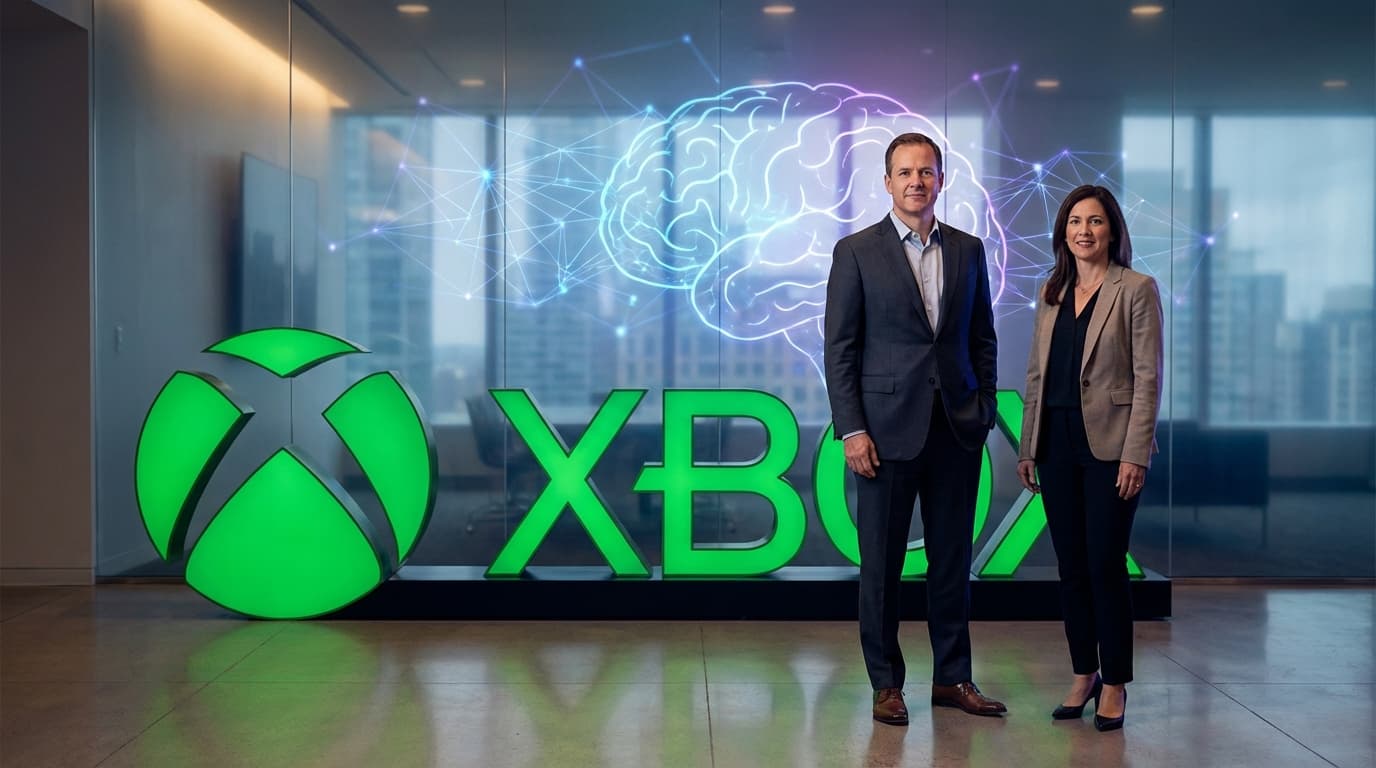
Microsoft Gaming CEO Phil Spencer and Xbox President Sarah Bond are stepping down in a massive shakeup. CoreAI lead Asha Sharma will take over, signaling an AI-first future for the Xbox ecosystem.