
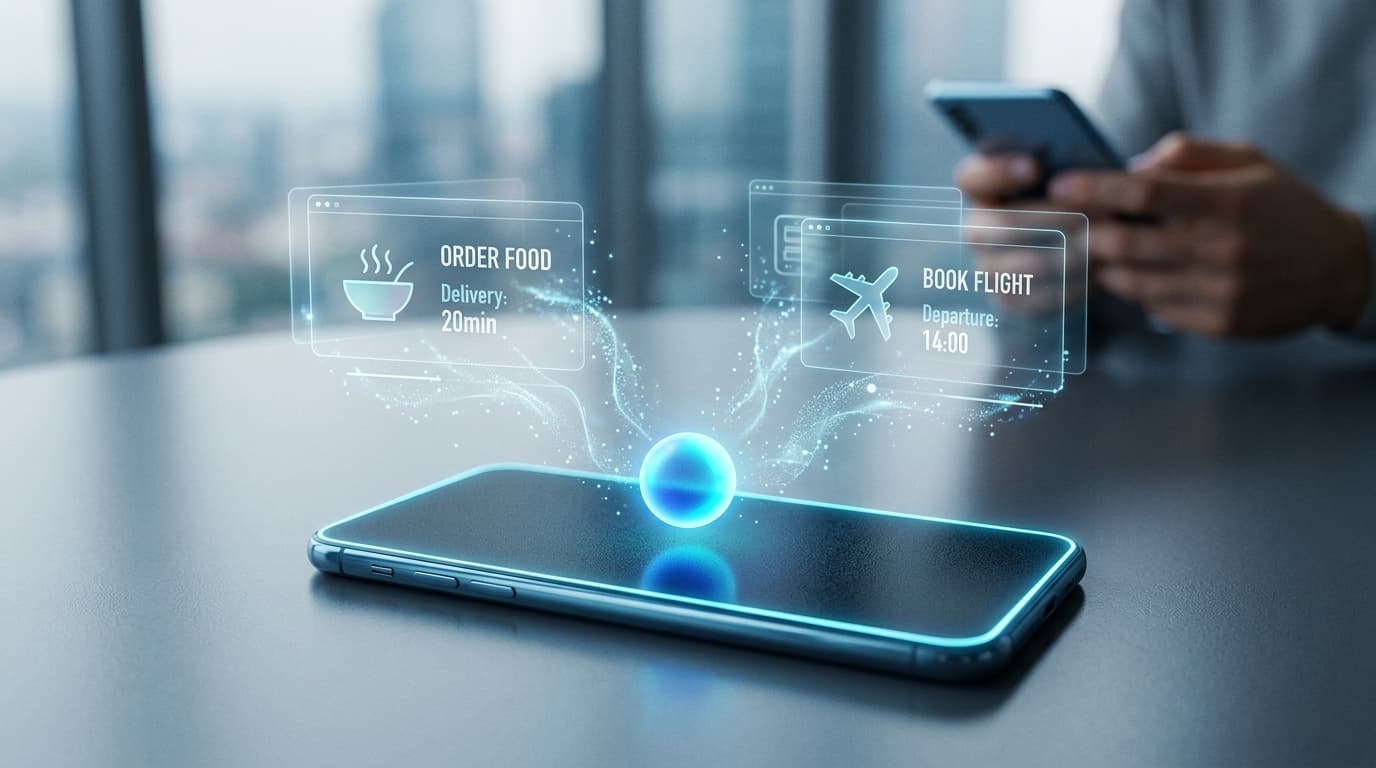
The Paradigm Shift: From Software to Intent
The smartphone ecosystem as we know it—dominated by a grid of colorful "apps"—is on the verge of obsolescence. Nothing CEO Carl Pei recently predicted that the future of mobile computing will be defined not by standalone applications, but by intent-aware "AI Agents." This transition marks a fundamental evolution from a software-centric interface to an intent-centric operational logic.
As reported by TechCrunch, Pei argues that modern smartphone usage is too fragmented. Users must switch between dozens of apps to complete a single complex task—such as ordering a meal, booking a ride, and processing a payment. In Pei’s vision, the future smartphone will no longer feature a home screen cluttered with icons. Instead, it will offer a unified, intelligent interface where users simply state their intent, and AI agents orchestrate the necessary services in the background. This aligns with Nothing’s developmental direction for its next-generation OS, which seeks to tear down the walls between siloed applications.
MiniMax M2.7: The Rise of Self-Evolving Agents
Providing the technological muscle for this vision is MiniMax, a rising AI startup that recently released its proprietary model, M2.7. According to VentureBeat, M2.7 is a "self-evolving" model capable of automating 30% to 50% of the reinforcement learning research workflow. This implies that future AI agents won’t just follow hard-coded instructions; they will possess the capability to optimize their own behavior based on environmental feedback and user interaction.
This technical leap is crucial for overcoming the "hallucination" and reliability issues that currently plague AI assistants. To further address these challenges, Microsoft has introduced Fabric IQ, a tool designed to ensure data alignment for enterprise-grade agents. The current pain point in multi-agent systems is that agents built on different platforms often operate from different versions of "reality." Fabric IQ establishes a shared factual foundation, allowing agents to make consistent decisions. As agents become more reliable and self-correcting, the need for a dedicated app for every function rapidly diminishes.
Global Trends: The Agentic Search Surge
Global interest in AI agents is reflected in real-time search data. Google Trends indicates that in Taiwan, the search interest for "AI" stands at a significant 74. Popular queries include "reclaim ai," "thetawave ai," and discussions surrounding the "AI Expo Taiwan 2026." This suggests that Taiwanese users and developers are leading the exploration into AI-driven productivity and agentic workflows. In California, where search interest is at 46, the focus is squarely on "AI Agents" and the "Smartphone replacement" narrative.
Even retail giants are shifting their strategies. Walmart is reportedly restructuring its partnership with OpenAI, moving away from standalone features toward embedding its "Sparky" chatbot directly into platforms like ChatGPT and Google Gemini. This move confirms that the future of digital service is not contained within an app, but is an omnipresent service provided by agents across various canvases.
The Sunset of the App Economy
For app developers, this shift represents both a threat and a massive opportunity. The traditional model of "eyeballs and engagement" within a specific app will likely fail as users stop opening dedicated applications. Instead, the new gold rush will be in creating services that are easily "callable" by AI agent frameworks. Success in the post-app era will belong to those whose APIs are the most seamless to integrate into systems like Apple Intelligence or Google Gemini. Pei suggests this will also lead to radical hardware changes, with physical buttons giving way to more advanced voice and gesture-based interaction systems.
Future Outlook: From Tools to Partners
By late 2026, we expect to see the first wave of truly "app-less" mobile operating systems hit the mass market. These devices will not require users to learn how to navigate software; instead, the software will learn how to serve the user. When a phone truly understands a user’s habits, preferences, and context, it transcends its role as a communication tool and becomes a genuine digital companion. As Carl Pei aptly put it: "The best technology is the one that disappears." This revolution by AI agents is finally bringing us to a world where technology serves humanity, rather than forcing humans to be slaves to the software.