

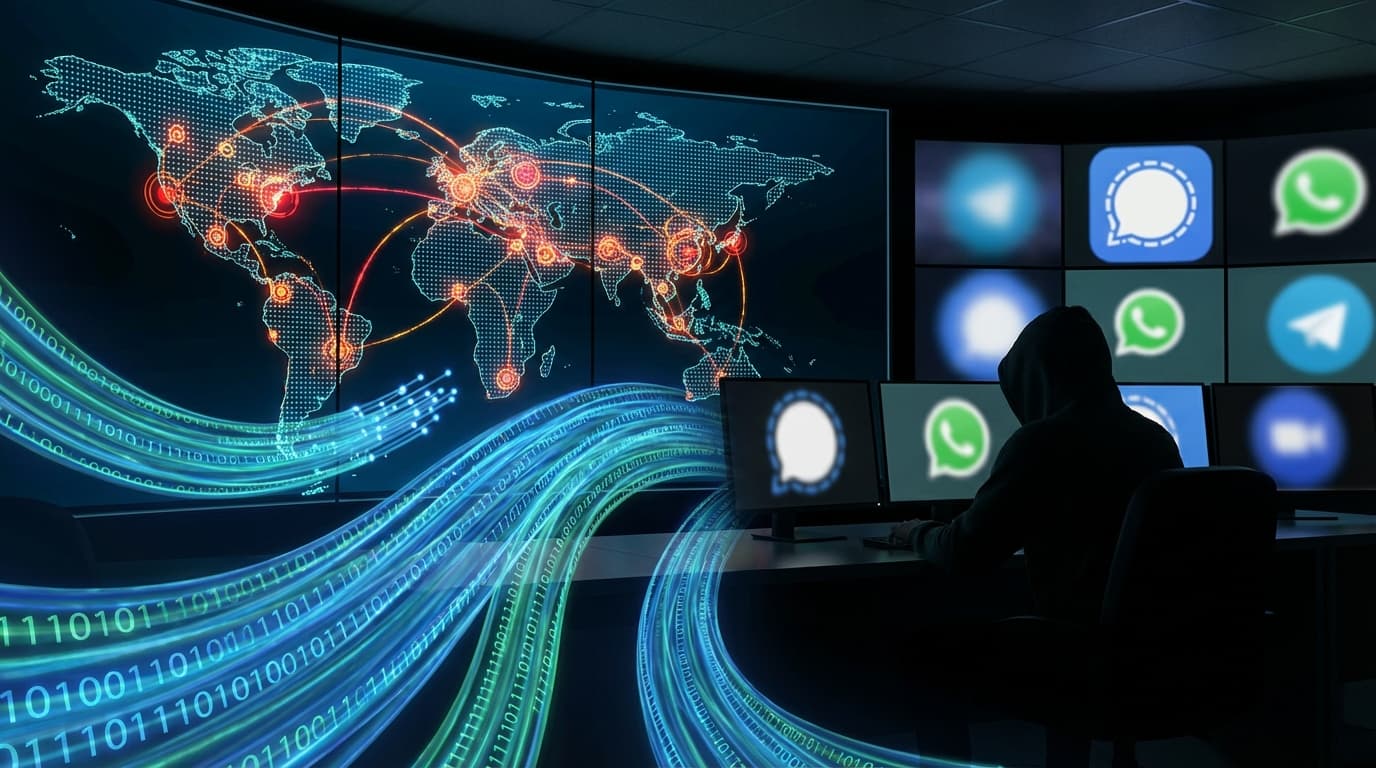
The Reach of 'Salt Typhoon': Breaching the Backbone of Global Telecoms
On March 9, 2026, cybersecurity experts and government agencies confirmed the widespread impact of a massive hacking campaign orchestrated by the China-linked group known as "Salt Typhoon." As reported by TechCrunch, this group has successfully infiltrated the internal networks of some of the world’s largest telecommunications companies. Unlike typical data breaches focused on financial gain, Salt Typhoon’s objective appears to be the establishment of long-term surveillance capabilities within global communications infrastructure, allowing them to intercept sensitive traffic and potentially disrupt critical internet services across multiple continents.
Russian Campaigns Target Secure Messaging: Signal and WhatsApp Under Fire
Simultaneously, Dutch intelligence services have issued a stark warning regarding Russian state-sponsored cyber activities. According to reports from March 9, Russian hackers are currently executing a large-scale global campaign specifically targeting users of encrypted messaging platforms Signal and WhatsApp. While these apps utilize end-to-end encryption, the attackers are focusing on exploiting vulnerabilities within the device hardware or utilizing sophisticated phishing techniques to gain access to account data. This campaign is primarily directed at government officials, journalists, and activists, threatening the very tools designed to provide secure and private communication.
Technical Tactics: Infrastructure Hijacking and Device Exploitation
Technical analysis of these dual threats reveals a multi-layered approach to modern cyber warfare. Salt Typhoon focuses on the "backbone" of the internet, exploiting zero-day vulnerabilities in high-capacity routers and telecom switches to monitor data at the source. In contrast, the Russian operations are more focused on the "endpoint," leveraging social engineering and mobile-specific malware to bypass app-level security. Adding to the complexity, evidence has surfaced that a powerful iPhone-hacking toolkit, potentially of U.S. origin (codenamed Coruna), is now being circulated among foreign intelligence agencies and criminal organizations, significantly raising the threat level for high-value individual targets.
Global Impact and Public Anxiety Trends
The convergence of these cyberattacks has triggered a wave of concern among the public and policymakers. Google Trends data indicates a significant surge in search queries related to "Signal security breach" and "telecom hacking" in late February and early March 2026, particularly in Europe and the United States. In response, several nations are reconsidering their reliance on international telecom vendors and are pushing for stricter domestic control over communication networks. The economic impact is also notable, as companies are forced to increase their cybersecurity budgets to combat these state-level actors.
Future Outlook: A New Frontier for Digital Sovereignty
As we move further into 2026, the battle for digital security is transitioning into a permanent state of "hybrid warfare." Governments are expected to introduce more aggressive regulations regarding telecom supply chain transparency and the protection of encrypted communication. The ongoing fight against groups like Salt Typhoon underscores the necessity for a unified global response to state-sponsored hacking. For individuals, the era of passive trust in encrypted apps is over; maintaining proactive security hygiene, such as frequent software updates and physical hardware security, has become essential in a world where the infrastructure itself may be compromised.