Lovable and Google Cloud Sign Multiyear AI Expansion Agreement
AI startup Lovable has signed a multiyear expansion deal with Google Cloud to scale infrastructure usage fivefold and increase access to Anthropic's Claude.
Pennsylvania Governor Shapiro has introduced a "Bring Your Own Energy" strategy for AI data centers to combat grid strain caused by high energy demands, making the state a model for sustainability regulation.
SpaceX’s IPO filing discloses a $15 billion compute deal between xAI and Anthropic, where Anthropic will pay $1.25 billion per month. Meanwhile, xAI plans a $2.8 billion investment in data center infrastructure to meet compute demand.
Massive demand from AI data centers is straining the U.S. power grid, driving up prices and prompting automakers like Ford and GM to shift focus to energy storage solutions.
Rapid AI data center expansion is placing extreme strain on US power grids, leading to higher electricity costs and triggering significant public pushback from local communities.
Cerebras Systems debuted on the Nasdaq with a market valuation briefly reaching $100 billion, signaling the move of specialized AI chip architectures into large-scale commercial success and market competition.
Cerebras Systems saw its stock nearly double on its Nasdaq debut, reaching a $100 billion market valuation and marking a significant milestone for AI hardware infrastructure in 2026.
Cerebras Systems made a strong debut on the Nasdaq, with its stock nearly doubling to push its market valuation past $100 billion, signaling robust investor confidence in its specialized AI processing hardware.
A Gallup survey shows that 70 percent of Americans oppose local AI data center construction, with many finding these facilities more objectionable than nuclear plants, posing a threat to future AI infrastructure expansion.
Anthropic has formed a compute partnership with SpaceX, allowing it to increase usage limits for Claude Code. This deal occurs amid reports of SpaceX’s plans to invest $119 billion in a semiconductor facility, highlighting a trend toward vertical integration in AI hardware.
GitHub is transitioning to a usage-based billing model for Copilot users, citing the inability to continue absorbing the escalating inference costs associated with high-frequency AI usage.
The expansion of AI data centers is hitting bottlenecks due to power infrastructure issues, community resistance to gas plants, and tariff-related construction delays.
ScaleOps has raised $130 million in Series C funding to automate Kubernetes infrastructure management, helping AI companies address GPU shortages and high cloud computing costs.
U.S. senators are pushing for mandatory reporting of electricity usage by data centers to address the strain on power grids and energy security concerns posed by rapidly expanding AI infrastructure.
Amazon's proprietary Trainium chips are gaining significant industry traction, reportedly securing adoption from major players including Anthropic, OpenAI, and Apple, marking Amazon's strategic expansion in AI infrastructure.
Nvidia's networking division reached $11 billion in quarterly revenue, solidifying its position as the company's second-largest pillar. Leveraging InfiniBand and Spectrum-X, Nvidia has transformed individual GPUs into integrated data center platforms, redefining the AI infrastructure market.
Meta is reportedly planning a massive 20% workforce reduction, affecting approximately 15,800 employees, to redirect resources toward its ballooning AI infrastructure and data center costs. This move reflects a broader industry trend where Big Tech companies are sacrificing headcount to fund the high-stakes AI arms race, as evidenced by sustained high search interest for AI topics globally.
Future tech infrastructure is undergoing three major shifts: glass substrates will boost AI chip compute density, 6G networks will integrate sensing capabilities with AI, and quantum-ready platforms are helping enterprises prepare for the next computing paradigm. These technologies will reshape the global landscape between 2026 and 2030.
British AI infrastructure startup Nscale has raised $2 billion at a $14.6 billion valuation, with backing from Nvidia. High-profile figures Sheryl Sandberg and Nick Clegg are joining the board. This massive investment comes as the venture capital industry debates whether AI will eventually automate investment decisions, highlighting the strategic value of hardware layers.
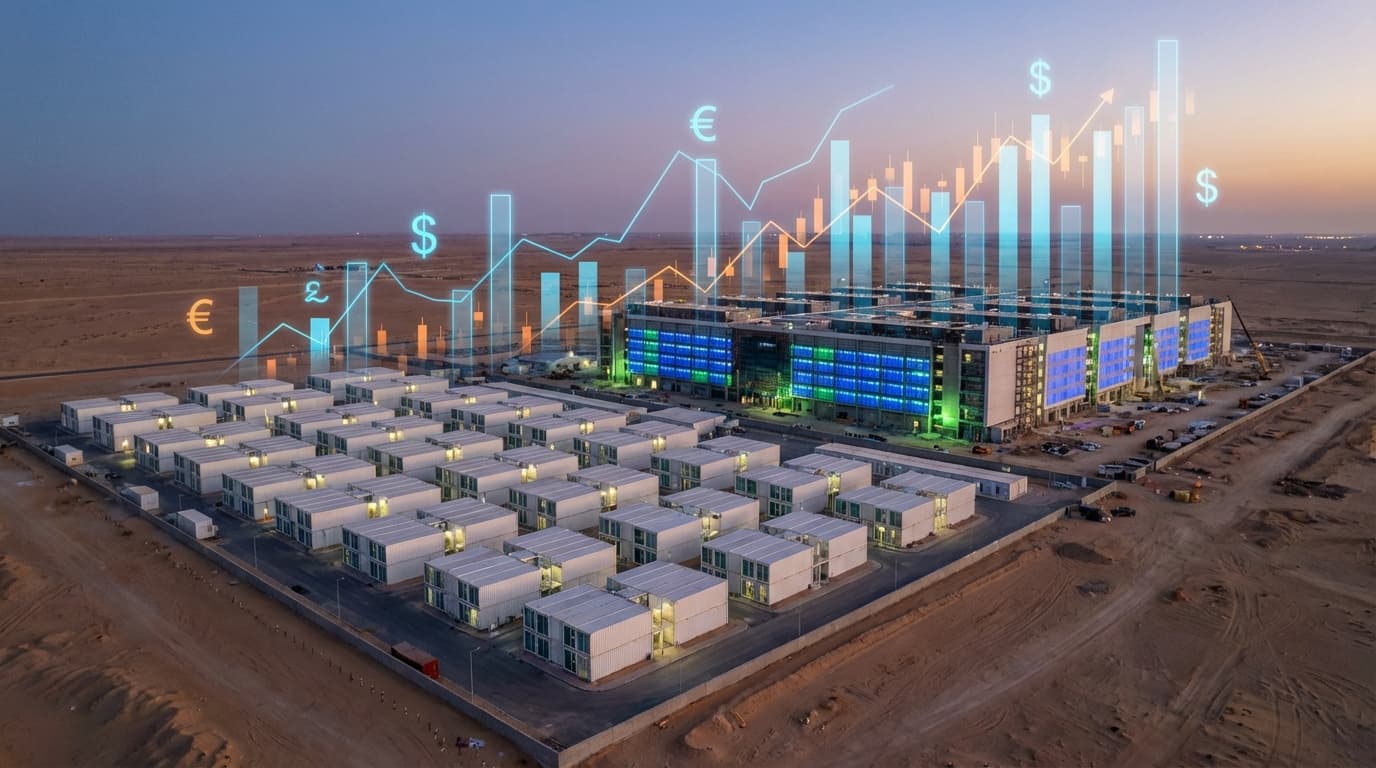
The AI boom is driving a surge in physical infrastructure, leading developers to use remote 'man camps' for data center construction workers. Simultaneously, the venture capital industry is facing disruption as AI agents begin to automate investment decisions traditionally based on human intuition. These shifts mark AI's transition into a heavy industrial and automated financial force.
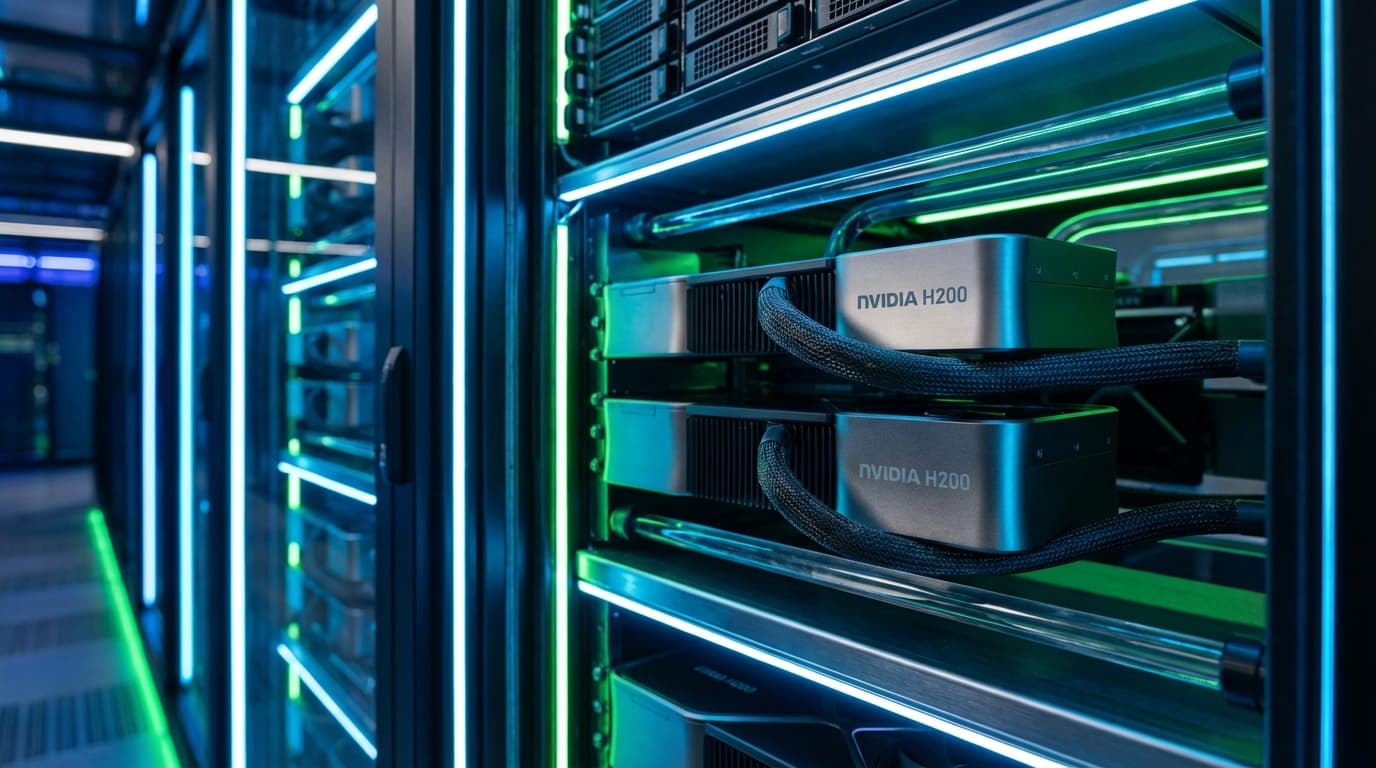
NVIDIA's H200 GPU has reached a mass deployment milestone across global cloud providers. CEO Jensen Huang frames this as the dawn of the AI industrial revolution, as the H200's HBM3e memory nearly doubles inference speeds for LLMs, solidifying NVIDIA's moat and boosting the Taiwan-based hardware supply chain.