
The Modular Renaissance: Lenovo’s ThinkBook Extensibility
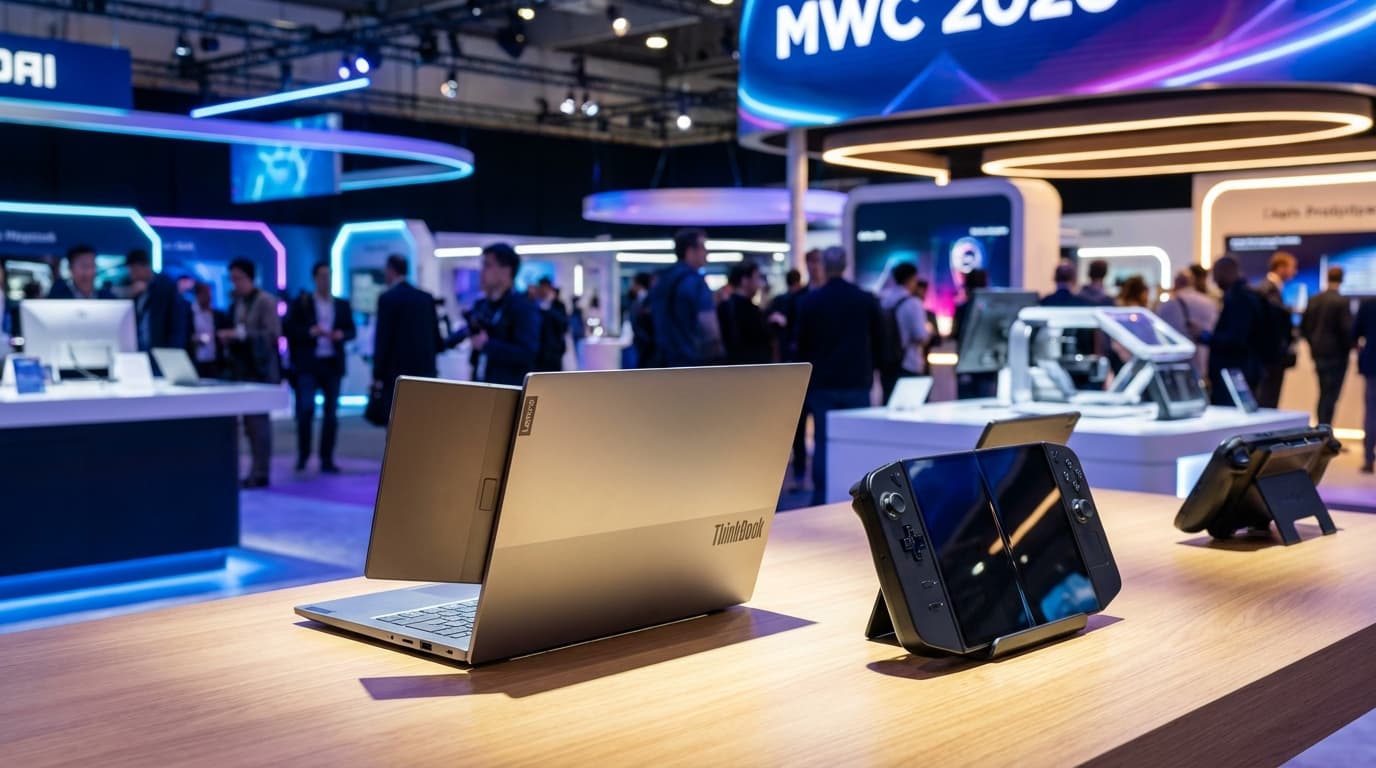
At the Mobile World Congress (MWC) 2026 in Barcelona, Lenovo stole the spotlight by challenging the trend of sealed-shut devices. The company unveiled the "ThinkBook Modular AI PC Concept," a 14-inch laptop that prioritizes customization and longevity. According to The Verge (2026), the device features plug-and-play interchangeable ports similar to Framework laptops, but with a twist: a second 14-inch display that magnetically attaches to the rear of the lid, effectively turning a standard laptop into a dual-screen productivity hub on the fly.
This design signals a shift in consumer tech toward sustainable hardware that adapts to the user's workflow rather than forcing the user to adapt to the machine's limitations. The modular ports allow users to swap out legacy connectors for high-speed AI accelerators or specialized professional interfaces without replacing the entire unit.
Foldable Gaming: The Legion Go Fold
Lenovo also redefined the portable gaming market with its Legion Go Fold Concept. This Windows-based handheld features a flexible POLED display and detachable controllers. As reported by The Verge (2026), the device can be used as a traditional large-screen handheld or folded into a "clamshell" mode, utilizing a folio case to transform it into a functional ultra-mini laptop. This versatility addresses the primary complaint about gaming handhelds: their inability to function effectively as general-purpose computers during travel.
Robotic Integration: Honor’s Moving Camera AI
Chinese tech giant Honor demonstrated a more futuristic approach with its "Robot Phone." The device features a movable camera arm that allows the lens to track subjects automatically or even "dance" to music. According to TechCrunch (2026), this robotic companion is slated for a late 2026 release. While the ability to dance is a flashy marketing feature, the underlying AI-driven environmental awareness and micro-actuators could lead to more practical applications in autonomous videography and smart home control.
Battery Breakthroughs: The 7,000 mAh Milestone
Hardware form is nothing without endurance. Honor also previewed new battery technology that could soon push foldable device capacities past the 7,000 mAh mark. Their current flagship, the Magic V6, already features a 6,600 mAh battery, a significant feat for a slim foldable. As reported by TechCrunch (2026), these advancements in silicon-carbon battery density are critical for supporting the high power demands of modern on-device AI models.
Future Outlook: Hardware as a Living Entity
MWC 2026 suggests that the era of the "generic black rectangle" is coming to an end. Manufacturers are no longer content with iterative spec bumps; they are experimenting with radical new physical forms. As AI transitions from a tool we use to a "prosthetic" we carry, the physical interface must become more dynamic, modular, and responsive to the physical world. Lenovo and Honor are leading the charge into a future where your PC is not just a tool, but a reconfigurable companion.