

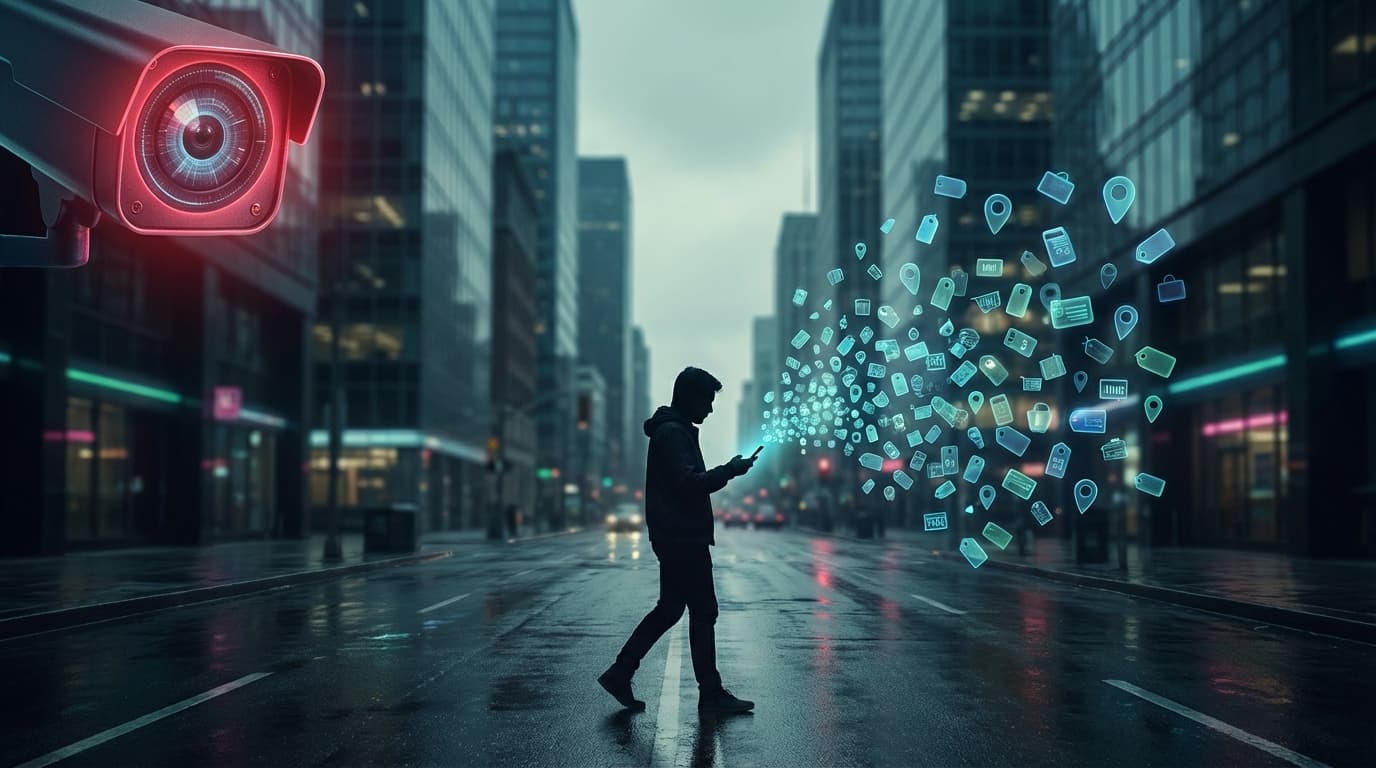
The Digital Backdoor: How the Government Buys Your Location
In a startling revelation from Wired (2026), the U.S. Customs and Border Protection (CBP) is reportedly utilizing commercial online advertising data to track the precise locations of individuals' mobile phones. This practice bypasses traditional judicial oversight by purchasing information from private data brokers rather than seeking a court-ordered warrant. The data, originally harvested for hyper-targeted marketing, contains granular geographic timestamps that allow law enforcement to reconstruct a person's movements with alarming accuracy.
Legal experts argue this maneuver exploits a significant loophole in current privacy laws. While the landmark 2018 ruling in Carpenter v. United States established that warrants are generally required for cell-site location information (CSLI), agencies contend that purchasing data from private markets does not technically constitute a 'search' under the Fourth Amendment. This controversy has breathed new life into the 'Fourth Amendment Is Not For Sale Act,' a legislative push aimed at banning the government from buying its way around constitutional protections.
Ring and the Facial Recognition Trap
Simultaneously, Amazon-owned Ring is facing renewed scrutiny over its use of facial recognition technology. According to TechCrunch (2026), Ring founder Jamie Siminoff’s recent attempts to calm public fears regarding biometric surveillance have largely backfired. The core of the concern lies in the potential for these consumer devices to serve as a decentralized surveillance network for local police departments, often without the explicit consent or knowledge of the subjects being filmed.
State-level regulations are currently the primary battleground for these issues. Illinois’ Biometric Information Privacy Act (BIPA) remains the most formidable legal barrier against the unchecked deployment of facial recognition. Without a cohesive federal standard, companies like Ring operate in a legal gray area, balancing product innovation against a growing public backlash toward 'digital snitching' and the normalization of neighborhood surveillance.
Global Conflict: Security Cameras as Geopolitical Targets
The threat to digital privacy is not limited to domestic government activities. A security report from Ars Technica (2026) highlights a disturbing trend: state-sponsored hackers from Iran to Ukraine are increasingly targeting consumer-grade security cameras. Iranian state actors have been identified attempting to hijack home cameras to gather real-time intelligence on ground-level movements. These devices, designed for peace of mind, have effectively become vulnerable nodes in a global geopolitical chess game.
This widespread vulnerability underscores the fragility of the modern smart home. Even services marketed as ultra-secure are not immune; recent disclosures showed that Proton assisted the FBI in identifying a protester under specific legal mandates. For the average consumer, the promise of absolute privacy is increasingly becoming an illusion in an era of interconnected and perpetually online hardware.
The Path Forward: Reclaiming Digital Rights
The coming months will likely see a surge in the adoption of privacy-enhancing technologies (PETs), such as differential privacy and on-device processing, as consumers seek to shield themselves from both corporate and state eyes. The rise of 'Privacy as a Service' (PaaS) models, offering to scramble advertising IDs or block unauthorized biometric scans, reflects a growing market for digital autonomy.
However, the ultimate resolution lies in the hands of legislators. If the 'Fourth Amendment Is Not For Sale Act' passes, it would represent a historic victory for digital rights, forcing law enforcement back into the framework of judicial transparency. As we move further into 2026, the global community is watching these legal developments closely, as they will define the boundaries of human privacy in the age of ubiquitous data.