
Tech Frontline Jason·
Intel Refreshes Mainstream Core CPUs with New Silicon
Intel is updating its non-Ultra Core CPU lines with new silicon, bringing latest technical advancements to mainstream processors for the first time in recent years.
Jason·Intel is updating its non-Ultra Core CPU lines with new silicon, bringing latest technical advancements to mainstream processors for the first time in recent years.
Jason·
Linux kernel developers have officially dropped support for the legacy Intel 486 architecture, aiming to clear technical debt and focus resources on modern high-performance hardware.
Jason·
Intel has partnered with Elon Musk’s Terafab project to help build an AI chip factory in Texas, signaling the vertical integration of the automotive and semiconductor industries to meet AI computing demands.
Jason·
Intel has partnered with Elon Musk’s Terafab project to co-design and build an AI chip factory. This move highlights Intel’s strategic pivot toward advanced packaging to address AI performance bottlenecks while securing chip supply for Musk’s AI ecosystem.
Jason·
Intel is prioritizing advanced chip packaging as a central strategy to capture market value in the AI hardware boom, aiming to enhance computational performance for AI workloads.
Jason·
Advanced chip packaging has emerged as the critical bottleneck for AI computing, surpassing the importance of traditional transistor scaling. Intel’s strategic pivot to offer integrated design, manufacturing, and packaging services highlights the industry's shift toward high-bandwidth, heterogeneous chip architectures to lower AI computing costs.
Jason·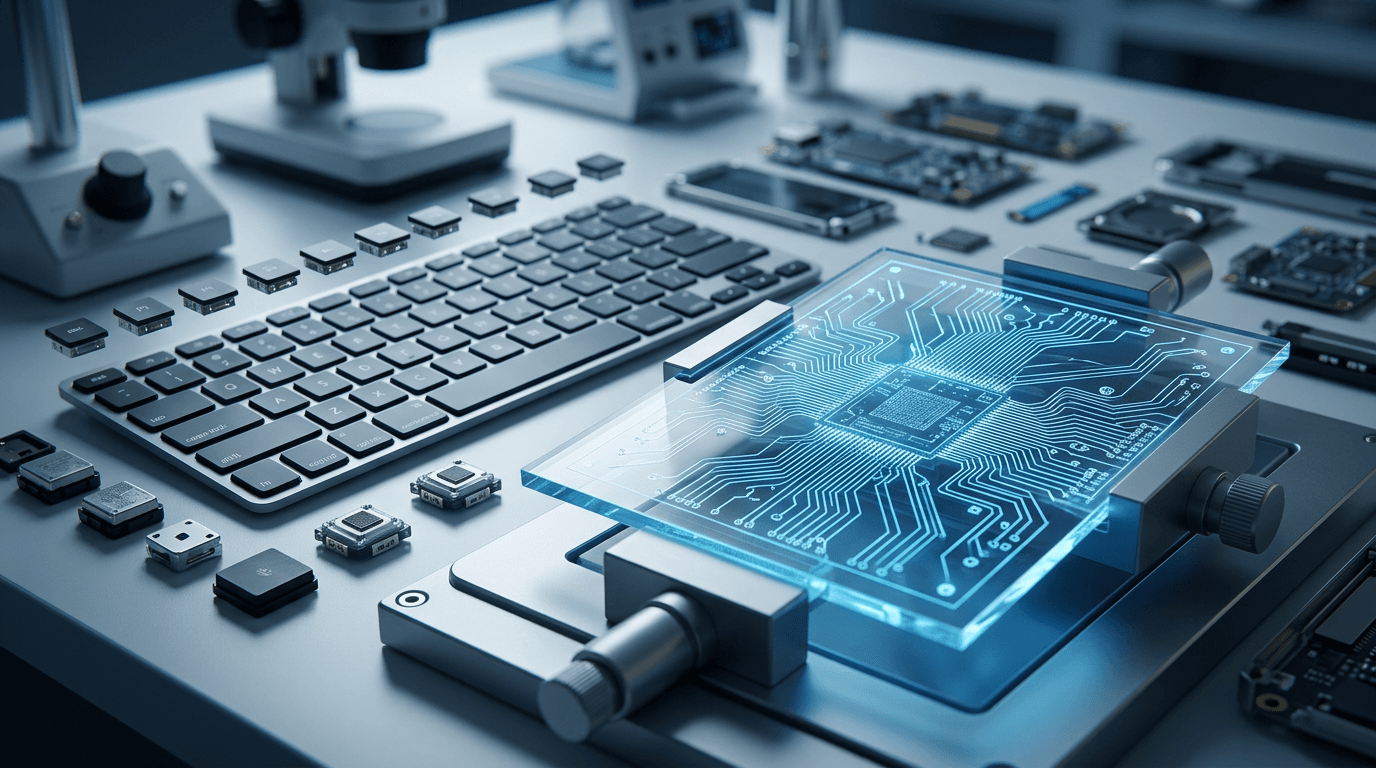
The semiconductor industry is shifting to glass substrates, with Absolics planning commercial production to power next-gen AI chips. Apple has introduced the MacBook Neo, its most modular laptop yet, while Intel launched its fastest gaming processors. Research from 2026 highlights that 'continuous batching' software combined with these hardware gains can boost efficiency by 20%.
Jason·