

The Digital Frontlines: GPS and Network Collapse
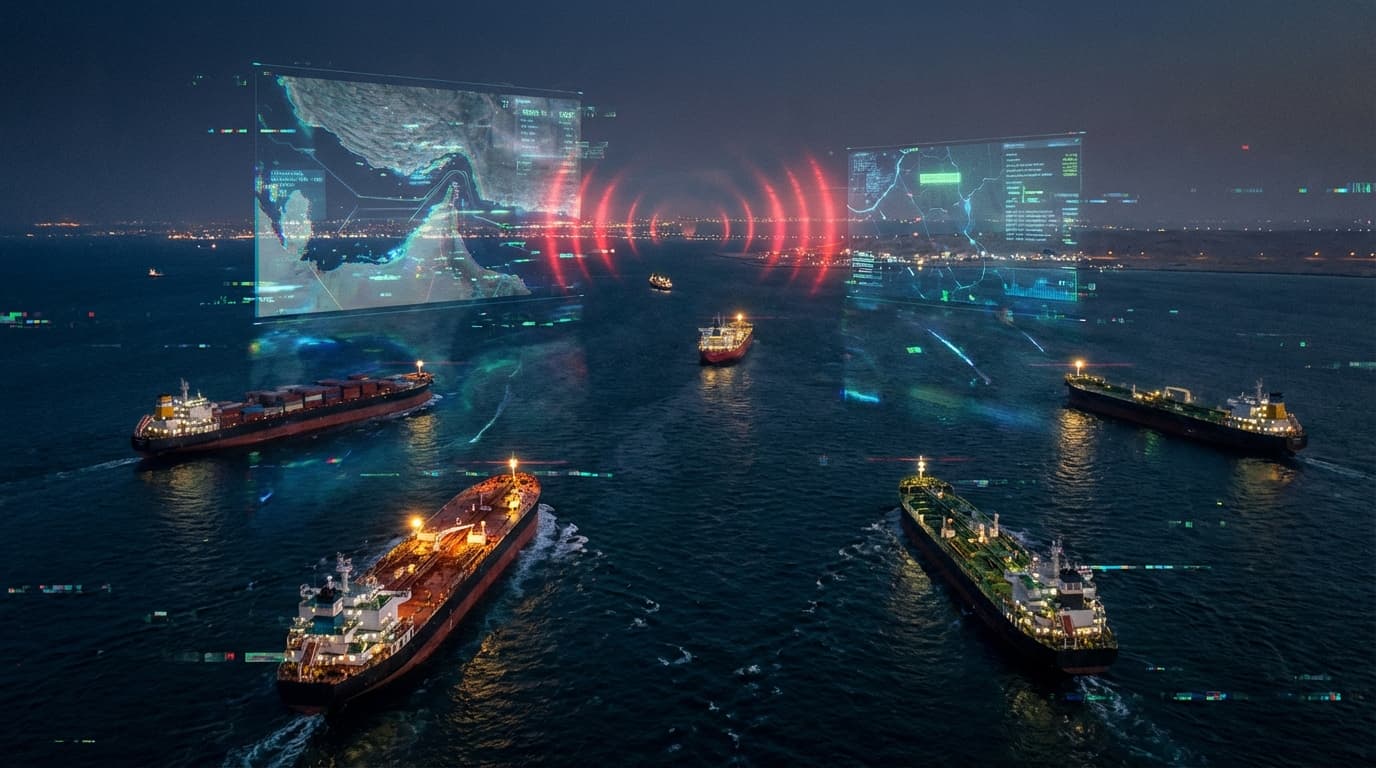
As military conflicts in the Middle East escalated sharply in early 2026, the flames of war have officially spread to the core of global technical infrastructure. According to a recent analysis by Wired (2026), attacks on Global Navigation Satellite Systems (GNSS) have impacted over 1,100 ships in Middle Eastern waters since the U.S. and Israel launched operations against Iran on February 28. These incidents go beyond simple signal jamming; they involve sophisticated "GPS spoofing," causing navigation systems to display incorrect coordinates and posing a severe threat to the security of critical global shipping lanes.
The scope of this technical conflict extends far beyond military boundaries. In the realm of logistics and supply chains, BBC Tech (2026) reported that Amazon drones and facility damage occurred at three locations in the UAE and Bahrain. This highlights the vulnerability of e-commerce and global distribution networks even on the fringes of active conflict. It marks the dawn of a new era where infrastructure is no longer defined just by power and water, but by the digital and automated chains that sustain global commerce.
Digital Black Holes: Iran's Information Cutoff Tactics
Beyond the physical destruction of facilities, the throttling of information flow has become the most direct weapon used by authorities. Following strikes that killed senior Iranian officials, the Tehran government implemented a total nationwide internet blackout. This "digital black hole" tactic has forced local journalists and citizens to turn to extreme measures. Wired (2026) reports that with fiber-optic networks paralyzed, reporters are now relying on encrypted satellite links, peer-to-peer encrypted apps, and the risky smuggling of visual footage to maintain a flow of information to the outside world.
This blackout affects more than just news dissemination; it has triggered significant social unrest. Reports indicate that users in Tehran received mass notifications via popular prayer apps just before the shutdown, suggesting that hacktivist groups may have compromised the local software ecosystem to use it as a psychological warfare tool. Simultaneously, as Iran closes its digital doors, global prediction markets like Kalshi have seen fierce disputes over contracts regarding the status of the Iranian Supreme Leader, with traders expressing outrage over the lack of transparent data.
Expert Warnings: When GPS Becomes a Weapon
Cybersecurity experts warn that the attacks targeting 1,100 ships are not isolated incidents but a large-scale demonstration of electronic warfare capabilities. When navigation signals are spoofed, vessels may unknowingly drift into hostile waters or suffer collisions. While traditional maritime training still includes manual techniques like celestial navigation, the modern reliance on GNSS has created a dangerous single point of failure for automated shipping operations.
Academic research published in Sensors (2026) notes that while denoising and verification algorithms for GNSS signals are advancing—using hybrid optimization models to identify anomalies—civilian vessels remain ill-equipped to handle state-level spoofing. This conflict is forcing maritime giants to re-evaluate their investments in backup navigation systems as a matter of urgent necessity.
Market Impact and Future Outlook
Geopolitical instability has rapidly translated into energy and logistics costs. Google Trends data shows that global search interest for the "Strait of Hormuz" reached a score of 95 in California and 67 in Taiwan, reflecting widespread panic over potential oil supply chain disruptions. With oil prices surging, the resulting increase in logistics costs will eventually be passed on to global consumers, further fueling inflationary pressures.
Looking ahead, the Middle East conflict illustrates the terrifying reality of intertwined technology and infrastructure in modern warfare. This is not just a traditional territorial dispute; it is a battle for navigational sovereignty, data access, and control over automated assets. Global tech companies must face the reality that their facilities are located in high-risk zones and accelerate strategic adjustments toward decentralized or hardened infrastructure in the coming years.
References
[src-1] Wired (2026). Attacks on GPS Spike Amid US and Israeli War on Iran. [src-2] BBC Tech (2026). Amazon says drones damaged three facilities in UAE and Bahrain. [src-3] Wired (2026). How Journalists Are Reporting From Iran With No Internet. [src-4] Sensors (Basel, Switzerland). GVMD-NLM: A Hybrid Denoising Method for GNSS Buoy Elevation Time Series Using Optimized VMD and Non-Local Means Filtering. (2026).