
Helium Leak Grounds Artemis II: NASA Faces Critical SLS Repairs Ahead of 2026 Lunar Mission
Executive Summary: A Setback in the Race to the Moon
NASA’s ambitious Artemis II mission, designed to send four astronauts on a historic ten-day journey around the Moon, has encountered yet another technical hurdle. On February 23, 2026, mission controllers announced that a critical failure in the helium flow system of the Space Launch System (SLS) rocket has necessitated a delay of at least one month Wired (2026). Originally targeted for March 6, the launch is now tentatively scheduled for April 2026. This delay underscores the immense technical challenges of human deep-space exploration and adds pressure to a timeline that is already being closely scrutinized by both Congress and international competitors.
Technical Analysis: The Helium Flow Failure
The Space Launch System (SLS), the most powerful rocket ever built by NASA, relies on a complex series of pneumatic systems to manage fuel and oxidize pressures. During recent ground testing, engineers identified an anomaly in the helium flow used for the SLS Core Stage.
Helium is essential in liquid-fueled rockets like the SLS for several reasons:
- Tank Pressurization: As liquid hydrogen and liquid oxygen are consumed, helium is pumped into the tanks to maintain structural integrity and ensure consistent fuel flow to the RS-25 engines.
- Valve Actuation: Many of the rocket's valves are pneumatically operated using helium.
- Purging: Helium is used to purge fuel lines to prevent hazardous mixtures or icing.
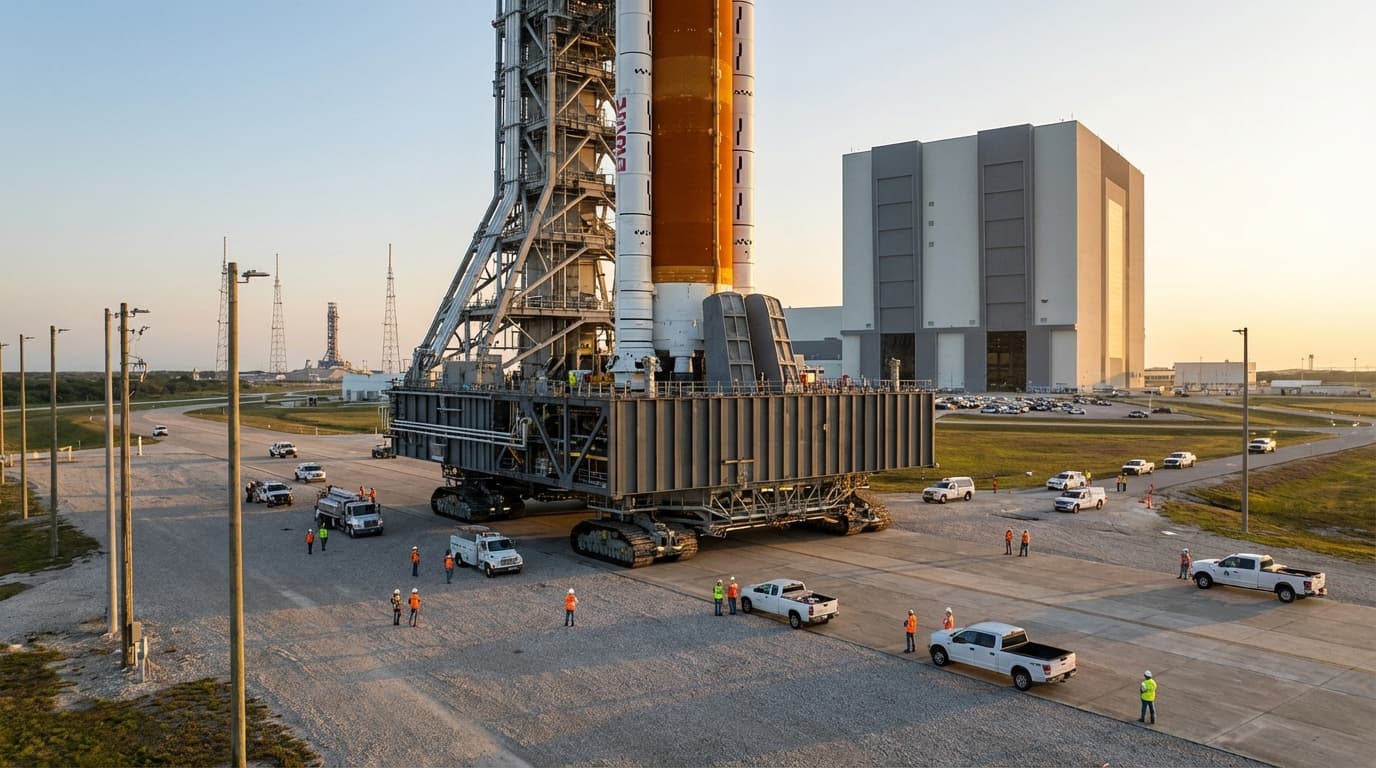
According to Ars Technica, the specific failure involves a component within the interstage section of the rocket that cannot be accessed while the stack is on the mobile launcher platform at the launch pad Ars Technica (2026). Consequently, NASA must "roll back" the 322-foot-tall rocket from Launch Pad 39B to the Vehicle Assembly Building (VAB). This transportation process alone takes approximately 8-12 hours and requires specialized equipment, effectively pausing all launch preparations for weeks.
Industry Impact: The Cost of Delays
Every day the SLS remains on the ground costs taxpayers millions. Estimates for the Artemis program's operational costs vary, but NASA’s Inspector General has previously warned that the current cost-plus contracting model for the SLS makes delays particularly expensive.
This latest setback also ripples through the broader aerospace industry. The European Space Agency (ESA), which provided the Service Module for the Orion spacecraft, and private contractors like Boeing and Northrop Grumman, must now adjust their support schedules. Furthermore, the delay gives additional breathing room to competitors like SpaceX’s Starship, which NASA plans to use as the Human Landing System (HLS) for Artemis III. If Starship achieves its milestones while SLS continues to struggle with reliability, the long-term political viability of the SLS program may face renewed questioning.
Environmental and Global Context: The Pollution Dilemma
While the focus remains on technical readiness, the environmental impact of frequent heavy-lift launches is coming under increased scrutiny. A study released this week highlights how rocket launches, particularly those using solid rocket boosters (like the SLS), contribute to atmospheric pollution in ways that were previously underestimated Ars Technica (2026). The study suggests that as the frequency of global launches increases, the "atmospheric commons" risk becoming an industrial waste dumping ground.
Looking Ahead: The Path to April
NASA Administrator Bill Nelson emphasized that "we do not launch until it is right," a mantra that has defined the agency since the Challenger and Columbia disasters. The immediate focus for the ground crew at Kennedy Space Center is:
- Rollback: Safely transporting the SLS back to the VAB.
- Remediation: Replacing the faulty helium valves or lines identified during testing.
- Re-testing: Conducting full system checkouts in the controlled environment of the VAB.
- Rescheduling: Finalizing the launch window for April, which must account for lunar alignment and tracking station availability.
References
[src-1] Wired. NASA Delays Launch of Artemis II Lunar Mission Once Again. (2026). [src-2] Ars Technica. NASA says it needs to haul the Artemis II rocket back to the hangar for repairs. (2026).