

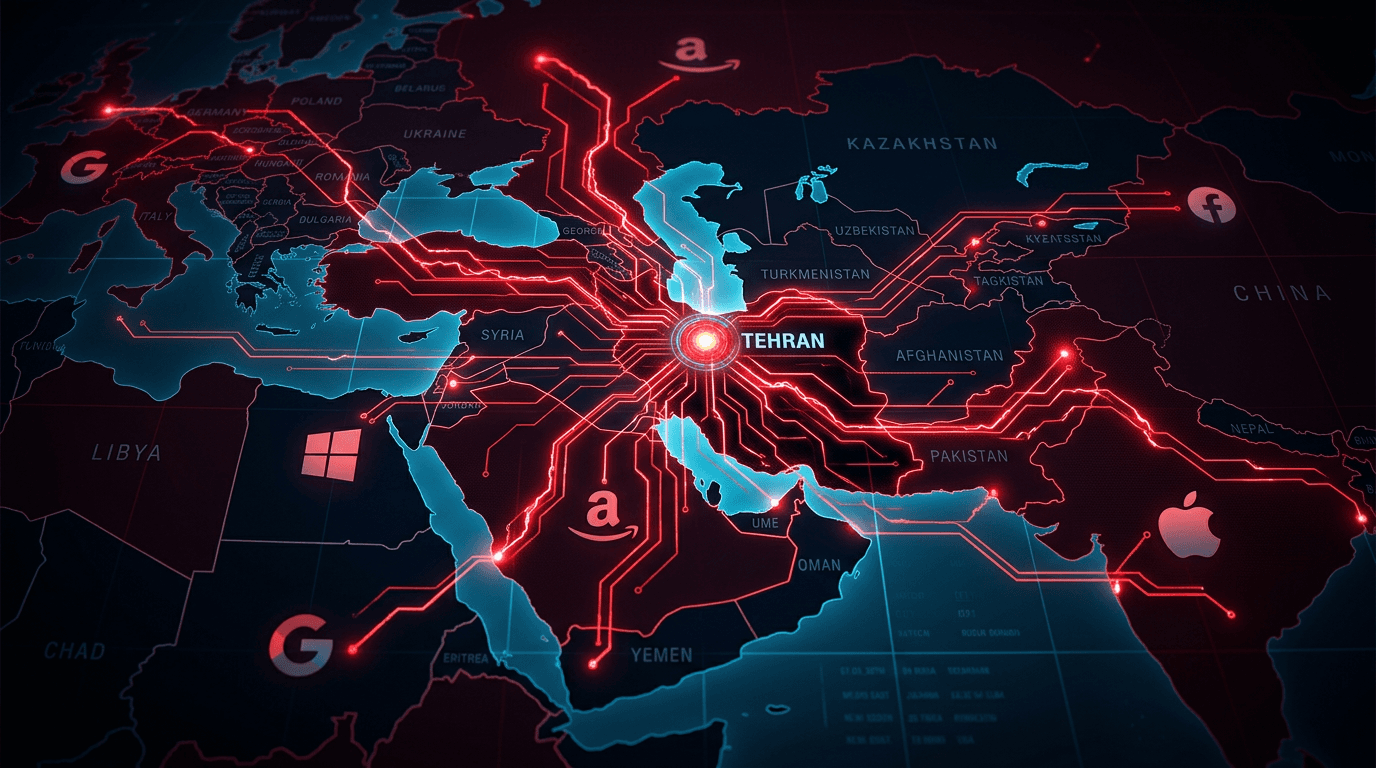
The Digital Cold War Heats Up
As geopolitical tensions in the Middle East continue to simmer, cyberspace has officially become the second front of the conflict. According to a recent report by Wired, the Iranian government and its state-affiliated media have issued a stern warning, explicitly naming several U.S. tech giants as potential targets for cyber retaliation. The list includes Google, Microsoft, and the big data analytics firm Palantir. Iranian officials claim these companies are essentially participants in military operations and intelligence gathering against Iran by providing cloud infrastructure and analytical tools.
This threat is far from empty rhetoric. Over the past 48 hours, cybersecurity analysts have observed a significant uptick in scanning activities targeting critical U.S. infrastructure. Iranian state media has argued that any digital platform providing technical support to the U.S. government and its allies will be viewed as a "legitimate target for defensive retaliation."
Medical Giant Stryker Becomes a Victim of Retaliatory Hacking
Concurrent with these warnings, tangible attacks have already materialized. As reported by TechCrunch, the pro-Iran hacktivist group "Handala" claimed responsibility for a massive cyberattack on the global medical technology giant Stryker. The group asserts they successfully infiltrated Stryker's internal systems and exfiltrated a vast amount of sensitive data.
"Handala" released a statement on social media claiming the attack was a direct response to a recent U.S. airstrike on a school in Tehran, which reportedly killed over 175 people, mostly children. While Stryker has not yet commented on the scale of the data breach, multiple sources confirm that segments of the company’s internal services have been suspended to prevent further damage. This incident underscores the growing vulnerability of private corporations in the midst of global conflicts.
A Hidden Threat to Global Supply Chains: Digital Blockades in the Strait of Hormuz
The impact of this cyber warfare extends beyond bits and bytes; it is causing real-world economic shocks. Wired reports that as Iran increases its military and digital surveillance in the Strait of Hormuz—a vital artery for global energy and consumer goods—shipping insurance rates are climbing. Should cyber interference disrupt critical maritime systems like GPS navigation or port logistics, it could trigger a spike in global consumer prices.
Google Trends data reveals that global search interest for "Cyber Attack Iran" has surged by 300% over the past week. In regions most directly impacted, such as Europe and the U.S. East Coast, corporate inquiries into advanced cybersecurity defense systems have reached record highs. Market analysts warn that if this cyber confrontation escalates into full-scale attacks on undersea cables or financial exchange systems (like SWIFT), global economic growth could be docked by as much as 0.5 percentage points.
Corporate Dilemmas and the Defensive Pivot
For tech giants like Google and Microsoft, the conflict places them in an increasingly precarious position. On one hand, they must ensure the global availability and security of their services; on the other, as U.S. government contractors, total neutrality is a difficult stance to maintain. Currently, these firms have intensified threat monitoring for Iranian IP ranges and deployed more advanced AI-driven defense models to identify malicious traffic.
The critical question remains whether these cyber threats will continue to spill over. If the attack pattern seen with Stryker is replicated in the energy or telecommunications sectors, the world could face long-term and destructive "digital blackouts." Governments and corporations must now re-evaluate their cybersecurity budgets, integrating "geopolitical risk" into the very core of their defensive architectures.