
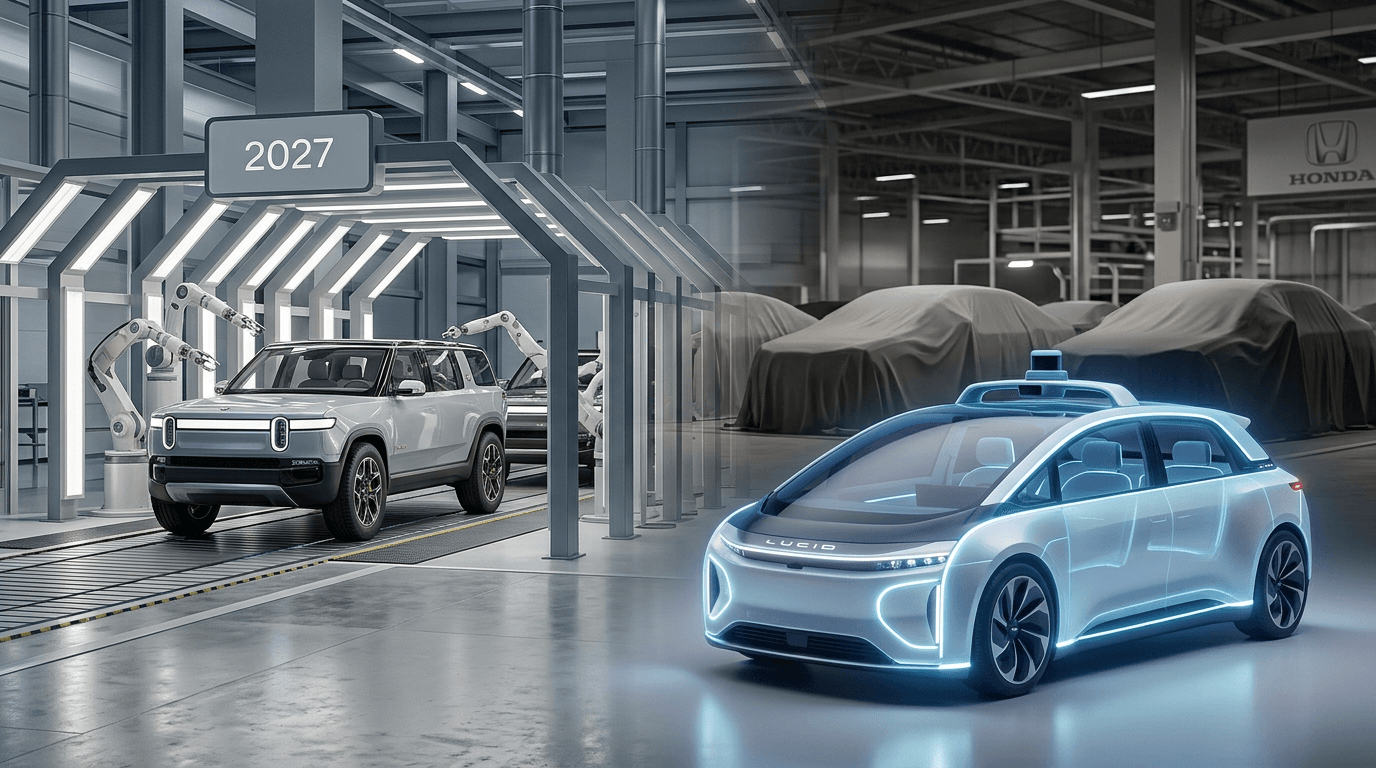
Expectations vs. Reality: Rivian R2 Base Model Delayed to Late 2027
Rivian’s much-touted move into the affordable EV segment has hit a major roadblock. As reported by TechCrunch, the base model of the R2 SUV, which was promised to start at $45,000, will not be available for purchase until at least late 2027. For now, Rivian is focusing on higher-trim versions of the R2, which launch at a starting price of $57,990. This strategy mirrors the challenges many EV startups face: the need to generate immediate cash flow from high-margin vehicles while struggling to achieve the economies of scale necessary for lower price points. For potential buyers waiting for a budget-friendly Rivian, the wait has grown significantly longer.
Honda’s Strategic Retreat: Canceling Three US-Made EV Models
In a surprising blow to the traditional automotive sector's green ambitions, Honda has canceled three planned electric vehicle models that were to be manufactured in the United States. According to Ars Technica, the company cited heavy financial losses, fluctuating US emissions regulations, and a loss of market share in China as the primary drivers for this decision. This retreat highlights the immense pressure legacy automakers are under as they attempt to balance massive R&D investments with declining internal combustion engine profits. Honda’s exit from these specific projects suggests a shift toward a more cautious, potentially hybrid-focused strategy in North America.
Lucid’s Pivot: The Path to Profitability Through SUVs
While others are pulling back, Lucid Motors is doubling down on its own niche. During its recent investor day, the company announced a new midsize EV platform, stating clearly that its path to profitability lies with SUVs. Lucid is currently developing three midsize SUVs, with goals to bring at least one model to market for under $50,000. To stir further excitement, the company showcased a robotaxi concept dubbed "Lunar." Lucid’s approach focuses on superior efficiency and high-end software to differentiate itself from both legacy players and lower-cost competitors, betting that technology will eventually drive down production costs.
Industry Analysis: Regulatory Shifts and Economic Realities
Analysts point to 2026 as a year of "market correction" for the EV industry. The initial euphoria surrounding the transition to electric power has been dampened by higher interest rates and a cooling of consumer demand for expensive EVs. Honda’s decision is particularly telling, reflecting a broader trend where traditional firms are reassessing their multi-billion dollar capital allocations in the face of political uncertainty. Meanwhile, Rivian’s delay illustrates the persistent difficulty of building a profitable vehicle at the sub-$50k mark. Experts suggest that only companies with highly optimized supply chains and advanced software integration will survive this consolidation phase.
Future Outlook: The Long Wait for the Affordable EV
With Rivian pushing its $45,000 target to late 2027, the dream of a mainstream, high-quality affordable EV remains just out of reach for most consumers. This delay creates a window for potential disruption, possibly from hybrid alternatives or even foreign competitors if trade barriers shift. The industry is now entering a phase where manufacturing excellence is more important than raw innovation. As we head toward 2027, the focus will be on whether Rivian can fulfill its pricing promise and if Lucid can successfully transition from a luxury niche player to a mid-market contender. For the EV market, 2026 is a year of survival and recalibration.