
Honda Retreats: US-Made EV Plans Scrapped Amid Losses
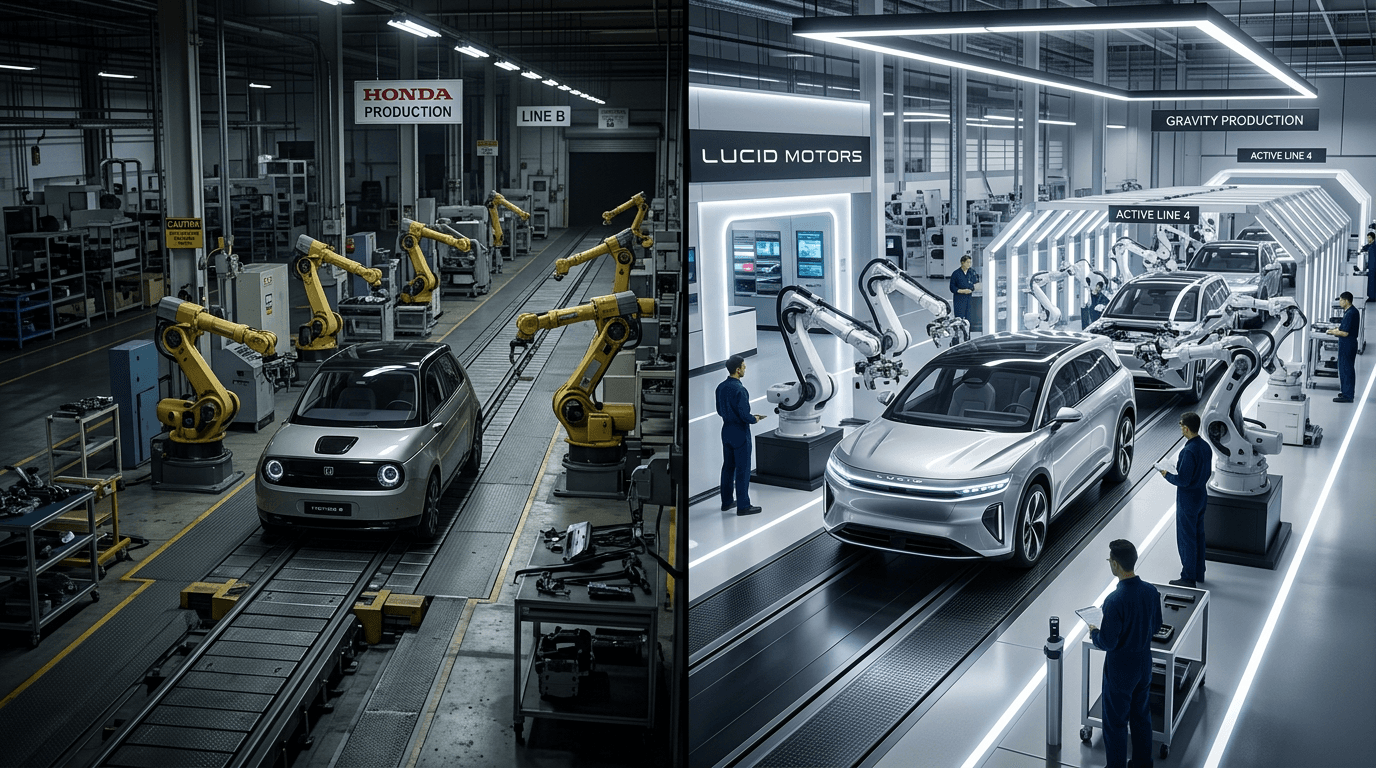
In a stark reversal of its electrification strategy, Honda has officially canceled three planned US-made electric vehicles. According to Ars Technica, the Japanese automaker cited a combination of heavy losses, shifting U.S. emission regulations, and a loss of competitiveness in the massive Chinese market as reasons for the withdrawal. This decision underscores the immense financial pressure traditional OEMs face as they attempt to balance legacy internal combustion engine (ICE) business with the high capital requirements of EV manufacturing.
Lucid’s Strategy Shift: SUV Profitability and the 'Lunar' Robotaxi
While Honda retreats, luxury EV maker Lucid Motors is doubling down on a more accessible future. During its recent investor day, Lucid unveiled a new midsize EV platform, asserting that the company's path to profitability lies with SUVs. Lucid is currently developing three midsize SUVs aimed at a sub-$50,000 price point. Highlighting its technical ambitions, Lucid also showcased a robotaxi concept called 'Lunar,' signaling its intent to compete not just in hardware, but in the autonomous mobility-as-a-service sector.
Rivian’s Pricing Paradox: The Long Wait for the $45,000 R2
Rivian, another key player in the US EV landscape, is facing scrutiny over its pricing strategy. TechCrunch reports that while the company has spent years marketing the R2 SUV as a $45,000 entry-level vehicle, that base price will likely remain out of reach for consumers until late 2027. Rivian is prioritizing the production of higher-margin All-Wheel Drive (AWD) trims first, leaving budget-conscious buyers in limbo. This gap between marketing and reality highlights the 'production hell' still haunting even the most successful EV startups.
Macro Challenges: Tariffs and Regulatory Uncertainty
The broader U.S. battery and EV industry is currently experiencing 'brutal times,' as described by MIT Technology Review. The initial excitement and massive fundraising rounds of the early 2020s have given way to a gritty reality of supply chain disruptions and shifting trade policies. Tariffs on imported materials and uncertainty over federal emissions standards have made it difficult for manufacturers to commit to large-scale domestic production, leading to the kind of retrenchment seen in Honda’s recent announcement.
Future Outlook: The Midsize SUV Battlefield
The next two years will be a defining period for the EV market as players pivot toward the midsize SUV segment. This category represents the largest potential for volume and profit, but it requires masterful cost control. As Honda exits and Lucid/Rivian attempt to scale, the winner will be the company that can actually deliver a competitive, high-quality electric SUV at the elusive $45,000 mark without further delays.