

Grassroots Resistance: Detecting the "Camera in the Room"
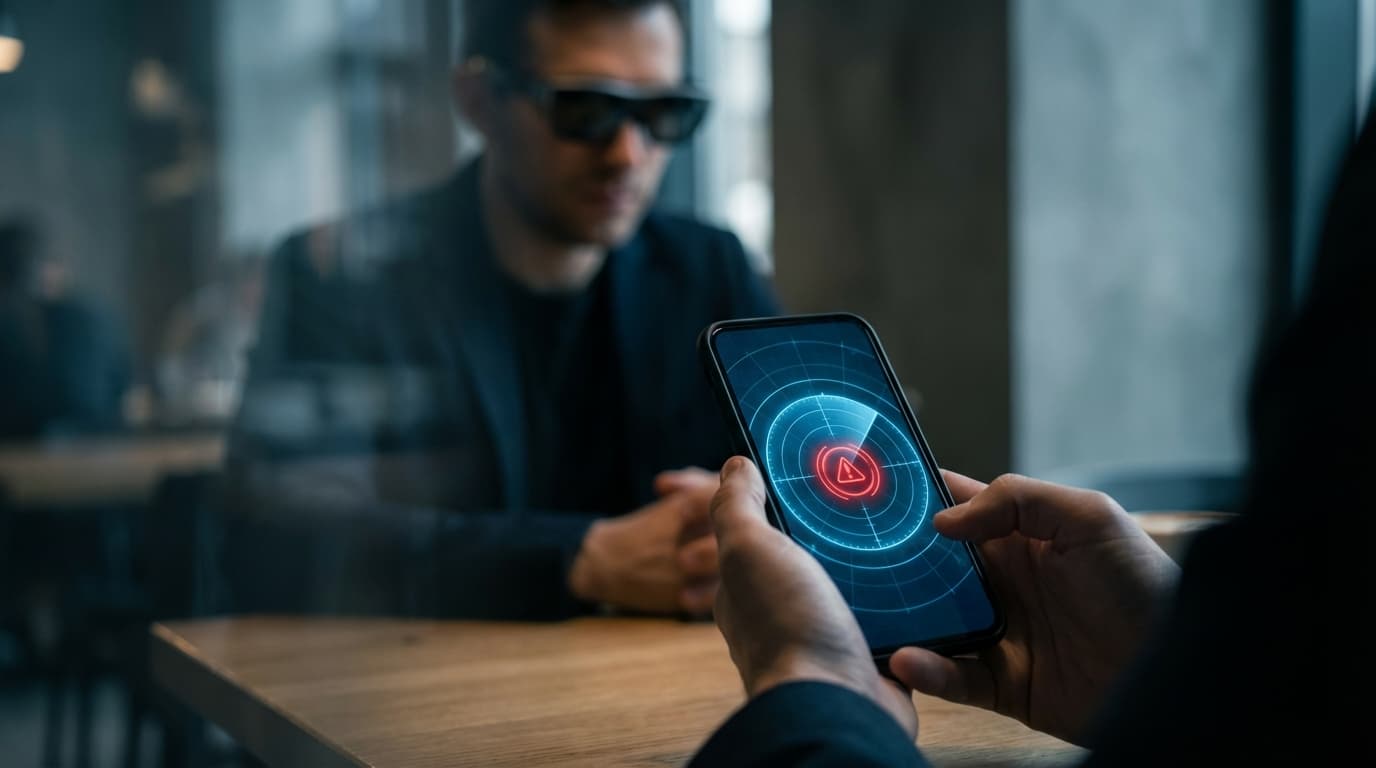
As smart glasses from giants like Meta and Snap become increasingly common, public anxiety over being recorded without consent has reached a breaking point. According to TechCrunch (2026), an independent developer recently released an app called "Nearby Glasses." Utilizing Bluetooth scanning technology, the app provides real-time alerts to users if someone nearby is wearing and potentially operating smart glasses. The rapid viral success of this app underscores a powerful consumer-led revolt against "always-on" recording devices.
While current smart glasses include indicators—such as a white LED that glows during recording—many users report that these cues are easily missed, physically covered, or even disabled. This anti-surveillance app emerged as a technical counter-measure, enabling individuals in public spaces like gyms or restaurants to more effectively guard their privacy. This represents a shift in the digital age, where privacy rights are moving from legal protections to a game of "technology versus technology."
Legal Debates: Privacy vs. Public Recording
Legally, smart glasses have ignited complex debates. Legal experts point to California Penal Code § 632, which generally makes it illegal to record confidential conversations where there is a "reasonable expectation of privacy." However, the precedent set in Katz v. United States also suggests that in public spaces, individuals have a limited claim to absolute privacy. The emergence of this app effectively forces a legal re-examination of what "public privacy" means in a hyper-connected society.
Simultaneously, government actions have fueled further unease. Wired (2026) reports that the U.S. Department of Homeland Security (DHS) is seeking to build a unified biometric search engine to consolidate facial recognition and fingerprint data across agencies. This pervasive surveillance pressure, from both civilian gadgets and government initiatives, is turning "anti-surveillance tech" into one of the fastest-growing vertical markets of 2026.
Market Trends: The Rise of Privacy Tools
Google Trends data shows that global search interest for "privacy settings for smart glasses" has grown by 120% over the last quarter. Interestingly, while smart glasses are a hit in tech circles, the broader consumer market is showing more interest in devices that feature physical shutters or one-touch power cutoffs, rather than models that boast seamless, invisible designs. This indicates that consumers prefer absolute control over when they are being recorded.
Furthermore, companies like Meta are facing intense legal scrutiny. Lawyers are currently arguing in court that while Instagram publicly claims to protect teens, it internally tracked growing usage and precisely targeted minors to increase engagement. Such inconsistencies in corporate behavior have significantly eroded public trust in the privacy promises made by tech giants regarding their hardware products.
Future Outlook: A New Social Contract for Digital Transparency
Looking ahead, 2026 may be a pivotal year for redefining "digital transparency." We are likely to see more regulations targeting the use of recording devices in specific public venues. There may even be pushes for mandatory Bluetooth broadcast protocols, requiring all recording-capable devices to "self-declare" to their surroundings.
For tech enthusiasts, the benefits of smart glasses—such as AR navigation or instant translation—are undeniable. But as the anti-surveillance app demonstrates, the adoption of technology must be accompanied by a social consensus. If we cannot establish a set of digital etiquette that makes everyone feel secure, smart glasses may follow in the footsteps of Google Glass: technologically advanced but socially rejected orphans.
References
[src-1] TechCrunch (2026). A new app alerts you if someone nearby is wearing smart glasses. [src-2] Wired (2026). DHS Wants a Single Search Engine to Flag Faces and Fingerprints Across Agencies. [src-3] TechCrunch (2026). Instagram tracked growing usage while targeting teens, lawyers argue. [src-4] Wired (2026). How to Organize Safely in the Age of Surveillance.