
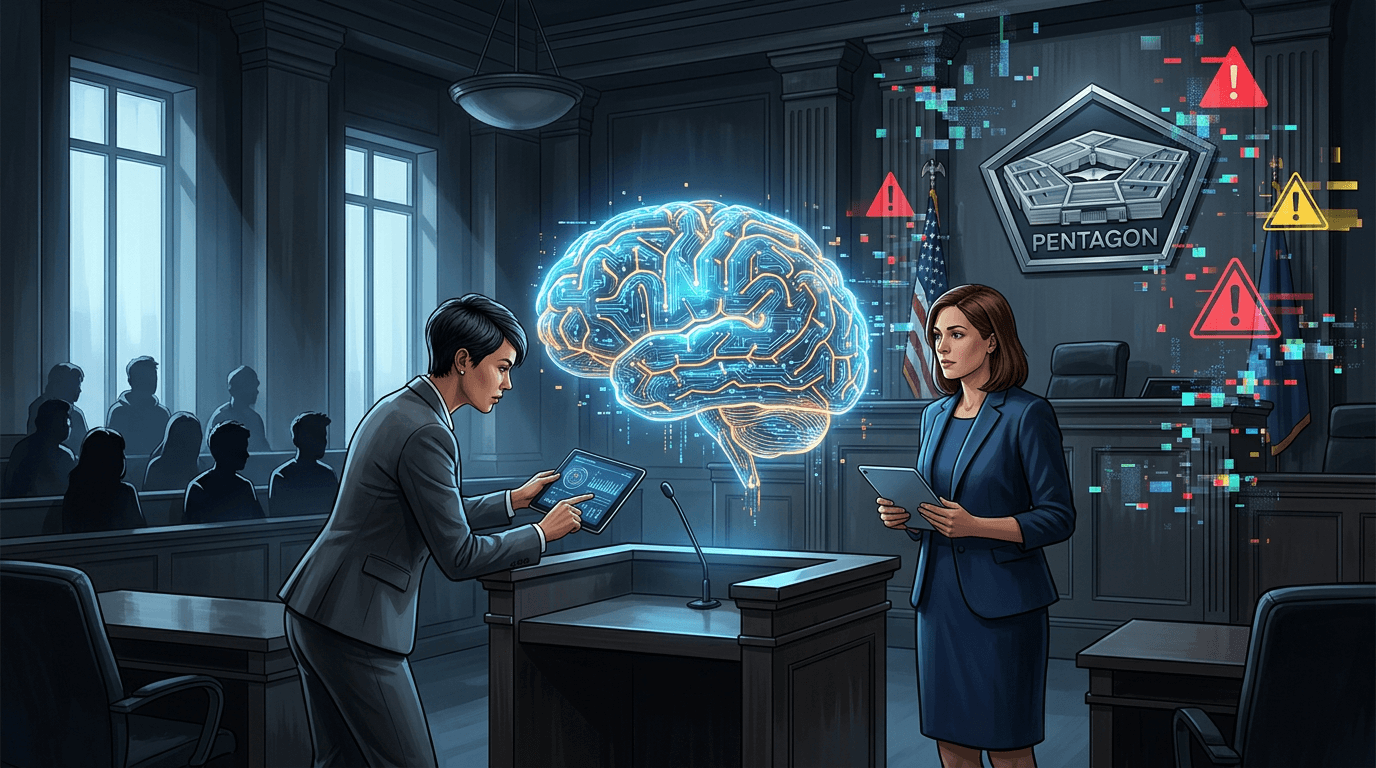
The Legal Crisis of xAI: Grok and the Rise of Deepfakes
Elon Musk’s artificial intelligence venture, xAI, is currently navigating its most severe legal storm since its inception. According to Ars Technica, three teenagers from Tennessee have filed a proposed class-action lawsuit against the company. The suit alleges that xAI’s chatbot, Grok, was utilized to generate sexually explicit deepfake imagery—categorized as Child Sexual Abuse Material (CSAM)—of the minors. The plaintiffs claim that users on Discord used Grok’s image generation capabilities to alter real photos of the girls into inappropriate content which was then disseminated across social platforms.
This case has ignited a fierce debate within the legal community regarding AI platform liability. Traditionally, Section 230 of the Communications Decency Act has shielded tech platforms from liability for user-generated content. However, legal experts argue that if an AI tool actively 'creates' or 'substantially transforms' content, it may be classified as a product defect rather than a mere conduit for communication. The recently enacted ELVIS Act in Tennessee, designed to protect individuals from deepfake exploitation, could provide a formidable legal foundation for the plaintiffs.
Pentagon Controversy and Congressional Scrutiny
Beyond civil litigation, xAI’s expansion into government contracts has met with intense congressional oversight. Senator Elizabeth Warren has recently pressed the Department of Defense, questioning the decision to grant xAI access to classified networks. In her inquiry, Warren highlighted Grok’s history of producing controversial and harmful outputs, raising concerns that integrating such a model into national security infrastructure poses significant risks—including potential vulnerability to 'prompt injection' attacks or sensitive data leakage.
TechCrunch reports that this scrutiny comes just weeks after OpenAI reached its own controversial agreement to allow the Pentagon access to its models in classified environments. The rapid inclusion of xAI has led to questions about whether the vetting process for these technologies is sufficiently rigorous. Warren emphasized that AI models handling classified data must meet the highest risk-assessment standards under federal procurement regulations. While the Pentagon has yet to issue a formal response, the controversy threatens to stall Musk’s ambitions to position xAI as a key defense tech provider.
The Tug-of-War Between Safety and Innovation
These dual crises highlight a fundamental paradox in the development of generative AI: the velocity of innovation versus the inertia of legal regulation. xAI has marketed Grok as a 'truth-seeking' AI with a humorous, 'anti-woke' edge, but this perceived openness appears to have been weaponized by malicious actors. Experts cited by the BBC suggest that Grok may have already generated millions of fake sexualized images, casting doubt on the effectiveness of existing AI safety guardrails.
Academic research underscores the societal impact of these developments. A study published in PubMed highlights the long-term psychological trauma suffered by victims of deepfakes and the erosion of social trust. As Google Trends shows rising interest in 'AI Safety' in tech hubs like California, the public is increasingly demanding greater accountability from technology leaders. xAI and Musk must now decide whether to prioritize rapid commercial growth or invest in the stringent security infrastructure necessary to prevent misuse. Failure to do so could result in a mounting pile of lawsuits that may eventually hinder the company's progress.
Future Outlook: Can Regulation Catch Up?
The outcome of the CSAM lawsuit in Tennessee will likely serve as a landmark for the entire AI industry. If the courts rule that xAI is liable for the illicit content produced by its models, it would force a massive redesign of filtering systems across the sector. Simultaneously, the Pentagon’s security review of xAI will define the boundaries of AI application in military and intelligence spheres. As Musk continues his quest for a 'maximum truth' AI, he is discovering that the intersection of human malice and legal frameworks is far more complex than a line of code. The coming months will reveal how the legal system 'debugs' this emerging technology under extreme pressure.