
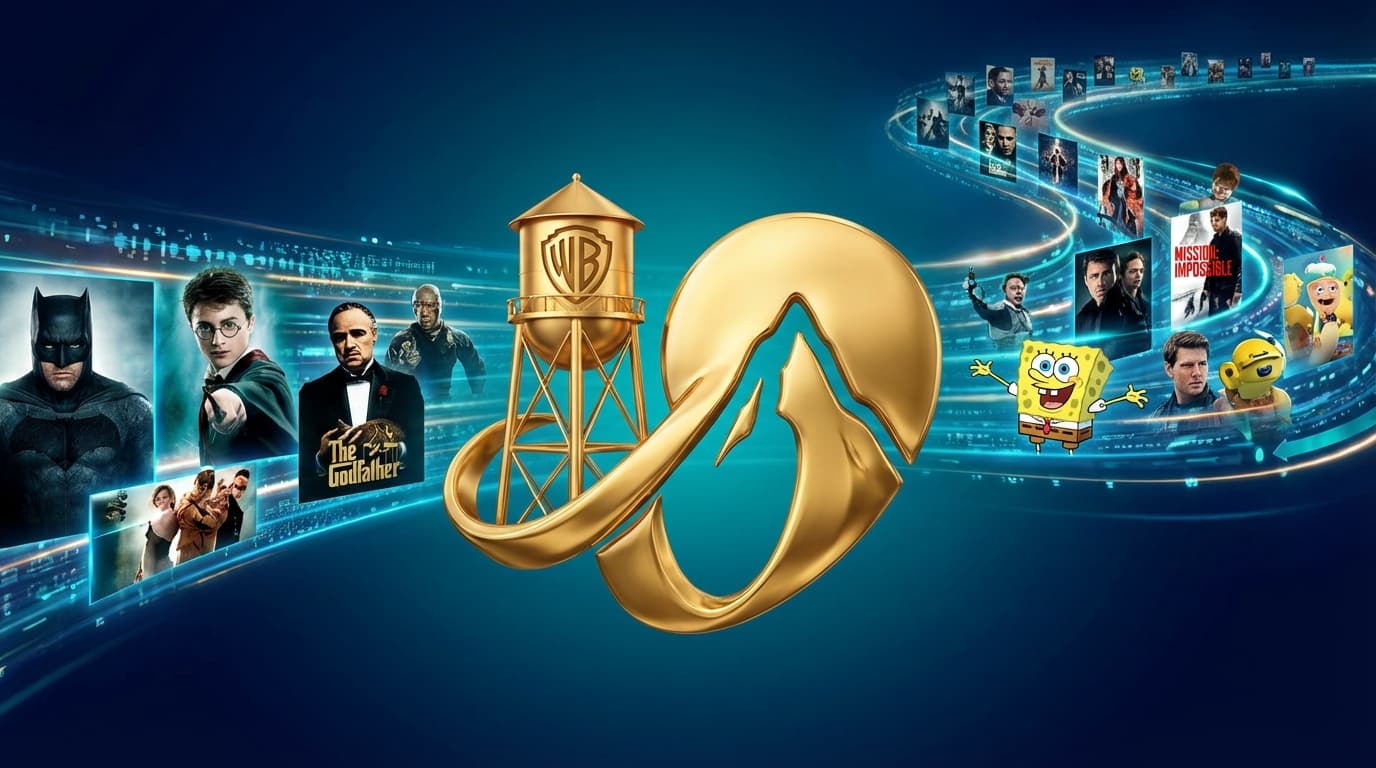
A Century in the Making: The Birth of a Media Titan
The landscape of global entertainment was permanently altered on February 28, 2026, as Warner Bros. Discovery (WBD) and Paramount Global announced a definitive agreement to merge in a deal valued at $110 billion. According to The Verge (2026), this historic consolidation brings together legendary studios, news networks like CNN, and prestigious content hubs such as HBO and DC Studios under a single corporate umbrella.
This move is widely seen as a defensive consolidation against the rising dominance of tech-native giants like Apple and Amazon. By merging Max and Paramount+, the new entity hopes to achieve a scale that makes them indispensable to global audiences while significantly reducing the redundant costs of maintaining two separate streaming infrastructures.
The Trump Factor and the Netflix Withdrawal
The lead-up to the deal was marked by high-stakes political maneuvering. Netflix had reportedly been in the running to acquire WBD’s assets, which would have ended the age-old studio system. However, as revealed by TechCrunch (2026), Netflix’s co-CEO backed out after a direct conversation with President Donald Trump. "I took your advice," the Netflix executive reportedly told the president, following suggestions that such an acquisition would face insurmountable antitrust hurdles under the current administration's nationalist economic policies.
Antitrust Headwinds: DOJ Scrutiny Awaits
A merger of this magnitude—essentially combining two of the five remaining major Hollywood studios—will trigger an exhaustive review by the Department of Justice (DOJ). Regulators will focus on "horizontal integration," specifically whether the consolidation of content libraries harms competition in the licensing and theatrical distribution markets. Experts suggest that to win approval, the new entity may be forced to divest certain assets, such as cable networks or local broadcast stations, to maintain a competitive balance in the media ecosystem.
Industry Impact: The "SaaSpocalypse" of Media
Financial analysts are drawing parallels between this deal and the "SaaSpocalypse" hitting the software industry. In an era where AI-driven content creation and high cloud computing costs are eroding margins, only companies with massive scale can survive. The merger is expected to yield billions in synergies, but it also signals a bleak future for smaller production houses that may find it impossible to compete with the combined licensing power of the WBD-Paramount library.
The Road Ahead: AI and the New Script
Beyond traditional filmmaking, the merged company is expected to pivot heavily into AI-driven interactive entertainment. With a combined treasury and content library, they are well-positioned to train specialized generative models for scriptwriting, visual effects, and personalized streaming experiences. This $110 billion merger isn't just about movies—it's about who controls the cultural data in the next decade of digital consumption.