

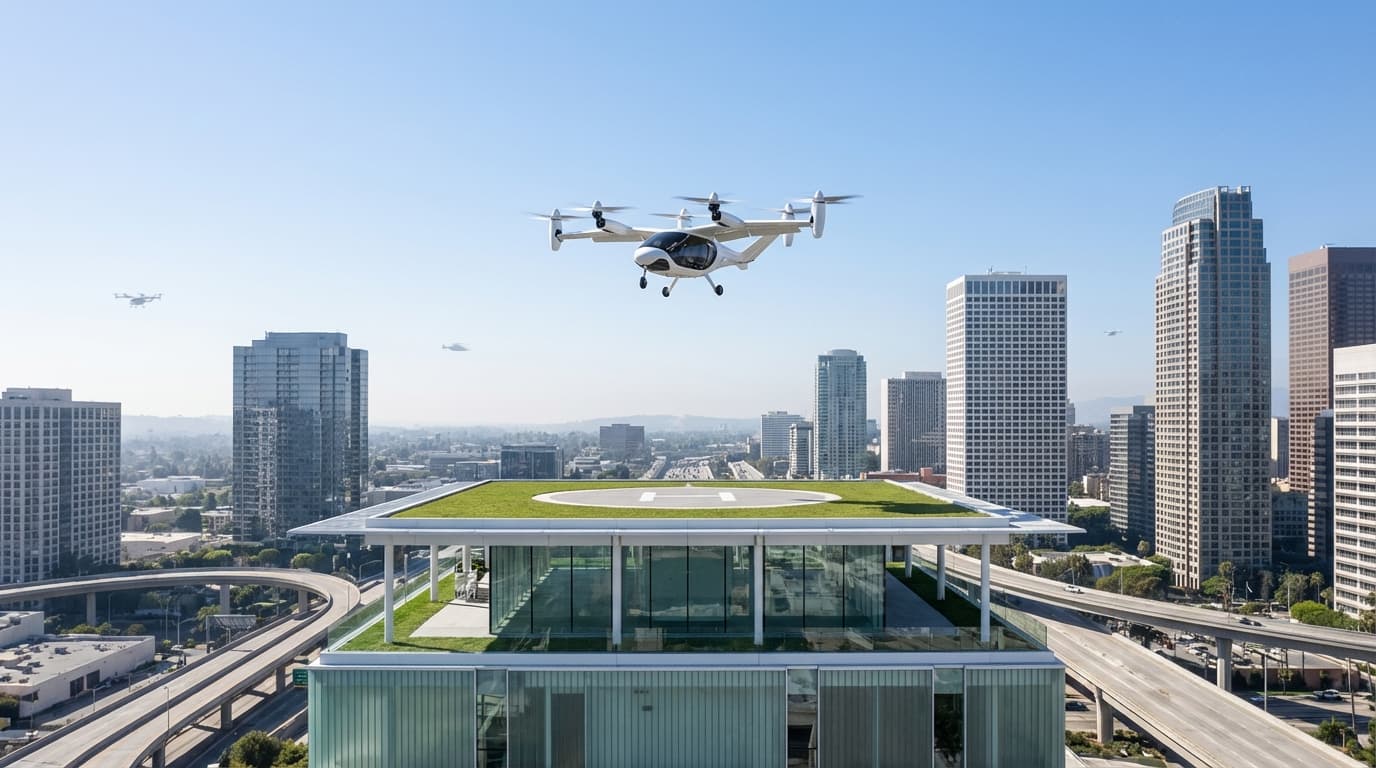
A New Horizon in Transportation: From Science Fiction to Reality
The summer of 2026 is poised to become a milestone in American aviation history. The US federal government has officially announced a new pilot program designed to get ultralight aerial vehicles and electric vertical takeoff and landing (eVTOL) aircraft—popularly known as "flying cars"—up and running across the country. As reported by Wired, this initiative allows these innovative vehicles to operate even before they have achieved full FAA certification. The goal is to accelerate the adoption of Urban Air Mobility (UAM), offering a potential solution to ground traffic congestion while promoting sustainable, electric-powered transportation alternatives.
Legal Framework: Navigating the Special Federal Aviation Regulations
To facilitate this rapid deployment, the Federal Aviation Administration (FAA) is utilizing a Special Federal Aviation Regulation (SFAR) for "powered-lift" aircraft. This legal framework bridges the gap between Part 103 (Ultralight Vehicles) and traditional Part 23/25 aircraft certifications. The program will establish designated "Innovation Zones" across several US states, allowing companies to gather crucial safety and performance data in real-world environments. For industry leaders like Joby Aviation and Archer, this bypassed certification pathway is a golden opportunity to demonstrate the viability of their business models. However, the FAA maintains that basic air traffic control protocols and strict noise abatement standards will remain in full force to ensure public safety.
Infrastructure and Technical Hurdles: Building the Vertiports
While the regulatory green light is a significant step, the practical implementation of flying cars requires substantial infrastructure investment. The primary requirement is a network of "vertiports"—specialized landing pads equipped with high-speed charging stations. Cities like Los Angeles and Miami are already exploring plans to convert existing parking structures and rooftops into aerial hubs. Technically, battery energy density and stability in adverse weather conditions remain the primary R&D focuses. Experts suggest that the 2026 pilot will focus on cargo delivery and pre-defined shuttle routes rather than widespread personal ownership, serving as a data-gathering phase for a broader rollout in the late 2020s.
Public Sentiment and Search Trends: Anticipation vs. Privacy Concerns
Google Trends data reveals a surge in search interest for "Flying Car license requirements" and "eVTOL safety" following the announcement, particularly in high-traffic regions like California. While public curiosity is at an all-time high, the program is not without controversy. Concerns regarding noise pollution and the privacy of residents living under low-altitude flight paths have been raised by community advocacy groups. Wired reports that the government plans to use the 2026 pilot to measure the social and acoustic impact of eVTOLs on urban environments, ensuring that the transition to the skies is harmonious with life on the ground.
Future Outlook: The Dawn of the Air Taxi Era
The 2026 pilot program marks the dawn of the air taxi era. Successful implementation during this summer trial could lead to the commercial availability of ride-hailing aerial services by 2030. This transformation will likely reshape real-estate values and urban planning, as proximity to city centers becomes less of a constraint for commuters. The flying car industry is rapidly becoming a convergence point for AI-driven navigation and green energy technology, creating a supply chain valued at hundreds of billions of dollars. In 2026, Americans will no longer just look at the sky for birds and planes; they will look for the future of their daily commute.