

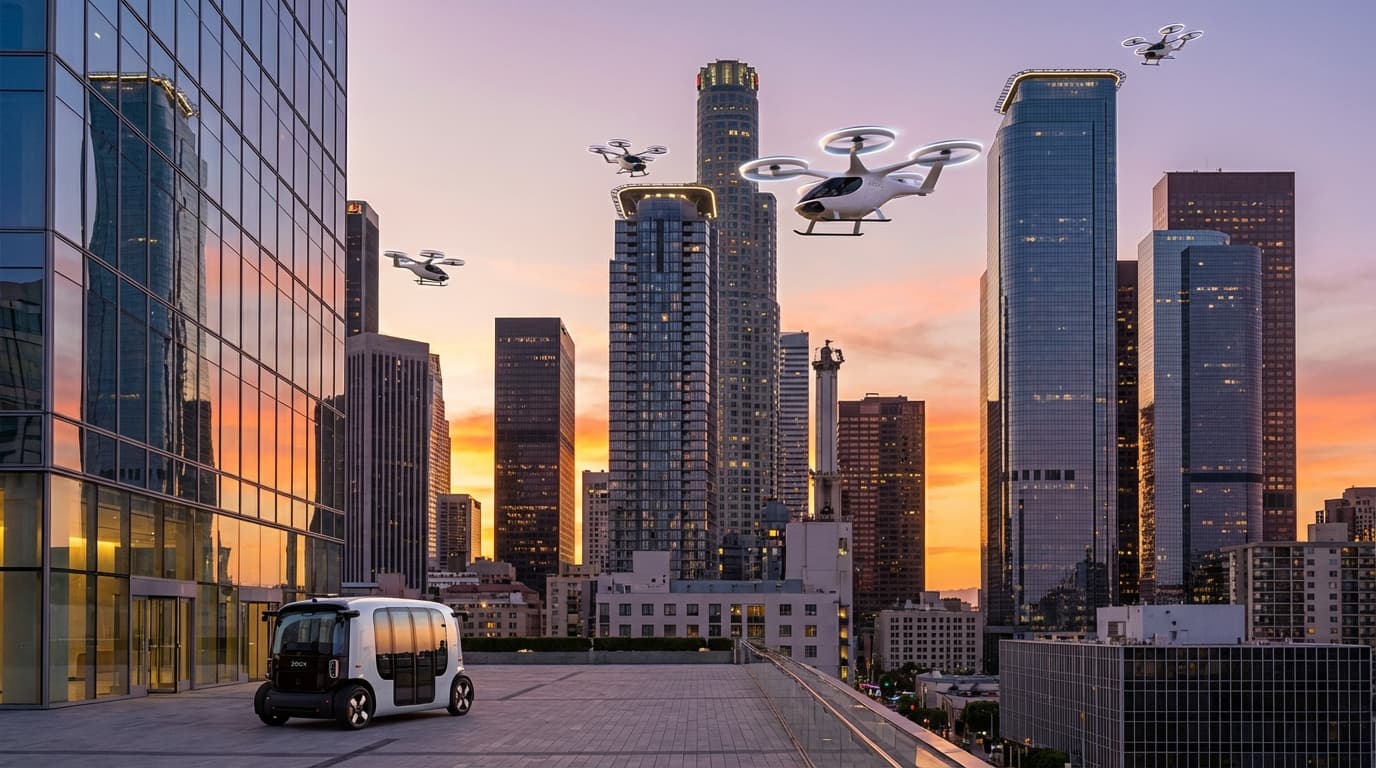
The Era of Flying Cars: A Federal Leap Forward
In the summer of 2026, the American sky is set to undergo a historic transformation. According to reports from Wired, the U.S. federal government has announced a bold new pilot program designed to get ultralight vehicles and electric vertical takeoff and landing (eVTOL) aircraft into operation across the country. The most significant aspect of this announcement is the government's decision to allow these vehicles to fly in designated pilot areas even before they achieve full FAA certification. This strategic move aims to bypass traditional regulatory bottlenecks and ensure that the U.S. remains a leader in the global race for urban air mobility (UAM).
As TechCrunch reports, the federal government has selected eight specific proposals from a wide field of applicants to test electric aircraft across 26 states. This large-scale deployment is intended to gather critical data on performance in various climates, integration with existing air traffic control systems, and public sentiment regarding the presence of "air taxis" over residential areas. The program represents a major effort to counter advancements made by international rivals in the electric aviation sector.
26-State Rollout: Unifying Fragmented Regulations
The broad geographical reach of the program—spanning 26 states—indicates a federal desire to establish a unified regulatory framework. By creating a national testing corridor, the government hopes to prevent a patchwork of conflicting state-level laws regarding drones and flying vehicles. Legal experts suggest that the FAA is utilizing its Part 103 regulations for ultralight craft as a legal bridge, while simultaneously fast-tracking a Special Federal Aviation Regulation (SFAR) for "powered-lift" aircraft.
Technologically, the eight selected proposals include a diverse array of designs, from multi-rotor systems to tilt-wing and hybrid-wing configurations. Wired notes that some participants are focusing on high-speed medical logistics, while others are developing platforms for urban passenger transport. This diversity allows the FAA to test different safety protocols and efficiency standards, ensuring that the eventual long-term certification process is grounded in comprehensive, real-world data.
Synergies with Ground Autonomy: Zoox and the Future of Transport
The development of aerial transit is closely linked with progress in ground-based autonomous vehicles. TechCrunch reported that Amazon-owned Zoox has begun mapping cities like Dallas and Phoenix in preparation for its robotaxi launch. Analysts believe that the future of transport lies in an integrated autonomous ecosystem where ground and air systems work in tandem. A passenger might start their journey in a Zoox robotaxi and transfer to an eVTOL for the final, long-distance leg of their commute.
This multimodal approach promises to drastically reduce commute times and alleviate the growing congestion in major American metropolitan areas. Zoox’s strategic focus on Texas and Arizona, regions known for stable weather and tech-friendly legislation, mirrors the federal government's approach to its 26-state pilot. Together, these developments signal the birth of a fully automated transit network that could redefine urban life by the end of 2026.
Societal Impact: Balancing Innovation and Quality of Life
Despite the technological enthusiasm, the rollout of flying cars faces significant social hurdles. Preliminary public feedback highlights concerns over noise pollution and privacy, as low-flying aircraft become more common in suburban skies. The FAA is under immense pressure to ensure that innovation does not come at the cost of residential peace. Furthermore, managing high-density traffic in low-altitude urban corridors remains one of the most complex engineering challenges of the decade.
Nevertheless, the federal government appears committed to the timeline. Officials emphasize that the pilot program will adhere to strict safety monitoring and that data collected will be used to refine flight paths and altitude restrictions. As the program takes off this summer, the sight of quiet electric rotors silhouetted against the American horizon will likely become a common occurrence, marking the beginning of a collective experiment in the future of human mobility.