

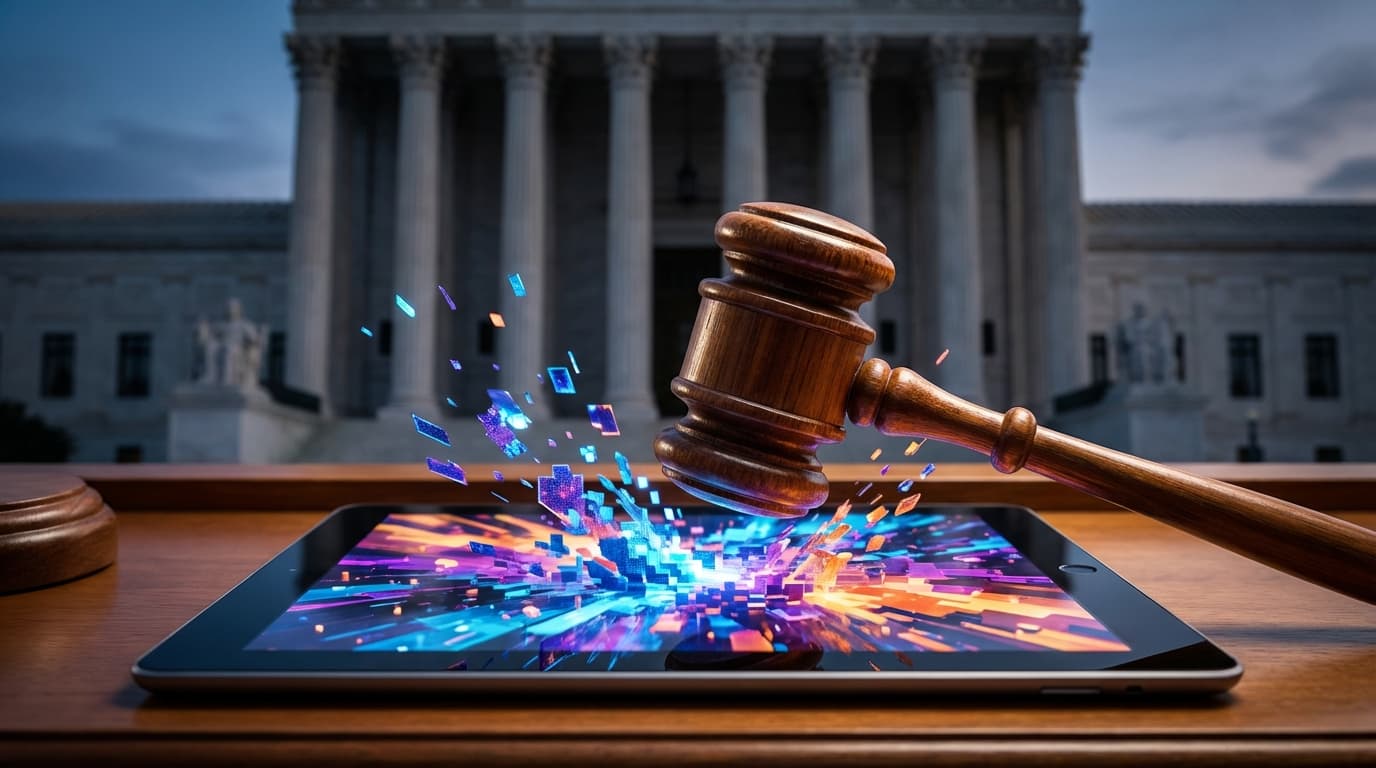
The Final Verdict: Ending the AI Copyright Battle
After years of legal maneuvering, the U.S. Supreme Court on March 2, 2026, officially declined to hear an appeal from computer scientist Stephen Thaler. This decision lets stand lower court rulings that art generated entirely by artificial intelligence (AI) is ineligible for copyright protection. According to The Verge (2026), this move solidifies 'human authorship' as a bedrock requirement for legal protection, drawing a clear red line for the generative AI industry.
Stephen Thaler vs. The Copyright Office: What is an 'Author'?
The case centered on Stephen Thaler’s long-standing effort to have his AI system, the 'Creativity Machine,' recognized as the legal author of a work titled A Recent Entrance to Paradise. However, the U.S. Copyright Office and multiple federal courts consistently maintained the spirit of the 1976 Copyright Act: that protection is reserved for the fruits of human intellectual labor. Academic discourse in 2025, such as PMC12575523, also noted a prevailing consensus that intellectual property laws globally are currently structured to cover natural persons only. The Supreme Court's refusal to grant certiorari means this stance is now practically unassailable in the U.S. legal system.
Impact on the Generative AI Industry
This ruling poses a significant challenge to companies and individual creators who rely solely on AI-generated outputs. If purely AI-made works cannot be copyrighted, they essentially enter the public domain upon creation, allowing anyone to legally copy, modify, or monetize them without permission. Legal analysts suggest this will force creators to demonstrate significant 'human intervention' to meet the threshold for protection. However, the exact definition of 'enough human input' remains a legal gray area that will likely be the focus of many future court battles.
Global Copyright Landscape: A Comparative View
While the U.S. has taken a firm stance, other jurisdictions are exploring varying degrees of flexibility regarding AI-assisted works. Nonetheless, as the world's largest media and tech market, the U.S. Supreme Court’s decision will undoubtedly influence global legal trends. Google Trends data shows that search interest in 'AI art legal status' remains high, with a score of 43 in California, reflecting deep industry concern. The debate continues among policymakers on whether copyright laws should eventually be fundamentally amended to accommodate rapidly advancing technology.
Conclusion: The Human Moat
In a sense, this Supreme Court decision protects the rights of traditional human artists by affirming the unique status of human creativity and emotion. For AI firms, it serves as a prompt to re-evaluate their technological roadmaps—moving away from total replacement and toward 'co-pilot' tools that assist human expression. For the foreseeable future, human-AI collaboration remains the only path to achieving full legal copyright protection for creative works.
References
- [src-1] The Verge. AI-generated art can’t be copyrighted after Supreme Court declines to review the rule. (2026).
- [src-2] PMC. Why We Should Recognize AI as an Inventor. (2025).