

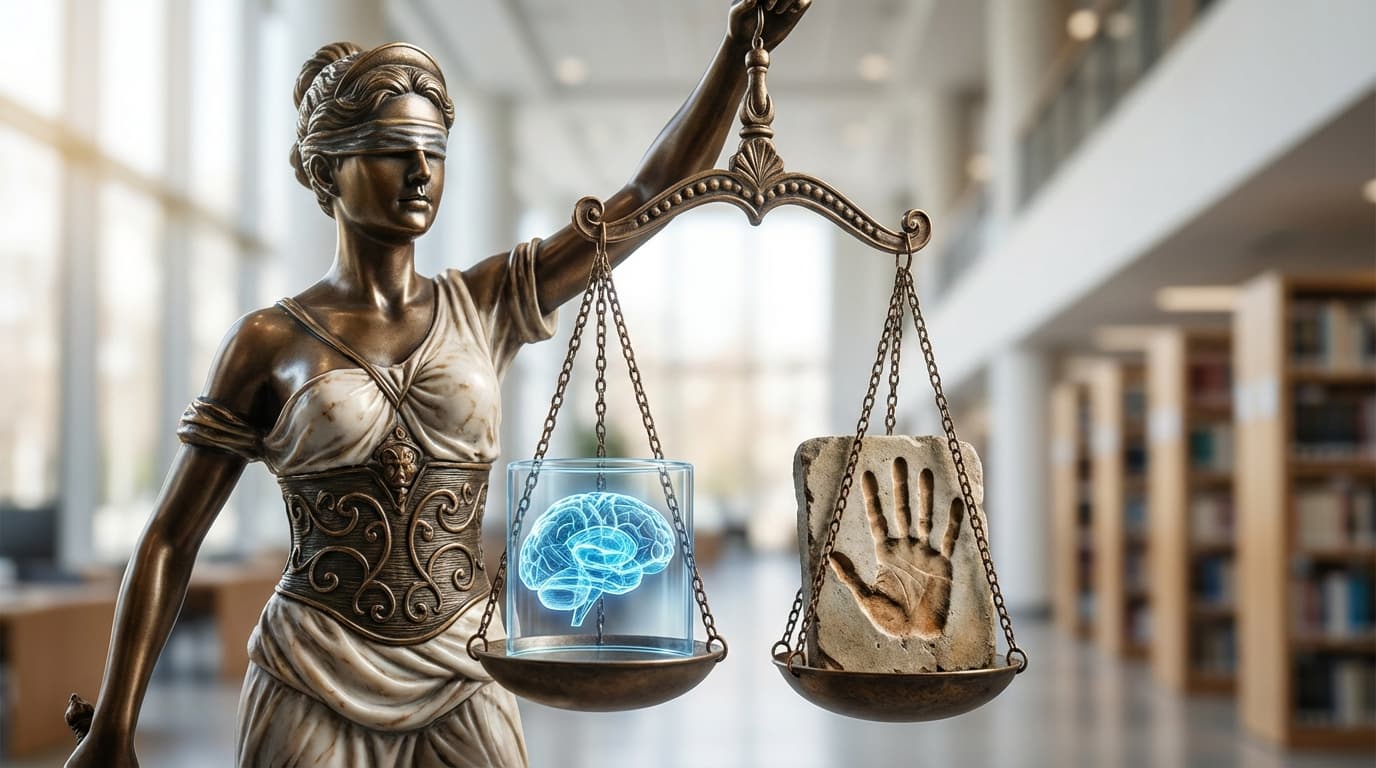
The Verdict is In: Supreme Court Declines Thaler Case
Should AI-generated creations be protected by copyright? This long-debated legal puzzle has finally reached its ultimate conclusion. On March 2, 2026, the U.S. Supreme Court formally declined to hear an appeal from computer scientist Stephen Thaler. Thaler had sought to secure copyright protection for an artwork created by his AI system, "Creativity Machine." After multiple lower-court losses, the Supreme Court's latest decision signifies that there will be no further movement within the current legal framework for the foreseeable future.
According to The Verge (2026), Thaler argued that the AI should be recognized as the sole author, with the rights accruing to its owner. However, federal courts and the U.S. Copyright Office have consistently maintained that, under the Copyright Act (17 U.S.C. § 102(a)), protected works must originate from a "human creator." The Supreme Court’s refusal to grant certiorari effectively upholds the previous circuit court rulings: works without human authorship cannot be copyrighted.
Legal Implications: The Absolute Status of Human Authorship
Legal experts analyze that this decision has far-reaching consequences for the AI industry. It is not just a ruling about a single painting; it establishes that all generative content—be it code, text, or music—automatically falls into the "Public Domain" when produced entirely by AI. This means that if a company uses AI to generate a brand logo or marketing copy without substantial human modification or guidance, that company will have no legal standing to prevent competitors from using the same content.
However, this does not mean that "AI-assisted" works are completely ineligible. Based on guidance provided by the U.S. Copyright Office in the Zarya of the Dawn case, if a human author exerts "substantial creative control" during the process, the portions contributed by the human can still be protected. However, authors must explicitly disclose the AI-generated parts. This Supreme Court decision further reinforces this "human control" threshold as the definitive legal standard.
Market Backlash and Protests: Large-Scale Anti-AI March in London
As the legal verdict was finalized, social resistance to AI reached a new fever pitch. MIT Technology Review (2026) reported that on the eve of the ruling, the largest-ever anti-AI protest erupted in London’s King’s Cross tech hub. Hundreds of creative workers, writers, and lawyers gathered outside the headquarters of OpenAI, Meta, and Google DeepMind, chanting slogans such as "Stop the Plagiarism" and "Pull the Plug."
Protest organizers argue that while the law currently denies AI copyright, it has failed to effectively stop AI companies from using human-authored works for training purposes. This "no copyright for training, no copyright for output" double-loss remains a survival threat for many creators. With the court ruling finalized, it is expected that the battle will shift from "copyright ownership" to legislative efforts for "training compensation."
Future Outlook: Long-Term Challenges for Copyright Law
While the Supreme Court has closed the door on the Thaler case, current law still faces continuous challenges as the line between AI technology and human creation becomes increasingly blurred. For instance, when a human uses highly complex Prompt Engineering to guide an AI, does that constitute enough "human authorship"? Current judicial practice has yet to provide a specific score or threshold for this.
For businesses, the safest strategy now is to establish a rigorous "AI Disclosure Policy." When submitting copyright applications, it is crucial to document the specific human contributions in the conceptualization, modification, and editing phases to ensure that core intellectual property (IP) does not fall into a legal vacuum. As more class-action lawsuits regarding AI infringement go to trial toward the end of 2026, the next legal battlefield will focus on the definition of "Fair Use."
References
[src-1] The Verge (2026). AI-generated art can’t be copyrighted after Supreme Court declines to review the rule. [src-2] MIT Technology Review (2026). I checked out one of the biggest anti-AI protests yet. [src-3] Wired (2026). How to Organize Safely in the Age of Surveillance. [src-4] The Download (2026). Protesting AI, and what’s floating in space.