
Context: Computing Beyond the Atmosphere
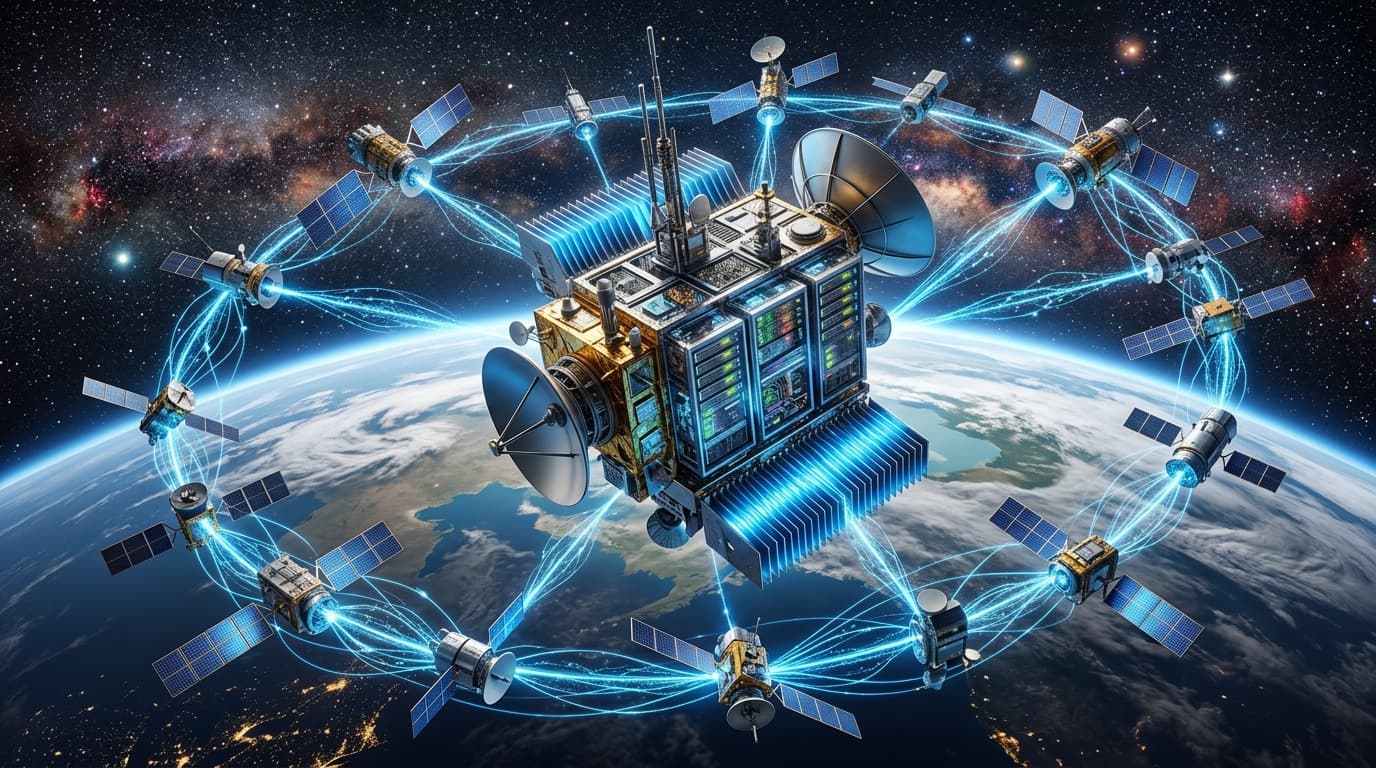
As the volume of data generated by telecommunications and remote sensing satellites grows exponentially, the need to process that information in situ has become a technological imperative. The startup K2 has officially initiated its "Gravitas" project, aiming to launch a constellation of high-powered satellites designed to test the feasibility of orbital data centers. This pivot represents a fundamental shift: space is no longer just a medium for data transmission, but a platform for active computation and storage, providing a secure alternative to terrestrial infrastructure.
Technical Details: Distributed Space-RAID and Tactical Mobility
Recent academic investigations, such as the O-RAID (Orbital Redundant Array of Independent Disks) architecture published in peer-reviewed journals like Scientific Reports, validate the concept of using satellite clusters for resilient global data backup. K2's Gravitas satellites utilize edge-computing chips hardened against solar radiation and extreme thermal cycling. Furthermore, development is underway for "High-Tempo Engagement" satellites. These are highly maneuverable platforms designed for rapid orbital rendezvous and docking—technologies essential for servicing expensive space assets or performing tactical defense maneuvers in congested orbits.
Energy and Infrastructure: Solar Power from the Void
Sustainable energy is the lifeblood of this new orbital economy. Notable investors, including the co-founder of Robinhood, are betting on space-based solar power systems that can beam energy back to Earth or power orbital computing clusters. By capturing solar energy without atmospheric interference, these systems could provide consistent, high-intensity power for data centers that would otherwise face cooling and energy constraints on the ground. Research into "Line-of-Sight" (LOS) measurement for precise docking is a prerequisite for these complex multi-satellite energy and data grids.
Market Impact and Professional Interest
While broad public search data for keywords like "Quantum Computing" showed some limitations in recent reports, specialized interest in "Space Tech" and "Space Compute" remains high in technology hubs like California. Analysts predict that as environmental regulations and land costs increase for ground-based data centers, orbital facilities will become attractive for long-term, ultra-secure data archiving. The commercialization of space is transitioning from simple connectivity to high-value tactical and computational infrastructure, attracting massive venture capital interest despite the high entry costs.
Legal and Ethical Considerations: The Wild West of Orbit
The rise of orbital data centers exposes significant gaps in international space law. The Outer Space Treaty of 1967 offers little guidance on commercial data jurisdiction or liability for cyber-attacks occurring in orbit. Additionally, the proliferation of high-mobility satellites increases the risk of orbital debris from accidental collisions, a phenomenon known as the Kessler Syndrome. Regulators are now calling for a comprehensive "Space Traffic Management" framework to govern commercial operations and ensure that orbital slots remain usable for future generations.
Future Outlook: A Mirror of Digital Earth in the Stars
Within the next decade, an integrated "Orbital Internet Layer" may emerge, where data processing and exchange occur entirely outside the Earth's atmosphere. K2's Gravitas is the vanguard of this movement. As launch costs continue to plummet, space will evolve into the ultimate vault for human digital assets. The current focus on tactical engagement and maneuverable satellites is, in essence, the construction of the protective infrastructure needed to secure the multi-billion dollar commercial investments flowing into the stars.