
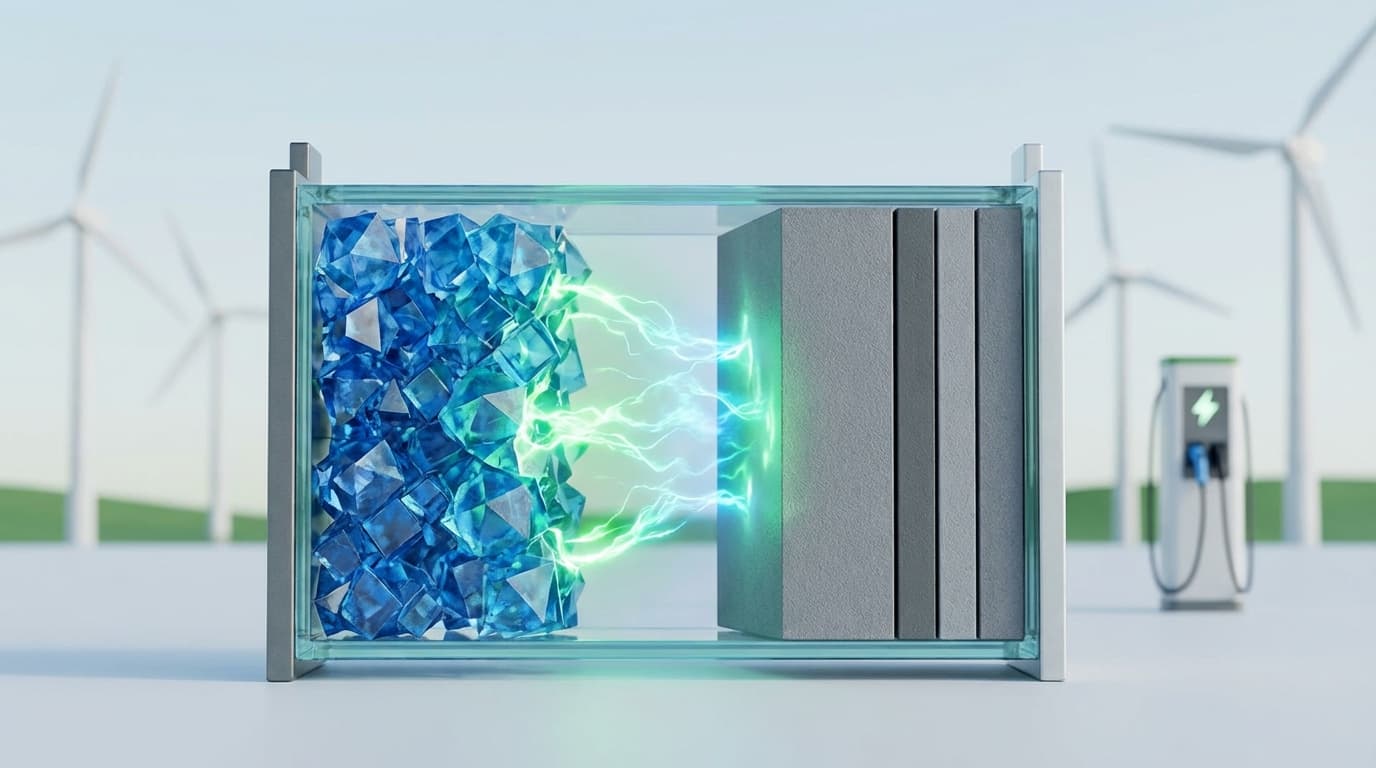
2026: The Year of Energy Transformation — Sodium-Ion Batteries Go Global as Solid-State Tech Hits Production Milestone
The year 2026 is being marked by global tech and energy experts as the definitive turning point for next-generation battery technologies. As lithium price volatility and supply chain risks persist, sodium-ion batteries have been named one of the "10 Breakthrough Technologies" by MIT Technology Review. Simultaneously, Finnish startup Donut Lab has announced a significant leap in solid-state battery production readiness, signaling an impending revolution in efficiency and cost for electric vehicles (EVs) and energy storage systems.
Sodium-Ion Batteries: The Cost-Effective Alternative to Lithium
For decades, lithium-ion batteries have dominated the storage market, but high raw material costs and scarcity have limited their universal adoption. According to a roundtable discussion by MIT Technology Review (2026), 2026 marks the first year sodium-ion technology is successfully moving into mass-market vehicles and utility-scale grid storage.
The primary advantage of sodium-ion technology lies in its abundant and inexpensive raw materials. Sodium is vastly more common than lithium in the Earth's crust, and its production process is highly compatible with existing lithium-ion manufacturing lines. While its energy density is slightly lower than high-end lithium counterparts, its superior safety, low-temperature performance, and competitive pricing make it the ideal candidate for affordable EVs and large-scale grid arrays.
Solid-State Batteries: Donut Lab’s Quest for Scalability
In the race for higher energy density, solid-state batteries are often considered the "Holy Grail." However, achieving large-scale, low-cost production has remained an industry-wide obstacle. MIT Technology Review (2026) reports that Finnish company Donut Lab now claims to have a solid-state technology that is ready for mass production.
Donut Lab's breakthrough focuses on a proprietary process for laminating and integrating solid electrolytes. While the technology still needs to prove its long-term cycle life and commercial yields, the claim of "production readiness" has attracted significant interest from global automakers. Successful mass production would allow EVs to achieve much higher ranges while virtually eliminating the fire risks associated with traditional liquid electrolytes.
Geopolitical Competition and Energy Sovereignty
The race for battery dominance is deeply intertwined with geopolitics. The United States is pushing to regain its lead in battery R&D, while China currently leads in the vertical integration of the sodium-ion supply chain. As observed in MIT Technology Review (2026), energy storage has become a pillar of national security, alongside semiconductors and aerospace.
For Europe, the rise of homegrown innovators like Donut Lab is seen as a vital step in reducing reliance on Asian suppliers and achieving the EU's 2050 net-zero targets.
Future Outlook: A Diversified Energy Landscape
Trends in 2026 suggest that the future of energy storage will not be dominated by a single chemistry. Lithium-ion will continue to serve high-performance sectors, while sodium-ion batteries will fill the gap for mid-to-low tier markets and static grid storage. Solid-state batteries are expected to become the standard for luxury and long-range transport as we move toward the end of the decade.