

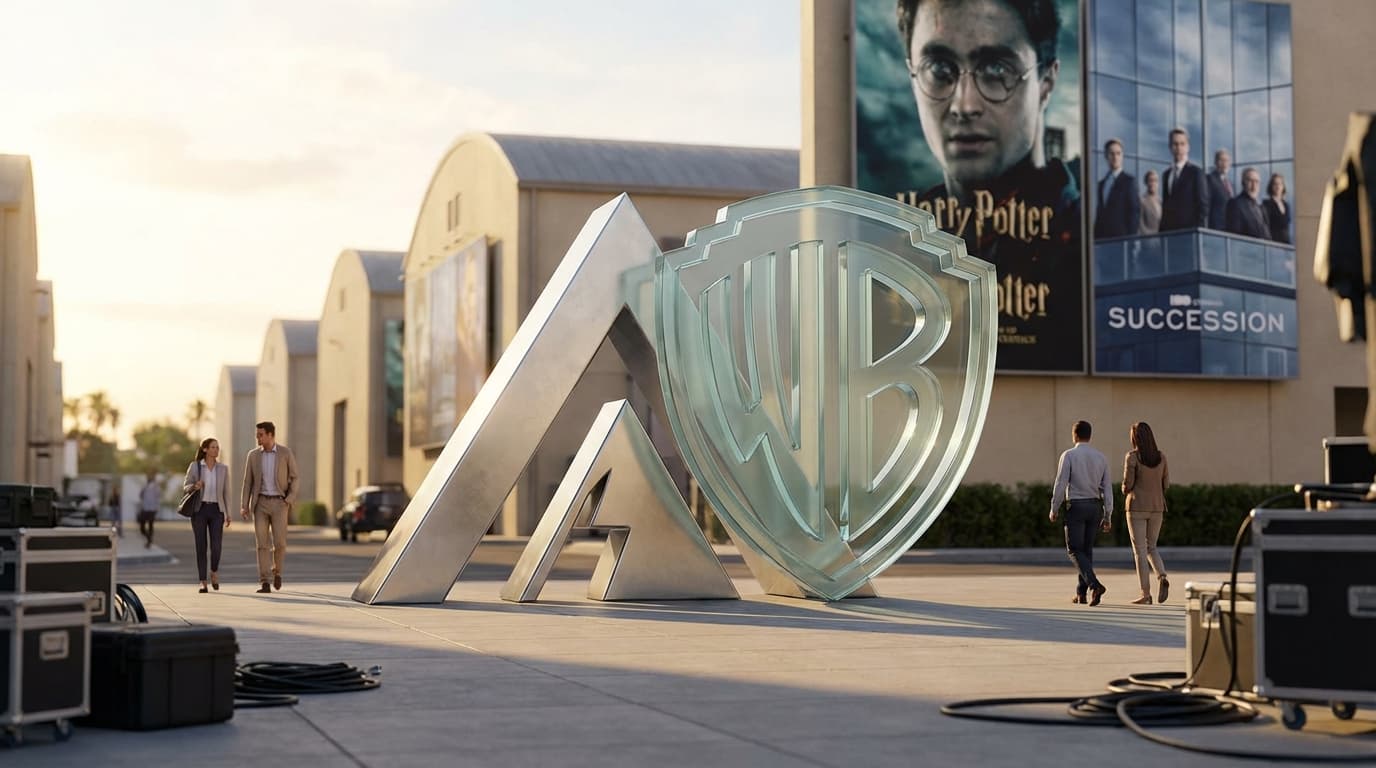
Streaming Wars Shakeup: Paramount Acquires Warner Bros. Discovery as Netflix Withdraws
The Battle Concludes: A New Media Titan
The high-stakes bidding war for Warner Bros. Discovery (WBD) has come to an abrupt end. In a surprising development, Netflix announced it has officially withdrawn its bid, clearing the way for Paramount—controlled by David Ellison—to finalize an acquisition that will redraw the map of global entertainment.
According to The Verge (2026), Netflix co-CEOs Ted Sarandos and Greg Peters confirmed the company is "declining to match" the superior terms offered by Paramount. The benchmark for the deal was estimated at a staggering $83 billion, a figure Netflix ultimately deemed inconsistent with long-term shareholder value.
The Ellison Era: Consolidating HBO, CNN, and DC
David Ellison’s victory places an unprecedented stable of legendary brands under one roof. Paramount will now control Warner Bros. Studios, HBO, CNN, and the DC Universe, combining them with its own existing assets like CBS and Paramount+. As TechCrunch (2026) reports, this consolidation creates a power center that poses a direct threat to Disney’s dominance.
Antitrust Scrutiny: The Regulatory Hurdle
While the financial agreement is sealed, the legal journey is just beginning. The merger will undergo intense scrutiny by the DOJ and FTC under the Clayton Act. Regulators are expected to examine the vertical integration of content production and distribution, focusing on whether Paramount will have too much control over premium streaming and global news outlets like CNN.
Market Impact: Why Netflix Walked Away
Industry analysts suggest Netflix’s withdrawal is a strategic pivot back to organic growth over expensive acquisition. While losing out on HBO's prestige catalog is a blow, Netflix avoids the massive debt burden that often follows such large-scale M&A. For the industry at large, this marks the end of the scattered streaming era and the beginning of a consolidated Mega-Studio period.