

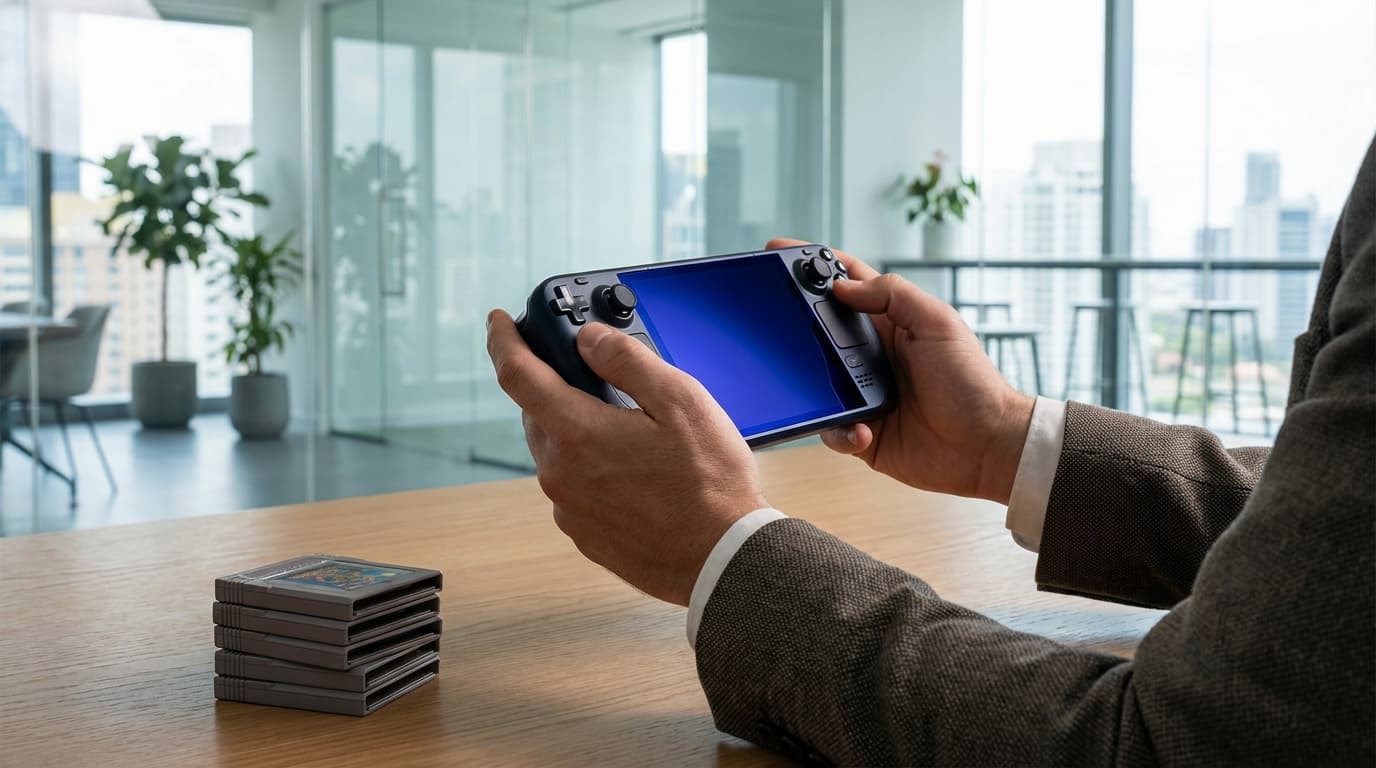
The Return of the Hardware Prodigy
Palmer Luckey, the visionary founder of Oculus and the driving force behind the defense-tech giant Anduril, is making headlines once again—this time in the world of high-end nostalgia. According to TechCrunch, Luckey’s latest venture, ModRetro, is reportedly seeking new funding at a staggering $1 billion valuation. This vault into unicorn status underscores a major shift in the tech landscape: the commodification of retro gaming into a luxury hardware segment.
ModRetro’s flagship product, the "Chromatic," is far from a standard emulator. It is a ground-up hardware reconstruction designed to play original Game Boy and Game Boy Color cartridges natively. With a chassis made of magnesium alloy, a screen covered in sapphire crystal, and a display custom-tuned to replicate the exact pixel response of 1990s hardware, the Chromatic targets the affluent "adult collector" demographic. Luckey is applying the same rigorous engineering standards to retro gaming that he used to build VR headsets and military drones.
Market Dynamics: In the Shadow of Switch 2
The timing of ModRetro’s billion-dollar valuation coincides with a broader explosion in handheld hardware interest. While the world waits for Nintendo’s "Switch 2," the market for third-party accessories and boutique consoles is booming. A recent hands-on review by The Verge of the $40 EasySMX S10 Lite controller demonstrated that third-party manufacturers are now matching or even exceeding the feature sets of official first-party hardware. This environment has created a fertile ground for ModRetro to position itself as the "Rolls-Royce" of retro gaming.
Google Trends data indicates that global interest in "Handheld Consolidation" and "Retro Hardware" is at its highest point in five years. In regions like Taiwan and Japan, the search score for these topics has hit a near-perfect 90, fueled by a generation of gamers who grew up with physical cartridges and are now seeking high-quality ways to preserve their collections. ModRetro isn't just selling a console; it’s selling a hardware manifesto against the ephemeral nature of digital-only gaming.
Why a $1 Billion Valuation for "Old" Tech?
To many, a billion-dollar valuation for a company focused on decades-old games seems absurd. However, investors see three key pillars of value. First is the "Luxury Hardware" angle—ModRetro is doing for gaming what Leica did for cameras. Second is the potential for a proprietary software ecosystem. ModRetro is commissioning new, original games to be released on physical cartridges, creating a unique marketplace that exists outside the control of Apple or Sony.
Third is the "Luckey Factor." Palmer Luckey’s track record for taking hardware from a garage prototype to a multi-billion dollar exit is unparalleled in modern tech. His ability to navigate complex global supply chains and manufacturing processes gives ModRetro a massive advantage over smaller competitors like Analogue. Investors are betting that Luckey can turn ModRetro into a lifestyle brand that encompasses not just gaming, but a wider range of high-end, retro-inspired electronics.
Looking Ahead: The Future of Physical Media
In a world where digital storefronts can disappear and "cloud gaming" is the industry’s new obsession, ModRetro represents a defiant return to the tangible. The company’s success suggests that there is a significant market for products that work without a subscription, without an internet connection, and without the threat of planned obsolescence. As ModRetro scales, the industry expects to see them expand into other categories of "legacy high-tech," perhaps modernizing CRT technology or retro audio equipment.
Palmer Luckey’s ModRetro is proving that nostalgia, when combined with elite engineering and a visionary brand, is one of the most powerful forces in tech. Whether the Chromatic can maintain its momentum against the upcoming wave of next-gen handhelds remains to be seen, but for now, the king of VR has found a billion-dollar goldmine in the past.