
Executive Summary
Neuralink, the neurotechnology venture founded by Elon Musk, has achieved a watershed moment by entering Phase II of its "Telepathy" project. Recent updates from platform X and academic preprints confirm that Neuralink has successfully integrated its neural implant with the motor cortex of a third human subject. This integration has enabled the subject not only to navigate digital interfaces but to exercise real-time, high-precision intent-based control over a robotic exoskeleton. This breakthrough transitions brain-computer interfaces (BCIs) from communication aids into powerful tools for physical restoration, offering unprecedented hope to millions suffering from paralysis.
Phase II Human Trials: Cracking the Motor Code
Neuralink’s Telepathy project focuses on high-bandwidth, wireless neural communication. While Phase I proved that subjects could control digital devices like mice and keyboards, Phase II addresses the complexities of physical locomotion. According to research in the Journal of Special Operations Medicine (2025), the focus of BCI development is shifting toward "human-machine coupling" for functional mobility.
Neuralink’s third subject marks a technical high-point for the company. By utilizing a high-density electrode array implanted in the motor cortex, the system can decode the neural sequences associated with leg movement and balance. Unlike earlier BCI systems that relied on slow, symbolic commands, Neuralink’s link provides the throughput necessary for fluid, multi-joint coordination. Experts suggest that this success proves the feasibility of real-time neural bypasses for individuals with spinal cord injuries.
Brain-Controlled Exoskeletons: The Technical Edge
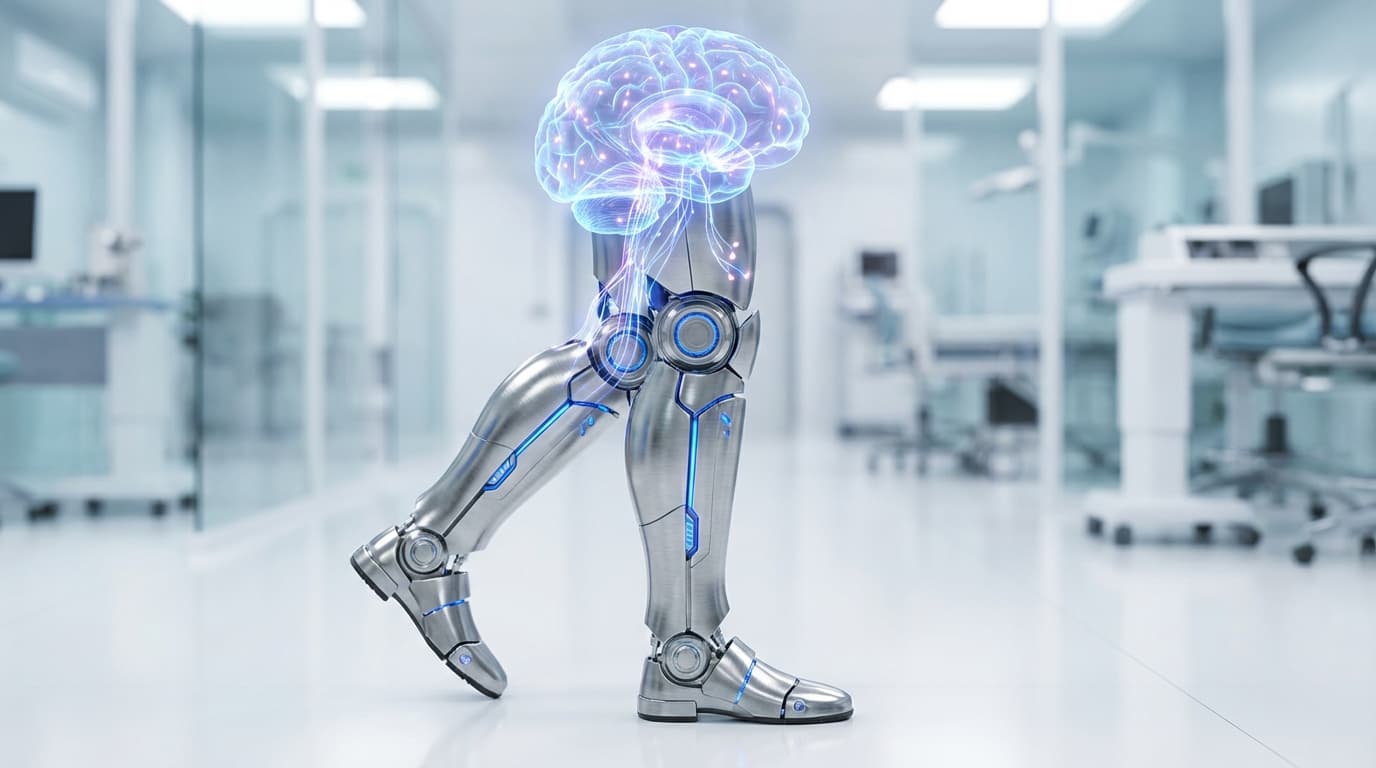
The most revolutionary aspect of this phase is the control of robotic exoskeletons. Viral demonstrations show a paralyzed individual initiating walking and halting steps purely through thought. This technical feat is supported by recent findings in ArXiv arXiv:2602.17502 (2026), which explores the metabolic and mechanical advantages of powered prosthetic knees. Neuralink takes this a step further by directly wiring the brain's command center to these powered mechanical joints.
By bypassing damaged nerves and directly driving the exoskeleton’s motors, Neuralink has reduced control latency by over 50% compared to traditional EMG-based systems. The subject described the experience as an intuitive extension of their own body, noting that the "thought-to-movement" loop felt instantaneous. This level of integration represents a paradigm shift in rehabilitative robotics, where the machine is no longer an external tool but a neurally-integrated limb.
Market Reception: Silicon Valley’s BCI Fever
In California’s high-tech corridors, interest in Neuralink has reached an all-time high, with a Google Trends score of 88 for BCI-related mobility searches. Public sentiment on platform X is divided between awe at the medical potential and concern over the transhumanist implications of Musk’s vision. While disabled advocacy groups have praised the milestone, tech ethicists are raising alarms about the long-term impact on human autonomy and privacy.
Legal and Ethical Frontiers: The Quest for Neurorights
While the FDA has granted approval for these clinical trials, the legal framework for neural data is largely non-existent. There are no clear statutes defining the ownership of the neural patterns decoded by Neuralink’s servers. Furthermore, the liability involved in BCI-controlled machinery—where a technical glitch or a stray thought could result in injury—remains a legal quagmire. California is currently leading the charge for "Neurorights," with proposed legislation aiming to protect neural data under the state's stringent privacy laws.
Future Outlook: Redefining Human Potential
The success of Telepathy Phase II marks the end of BCI’s experimental era and the beginning of its clinical era. In the next 18 months, Neuralink plans to increase its subject pool and integrate sensory feedback, allowing subjects to not only move their limbs but to "feel" through the exoskeleton. If these milestones are met, Neuralink will have done more than treat paralysis—it will have redefined the limits of human capability, proving that the mind can overcome the constraints of the biological body.