

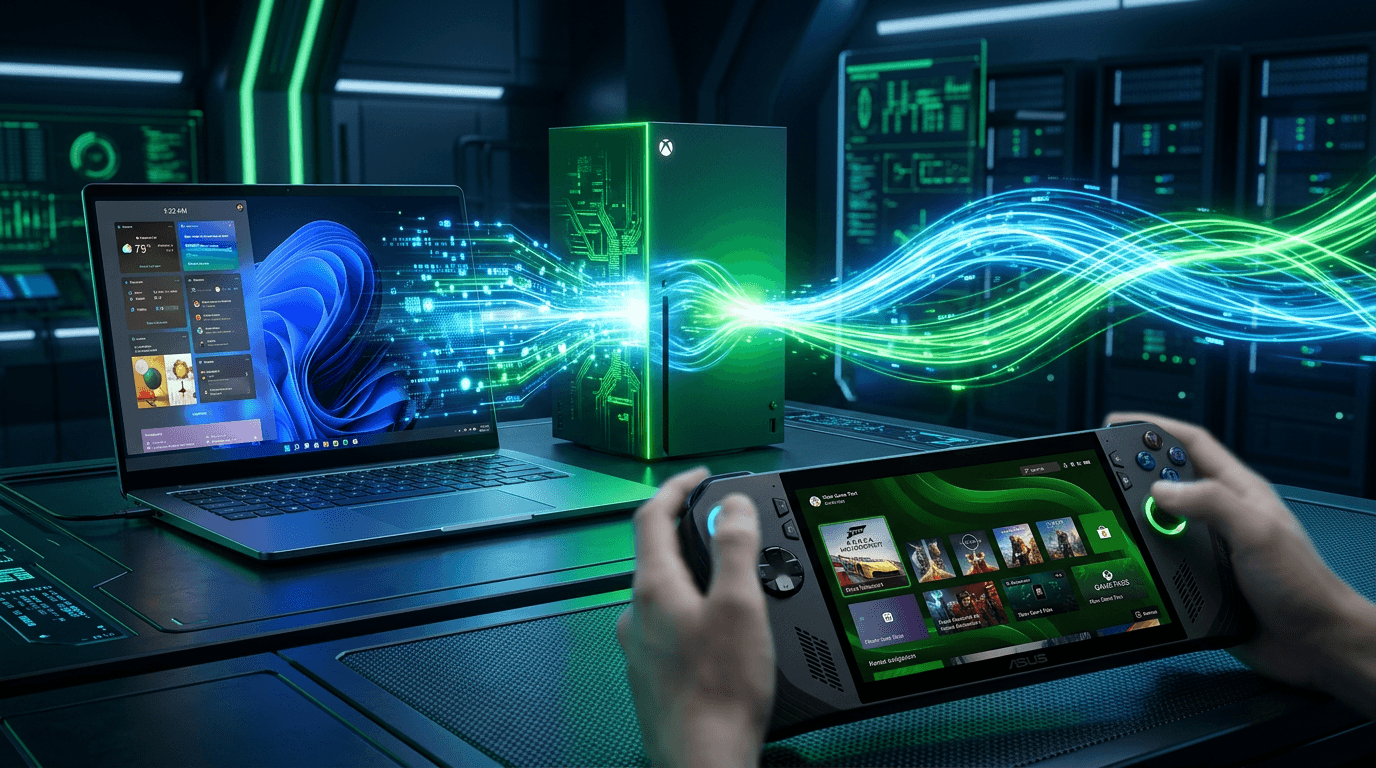
The Unification of Play: Bridging the Console-PC Divide
At the 2026 Game Developers Conference (GDC), Microsoft unveiled a strategic roadmap that promises to fundamentally alter the gaming landscape. For decades, the divide between console gaming and PC gaming has been defined by different operating systems, user interfaces, and development pipelines. However, Microsoft’s "Project Helix" aims to dissolve these barriers, creating a unified ecosystem where the next-generation Xbox hardware and the Windows 11 operating system become functionally indistinguishable. The ultimate goal: an Xbox that can run PC games natively and a Windows PC that offers a console-like handheld experience.
Jason Ronald, Microsoft’s VP of Next Generation, provided the first concrete details of Project Helix during a GDC keynote. The next Xbox, slated to reach alpha status in 2027, will feature a custom AMD chip designed for a "massive increase" in raytracing performance and AI-driven graphics acceleration. Most importantly, the hardware will be built on a core Windows 11 kernel, allowing it to leverage the massive library of PC gaming titles without the need for specialized porting. This marks the end of the traditional closed-box console philosophy and the beginning of a new era of "Universal Gaming."
Coming in April: The 'Xbox Mode' for Windows 11
Microsoft is not waiting for 2027 to start this transition. Beginning in April 2026, a major update will roll out to all Windows 11 PCs, introducing a streamlined, controller-friendly user interface optimized for gaming handhelds and home theater PCs. As reported by Ars Technica, this new "Xbox mode" is a direct response to the success of Valve’s Steam Deck and its Linux-based SteamOS. Until now, running Windows 11 on handheld devices like the ROG Ally or Lenovo Legion Go has been a clunky experience, often requiring a keyboard and mouse for basic navigation.
This update will feature a simplified dashboard, enhanced power management tools, and deep integration with Xbox Game Pass. It allows users to bypass the traditional Windows desktop and launch straight into a gaming-centric environment. For the burgeoning handheld market, this update is a game-changer. It provides hardware manufacturers with a standardized, high-performance interface that makes Windows-based handhelds as intuitive to use as a dedicated game console. This move is a strategic play by Microsoft to protect its OS dominance in the rapidly growing portable gaming sector.
Global Impact and Market Trends: The Handheld Renaissance
The announcement has triggered a wave of interest globally. Search data from early March 2026 shows a 50% spike in queries related to "Windows Handheld Update" and "Next Xbox Specs," particularly in markets like Taiwan and South Korea, where mobile and portable gaming have a massive footprint. In Taiwan, a global hub for gaming hardware manufacturing, companies like ASUS and MSI are expected to be the primary beneficiaries of the April update. By providing a better OS experience, Microsoft is helping these manufacturers compete more effectively against the Steam Deck and upcoming competitors from Sony.
Industry analysts note that Project Helix is a move of both offense and defense. By unifying the software stacks, Microsoft is making its ecosystem more attractive to developers who want their games to reach the widest possible audience with minimal effort. At the same time, it ensures that Windows remains the "default" platform for gaming, regardless of the form factor. The synergy between Windows 11 and Xbox hardware is expected to drive a significant increase in Game Pass subscriptions, as the service becomes a seamless thread connecting the living room, the desk, and the commute.
Technical Foundations: Raytracing and AI Scaling
The technical ambitions of Project Helix are centered on a "generational leap" in visual fidelity. According to Ronald, the integration of advanced AI units within the next-generation Xbox chip will allow for sophisticated real-time raytracing that was previously only possible on high-end PC GPUs. This hardware-level optimization will be paired with a next-gen version of DirectSR (Direct Super Resolution), ensuring that games look crisp even on the lower-resolution screens of handheld devices.
This technical synergy is what makes the unification possible. When the hardware capabilities of the console and the PC align, the software can follow suit. However, The Verge notes that the challenge lies in maintaining compatibility across an infinite variety of PC hardware configurations. While Microsoft can control the specs of its own Project Helix hardware, ensuring the "Xbox mode" runs flawlessly on a budget gaming laptop or a high-end custom rig requires immense software engineering effort. The April update will serve as a massive live test for this vision.
Future Outlook: A Seamless Gaming Ecosystem
Looking ahead to 2027 and beyond, Project Helix represents Microsoft’s vision for a post-platform world. In this future, your "platform" is simply your Xbox account, and the device you happen to be holding is merely a portal into that experience. Whether you are playing on a $500 console, a $2,000 PC, or a $600 handheld, the UI, your library, and your social connections remain constant. This fluidity is the ultimate competitive advantage in an increasingly fragmented digital world.
As the April update for Windows 11 approaches, the gaming community will get its first taste of this unified future. The success of this transition will depend on how well Microsoft can balance the needs of hardcore PC power users with the simplicity required for a console experience. One thing is certain: the walls between Windows and Xbox have never been thinner, and the era of the unified gaming ecosystem has officially begun.