
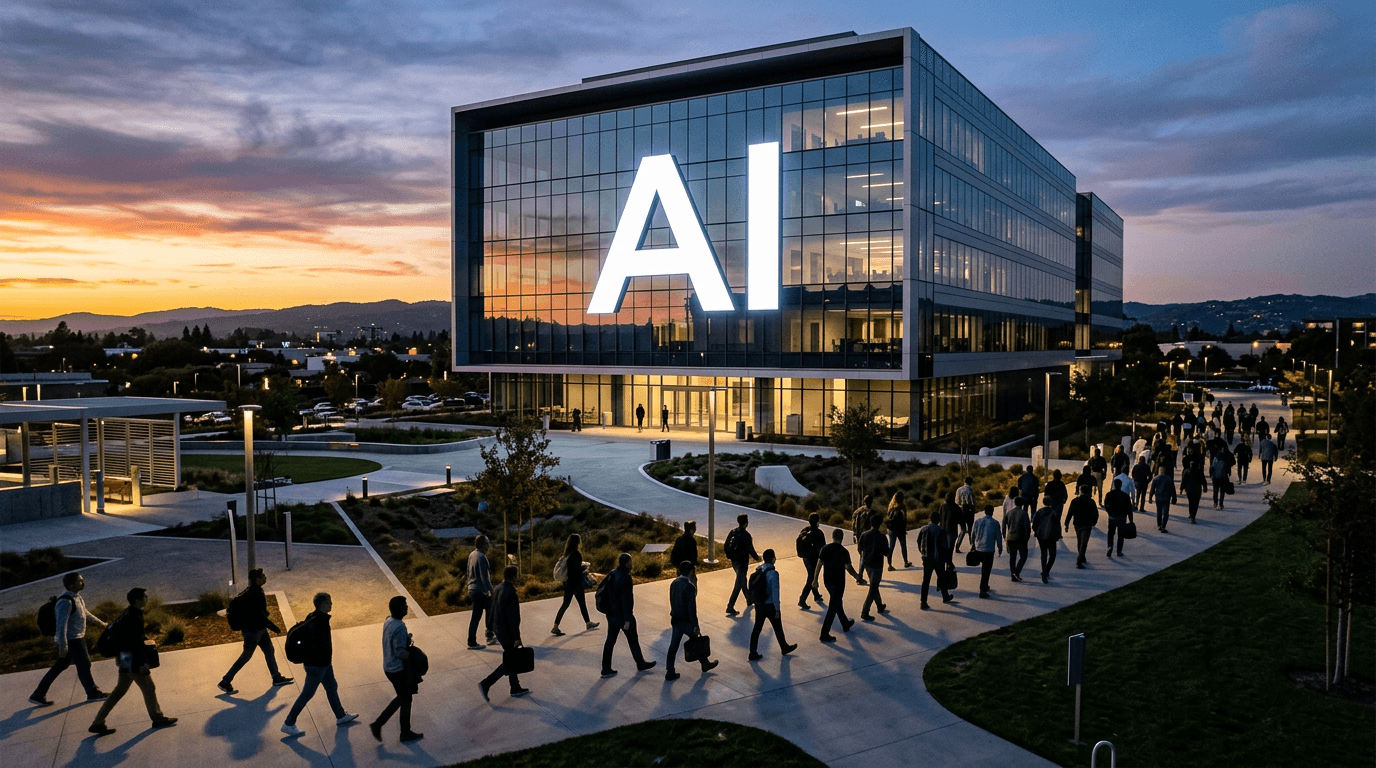
The Cost of AI Transformation: Meta's Massive Downsizing
Meta, the parent company of Facebook and Instagram, is reportedly preparing for one of the most significant workforce reductions in its history. According to reports from TechCrunch and Reuters, the social media giant is considering laying off up to 20% of its staff, which equates to approximately 15,800 positions. This aggressive move comes as the company attempts to offset the staggering costs of its massive investments in AI infrastructure and the ongoing procurement of high-end hardware for generative AI development.
While CEO Mark Zuckerberg previously designated 2023 as the "Year of Efficiency," this latest development suggests that the need for efficiency has only intensified in the face of the AI arms race. Yahoo Finance data indicates that market sentiment remains cautious as investors weigh the benefits of reduced overhead against the potential disruption to Meta's core services. The layoffs are strategically designed to pivot the company's financial resources away from legacy projects and toward the high-stakes world of foundation models and data centers.
Funding the AI Infrastructure "Money Pit"
The primary driver behind this 20% reduction is the immense capital expenditure required to stay competitive with the likes of OpenAI and Google. Meta has committed billions to acquiring NVIDIA's H100 and B200 GPUs, which are essential for training the Llama family of models. Beyond the cost of the chips themselves, the energy requirements and cooling infrastructure for these massive data centers have created a significant strain on the company's balance sheet.
Google Trends data reveals that search interest for "Meta layoffs" reached peak levels in tech hubs like California shortly after the news broke. Unlike previous rounds of layoffs that targeted general administrative roles, this wave is expected to be more clinical, specifically aiming at departments that do not directly contribute to Meta's AI-first roadmap. This transition highlights a fundamental shift in Meta's identity from a social networking firm to a "Physical AI" and computing company.
Expert Analysis: From Efficiency to Arms Race
Industry analysts suggest that Meta is entering a "high-risk, high-reward" phase. As verified by recent reporting, these layoffs are intended to fund aggressive acquisitions and the hiring of top-tier AI researchers who command seven-figure salaries. While Meta's Llama models have been a boon for the open-source community, they have yet to generate a direct revenue stream that offsets the massive compute costs incurred by the company.
Market observers note that Meta is under pressure to prove to Wall Street that it can balance its metaverse ambitions with the immediate demands of AI. The 20% cut is a signal to investors that the company is willing to sacrifice its size for the sake of survival in the next era of computing. However, internal morale remains a concern, as constant restructuring can lead to talent attrition beyond the intended layoffs.
Regulatory and Legal Implications
Such a large-scale workforce reduction is likely to trigger regulatory scrutiny, particularly in the European Union where labor laws are stringent. Meta will likely face mandatory consultation periods and potential legal challenges from works councils. Furthermore, there are concerns that cutting 20% of the staff could impair Meta's ability to maintain content moderation and privacy standards, potentially leading to increased fines from global regulators. Legal experts warn that if the layoffs impact safety teams, Meta may find itself at odds with new AI safety legislation being debated in several jurisdictions.
Future Outlook: The Path Forward for Meta
The success of this strategic retreat will depend on whether Meta can successfully convert its saved labor costs into technical breakthroughs. If the pivot allows Meta to dominate the AI agent market, the layoffs will be seen as a necessary evolution. Conversely, if the company fails to innovate despite its massive spending, it may find itself weakened and vulnerable to more nimble competitors.
Investors will be looking for clarity in the next quarterly earnings report, specifically regarding the ROI on AI capital expenditures. Whether Meta can leverage its billions of users into an AI-powered ecosystem remains the defining question for 2026. The tech world will be watching closely as Zuckerberg attempts to navigate this turbulent transition.