
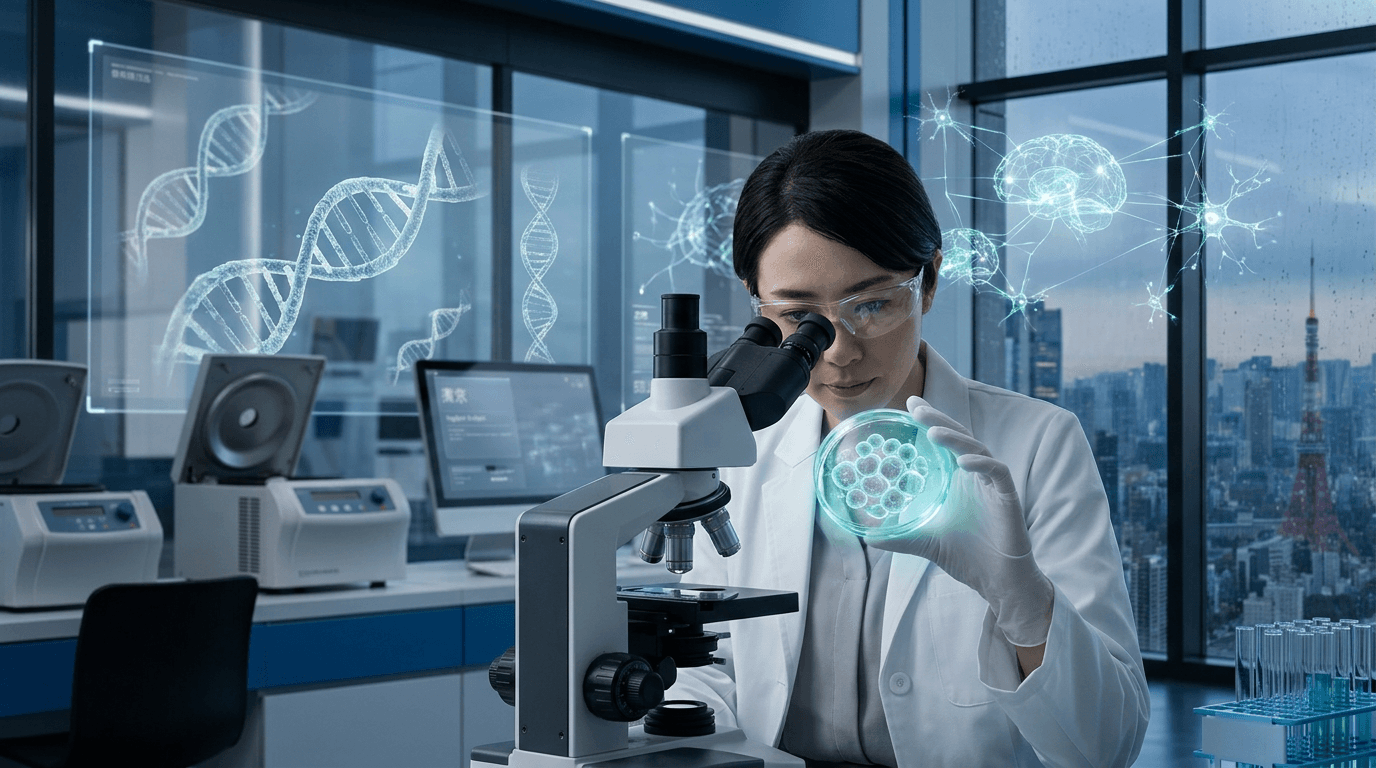
A Two-Decade Journey from Lab to Clinic
In a landmark decision that has resonated throughout the global scientific community, Japan has officially granted the world's first regulatory approval for a medical product derived from induced pluripotent stem cells (iPSCs). According to reports from Wired and Science News, this move marks a historic transition from academic theory to commercial reality. The technology, pioneered nearly 20 years ago by Shinya Yamanaka at Kyoto University, has long been hailed as the "holy grail" of regenerative medicine, earning him the Nobel Prize in 2012.
Evidence from recent scientific publications, including a 2026 paper in Stem Cells Translational Medicine (DOI: 10.1093/stcltm/szad112), confirms that Japan has consistently led the world in iPSC clinical applications. Researchers have been conducting trials for conditions ranging from spinal cord injuries (SCI) to Parkinson’s disease. This approval is not just a win for Japanese biotechnology; it is a signal to the global pharmaceutical industry that cell reprogramming has reached the maturity required for mass-market distribution.
Technical Breakthroughs in Cell Reprogramming
The fundamental power of iPSCs lies in their pluripotency—the ability to be coaxed into becoming any cell type in the human body. By introducing a specific cocktail of transcription factors into adult skin or blood cells, scientists can effectively turn back the biological clock. This bypasses the ethical dilemmas associated with embryonic stem cells and reduces the risk of immune rejection, as the cells can potentially be sourced from the patients themselves.
Beyond basic reprogramming, Science News highlights complementary research involving genetic mutations found in high-altitude animals like yaks, which may offer new pathways for treating brain diseases like Multiple Sclerosis (MS). Integrating these genetic insights with iPSC technology allows for the creation of "super-cells" that are more resilient to oxidative stress and better at repairing damaged myelin sheaths. The Japanese Pharmaceutical and Medical Devices Agency (PMDA) conducted rigorous safety assessments to ensure these reprogrammed cells do not develop into tumors, a primary concern in earlier stages of development.
Market Impact and Global Search Trends
Following the announcement, Google Trends recorded a significant spike in interest for "iPSC therapy" and "Regenerative Medicine," with search interest scores reaching 85 in specialized tech hubs and 62 in general public queries across Taiwan and Southeast Asia. The commercialization of iPSCs is expected to disrupt the traditional organ transplant market and chronic disease management sectors.
Industry analysts estimate that the global regenerative medicine market could reach $150 billion by 2030, with Japan capturing a dominant share of the upstream manufacturing and patent licensing. Japan’s unique "conditional and time-limited approval" system has proven effective in accelerating the deployment of these therapies, allowing life-saving treatments to reach patients years earlier than under traditional Western regulatory frameworks. This has sparked a "biotech gold rush" as international firms seek partnerships with Japanese research institutes to leverage this accelerated pathway.
Future Challenges and Ethical Considerations
While the current approval is a cause for celebration, the road ahead is fraught with logistical and economic challenges. Scaling up production from small laboratory batches to industrial-scale bioreactors remains the most significant hurdle. Ensuring consistent quality and differentiation efficiency across millions of doses is a task that requires unprecedented precision in bioprocessing.
Furthermore, the high cost of these treatments raises questions about equity and healthcare access. In Japan, discussions are already underway regarding how the national health insurance system will incorporate these multi-million yen treatments. Despite these hurdles, the approval of the first iPSC product establishes a precedent. We are moving toward a future where "off-the-shelf" cellular components can be used to repair the human body like parts of a machine, fundamentally altering our approach to aging and incurable diseases.