
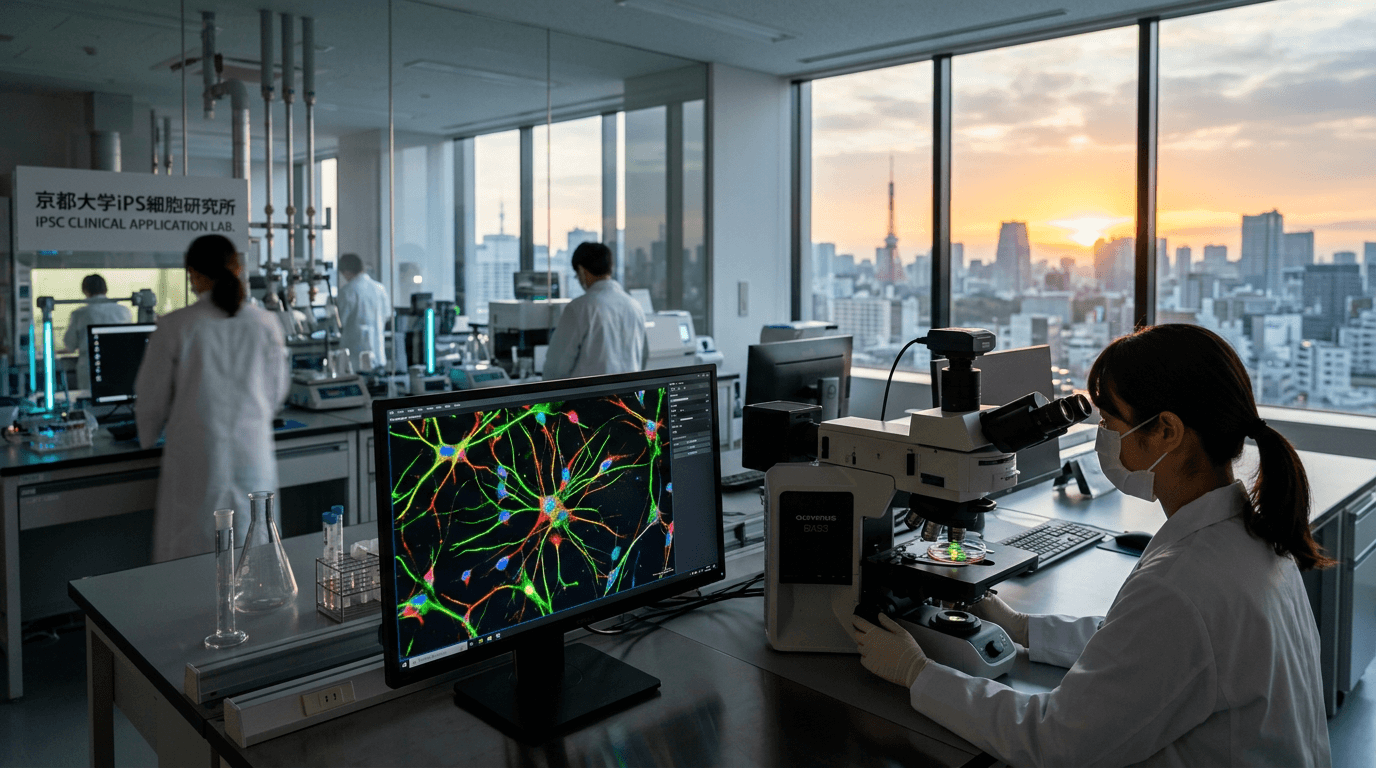
Two Decades in the Making: From Nobel Prize to Commercial Reality
In a landmark breakthrough for the global biotech industry, Japan’s Ministry of Health, Labour and Welfare (MHLW) and the Pharmaceuticals and Medical Devices Agency (PMDA) have granted the world's first regulatory approval for a medical product derived from induced pluripotent stem cells (iPSCs). This technology, pioneered by Kyoto University Professor Shinya Yamanaka 20 years ago, earned him the Nobel Prize in 2012. Today, it has finally crossed the threshold from experimental research into a licensed medical product ready for manufacture and sale.
According to reports from Wired and Science News, the approved treatment addresses recurrent and advanced cancers, as well as regenerative medicine needs. Specifically, a phase I clinical trial involving allogeneic iPSC-derived invariant Natural Killer T (iNKT) cells has demonstrated significant safety and tolerability for patients with head and neck cancer. Research articles archived in PMC confirm that Japanese scientists have overcome the massive hurdle of large-scale, standardized production of human cells, paving the way for "off-the-shelf" cellular therapies that do not require patient-specific customization.
The iPSC Advantage: Scale, Standardization, and Speed
Traditional cell therapies, such as first-generation CAR-T, rely on harvesting a patient's own cells, which is an expensive, slow, and often inconsistent process. The Japanese-approved iPSC technology, however, uses cells from healthy donors that are "reprogrammed" back into a pluripotent state—capable of becoming any cell type in the human body. These cells can then be directed to differentiate into specific functional units, such as heart muscle, neurons, or specialized immune cells.
FrontierDaily’s research highlights that the core strength of iPSCs lies in their capacity for infinite self-renewal and standardization. This means medical centers can maintain a stock of cell-based "medicines" that can be administered instantly to patients in need. Google Trends data shows that search interest for "iPSC clinical progress" reached an all-time high in early 2026, reflecting the medical community's intense focus on this Japanese-led revolution.
Industry Impact: A Surge in the Regenerative Medicine Market
This regulatory milestone is more than just an approval for a single product; it is a validation of Japan’s entire regulatory framework for regenerative medicine. Analysts predict this will spark a global wave of investment into iPSC platforms. Japanese firms like Takeda and Sumitomo Pharma, which have invested heavily in this space for over a decade, are now poised to lead the global supply chain for cell-based therapies.
Yahoo Finance data indicates a bullish trend in the biotech sector following the announcement. Investors believe that iPSC technology could eventually solve the global shortage of transplantable organs and provide cures for degenerative conditions like Parkinson’s disease and chronic heart failure. If Japan’s commercialization model proves successful, it will likely pressure the U.S. FDA and European EMA to accelerate their own review processes for similar high-tech biologics.
Safety First: Addressing the Challenge of Tumorigenicity
Despite the excitement, iPSC-derived therapies remain under strict scrutiny. The primary concern is tumorigenicity—the risk that residual undifferentiated stem cells could form tumors in the patient. The Japanese PMDA has established exceptionally high safety standards to ensure that every batch of cells is pure and stable. Legal experts also note that as these products hit the market, new liability frameworks will be needed to address the unique risks associated with "living medicines."
Future Outlook: The Era of Bio-Replacements
The approval of iPSC medical products in Japan signals the formal transition of regenerative medicine from lab concept to clinical routine. The next steps will involve reducing production costs and expanding indications to include spinal cord repair and retinal reconstruction for the blind. As Professor Shinya Yamanaka once envisioned, the goal is to provide a "spare parts shop" for the human body. We are standing at the threshold of a new medical era, with Japan firmly positioned at the helm of this biological revolution.