

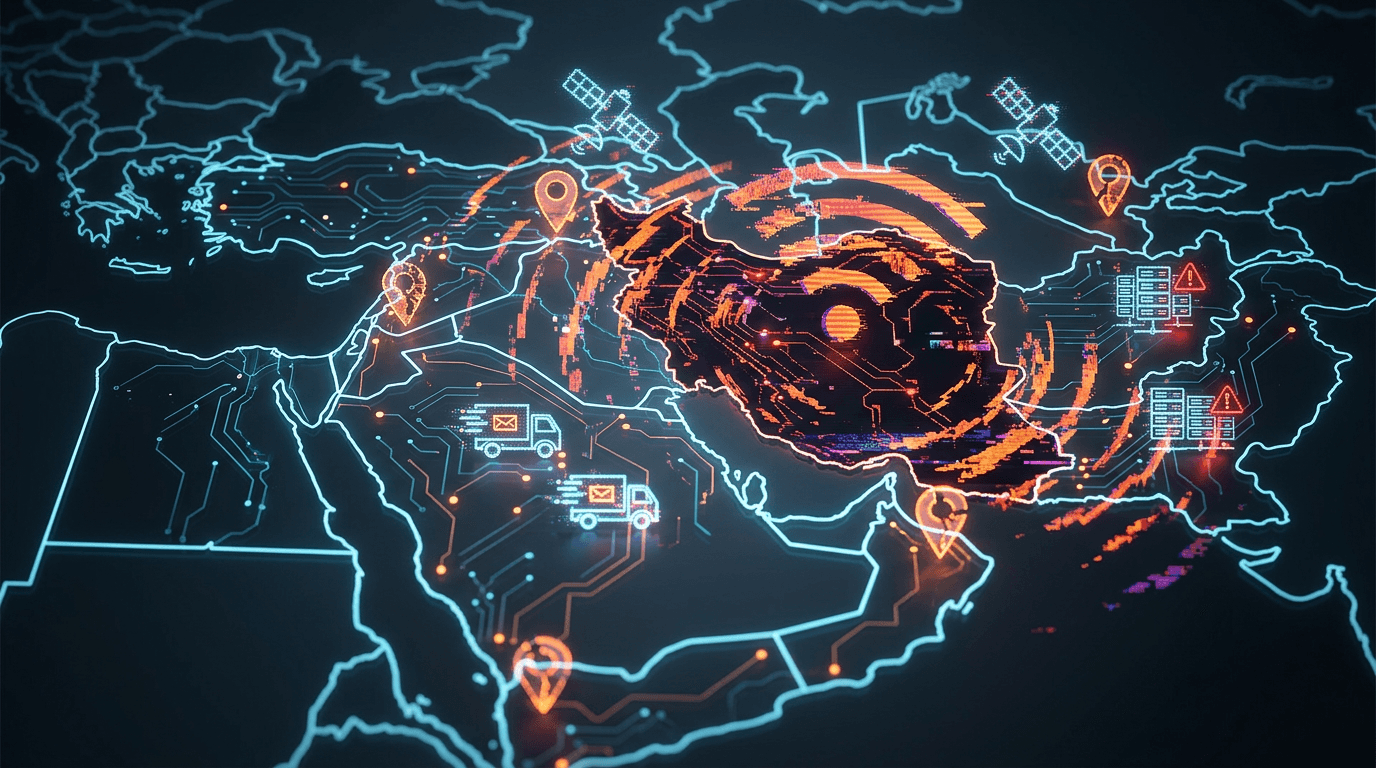
The New Frontier of Conflict: Electronic Signal Interference
As Middle Eastern tensions escalate, electronic warfare (EW) is transcending the battlefield to disrupt civilian technology infrastructure on a global scale. Reports from March 10, 2026, indicate that GPS attacks near Iran have reached unprecedented levels, causing widespread failure in global navigation apps and threatening the stability of regional data centers. This 'invisible war' is sending shockwaves through the global tech supply chain, exposing the fragility of satellite-dependent systems.
GPS Spoofing and Jamming: Chaos in Delivery and Navigation
Wired has documented a surge in 'GPS spoofing' near Iranian territory, where fake signals override legitimate satellite data, misleading devices about their actual location. This has rendered delivery platforms, ride-sharing apps like Uber, and logistics mapping systems virtually unusable in certain sectors. Navigation routes often jump hundreds of miles instantaneously, creating hazardous conditions for both local logistics and the burgeoning field of autonomous vehicle testing in the region.
Data Centers and Energy: The Hidden Costs of War
The impact extends far beyond navigation. According to The Verge, the spiraling conflict has driven up oil and gas prices, directly increasing the electricity costs for massive data center clusters. As the Middle East is a central hub for global subsea cables and energy, prolonged hostilities threaten to raise cloud computing fees worldwide. Furthermore, the high-intensity electromagnetic interference associated with EW poses long-term risks to sensitive server hardware and regional telecommunications stability.
Tech Industry Response: The Search for Resilient Positioning
In response to these vulnerabilities, tech companies are accelerating the development of non-GPS positioning systems. This includes leveraging terrestrial cellular signals, inertial navigation, and LEO satellite constellations like Starlink to provide a more stable alternative. However, the current reliance on GPS remains a single point of failure that the Iran conflict has starkly highlighted for the global community.
A Scientific Surprise: Submerged Bees Defy Oxygen Limits
Amidst the geopolitical tension, Science News reported a fascinating biological discovery. Research by Sabrina Rondeau has confirmed that submerged bumblebee queens can survive underwater for weeks without drowning. This study suggests that these insects utilize metabolic strategies that don't require oxygen during hibernation, offering new insights into biological resilience in extreme environments—a theme that resonates in a world facing increasing environmental and technological stressors.
Outlook: The Era of Signal Defense
Geopolitical analysts warn that the 'democratization' of low-cost EW tools means that local conflicts can now cause global technological disruptions. For multinational tech firms, integrating 'signal defense' into consumer products is no longer optional. We are entering an era where protecting the integrity of signals is as critical as protecting the security of data itself, requiring a fundamental shift in how we build and maintain global infrastructure.