
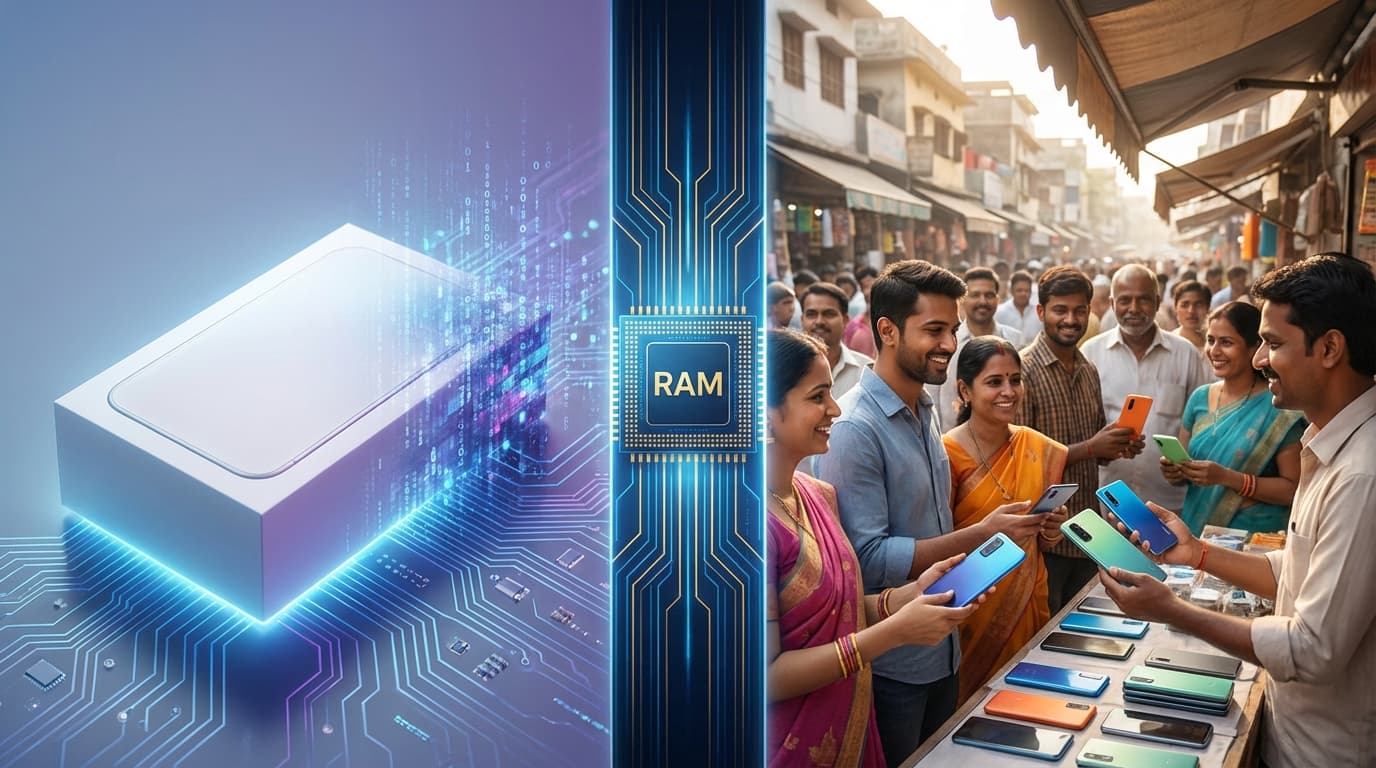
A Polarized Hardware Landscape
The global hardware market in early 2026 is witnessing a stark divergence. While the high-end sector is struggling with critical component shortages that have forced industry leaders like Apple to retract certain products, a powerful movement is rising at the opposite end of the spectrum to produce $40 smartphones. This push aims to bridge the digital divide for 20 million people in developing nations. Google Trends analysis shows that while general "semiconductor" queries are flat, the specific impacts on supply chains are manifesting in tangible product strategy shifts across the globe.
Apple's Quiet Retreat: The RAM Shortage Effect
Apple has quietly removed the entry-level 512GB Mac Studio model from its official store, a move first flagged by Ars Technica. This tactical withdrawal is widely viewed as a direct consequence of the persistent global shortage of high-performance RAM and storage components. As AI applications demand increasingly massive amounts of memory, the competition for memory chips has intensified, leaving even giants like Apple vulnerable. By eliminating lower-margin entry-level configurations, Apple is likely consolidating its limited component supply to fulfill orders for higher-end, high-margin SKUs, prioritizing profitability over volume during this supply crunch.
The $40 Smartphone: A New Push for Inclusion
In contrast to the premium segment’s consolidation, TechCrunch reports on a new initiative by a coalition of telecom operators and device manufacturers to launch $40 smartphones. The project aims to bring mobile internet access to up to 20 million non-users, particularly in markets like India. However, the path is fraught with difficulty; rising costs of base components threaten the viability of the $40 price point. To succeed, the coalition is exploring innovative software optimization and manufacturing subsidies, viewing the smartphone not just as a device, but as a fundamental gateway to the modern economy.
India’s PC Boom: Beyond the Pandemic
The demand for connectivity is evident in recent data from India, where PC shipments have surpassed their previous pandemic-era peaks. According to TechCrunch, this surge is driven by first-time users who entered the market during lockdowns and are now seeking their first major hardware upgrades. This cycle of growth highlights the massive potential of the Indian market, yet it also adds to the global strain on foundational electronic components, creating a paradox where demand is skyrocketing just as supply chains are tightening for entry-level parts.
Outlook: The Bifurcation of Tech Access
Moving forward, the hardware industry will be defined by a growing gap in accessibility. The premium market will likely continue to face instability as AI-driven demand for memory and processing power outpaces supply, keeping high-end workstations expensive and scarce. Meanwhile, the "race to the bottom" for affordable devices will test the limits of manufacturing efficiency and global logistics. We are entering an era where the digital divide is no longer just about network coverage, but about the physical availability of the silicon and memory required to participate in the digital age.