
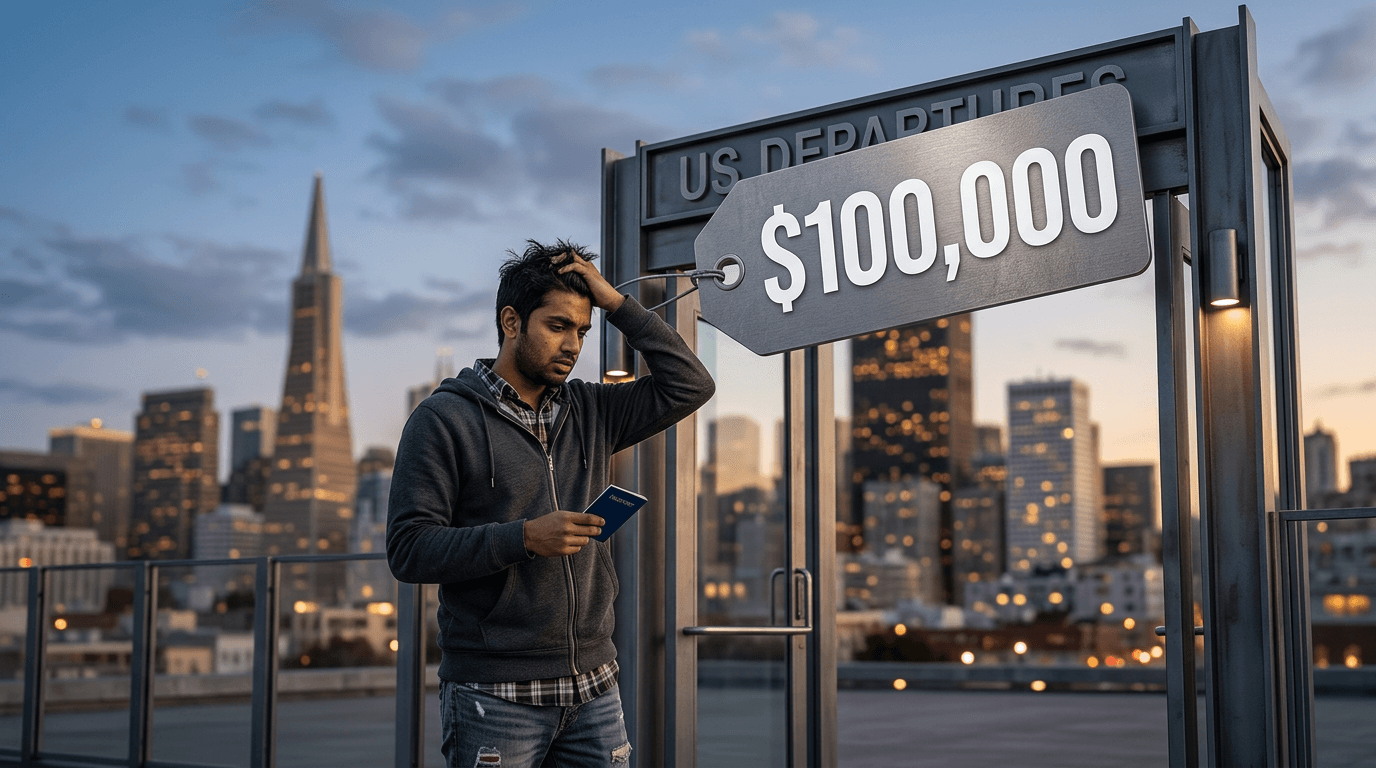
Policy Shocks: When a Visa Becomes a $100,000 Luxury Item
Six months after the implementation of an executive order that raised H-1B visa fees to a staggering $100,000, the American tech sector is grappling with systemic disruption. According to a follow-up report by The Verge, the policy—initially framed as a move to prioritize American labor—has instead triggered a state of "near-immediate chaos." Thousands of high-skilled workers who traveled abroad to renew their visas have found themselves stranded, as employers balk at the massive new financial requirement. This isn't just a hurdle for Silicon Valley; it's an existential crisis for the US's ability to retain global talent.
Legal experts are centering their arguments on the Administrative Procedure Act (APA). Under the APA, any change in government fees must not be "arbitrary, capricious, or an abuse of discretion." Increasing a fee from roughly $2,500 to $100,000 is being characterized by legal scholars as an unauthorized "tax" rather than a simple administrative fee. Since only Congress has the power to levy taxes, trade groups are preparing for a major legal showdown with the Department of Homeland Security (DHS), arguing that the executive branch has overstepped its statutory limits.
Silicon Valley's Exodus: The Talent Drain to Competitors
While Big Tech firms might have the cash reserves to absorb the shock, the impact on the startup ecosystem and public sectors is devastating. TechCrunch reports that many mid-sized firms and startups have effectively ceased international hiring. Perhaps more concerning is the burgeoning "reverse migration" to countries like Canada, Singapore, and the UK. These nations have ramped up their "Global Talent Streams," specifically targeting H-1B holders who are now feeling unwelcome in the United States. The resulting talent drain could set back US research and development in critical fields like quantum computing and semi-conductors by years.
Furthermore, the educational sector is facing an unprecedented shortage. Schools that relied on H-1B visas to fill specialized roles in STEM education are now unable to afford the $100,000 fee per teacher. This has led to the cancellation of advanced placement classes and specialized technical training in several states. The paradox of the policy is that in trying to protect American workers, it may be crippling the infrastructure needed to train the next generation of American innovators.
The Legal Battle: "Irreparable Harm" and Injunctions
Lawsuits currently filing for injunctions are emphasizing the concept of "irreparable harm." They argue that once a top-tier researcher leaves for a competitor nation, that loss of intellectual property and innovative potential cannot be recovered through financial compensation later. If a federal judge grants a stay, the fee might be rolled back temporarily. However, the current administration maintains that the fee is a necessary measure to ensure that companies only hire foreign workers for truly indispensable, high-value roles. The debate highlights a fundamental disagreement over the value of international talent in a globalized economy.
Market Sentiment and Social Media Reaction
Google Trends data reveals that search volume for "H-1B litigation updates" and "Moving to Canada from US" has increased by 300% over the last half-year. California, the hub of the US tech industry, maintains a peak interest score of 100 on these topics. On professional networks like LinkedIn, there is a palpable sense of betrayal among long-term H-1B holders who have lived in the US for over a decade. As the legal war rages on, the US risks losing its identity as the world’s premier destination for the brightest minds. The next six months of court rulings will determine whether the American Dream remains open to the world's best tech talent.