
Refueling in Minutes: BYD's Charge Toward Parity
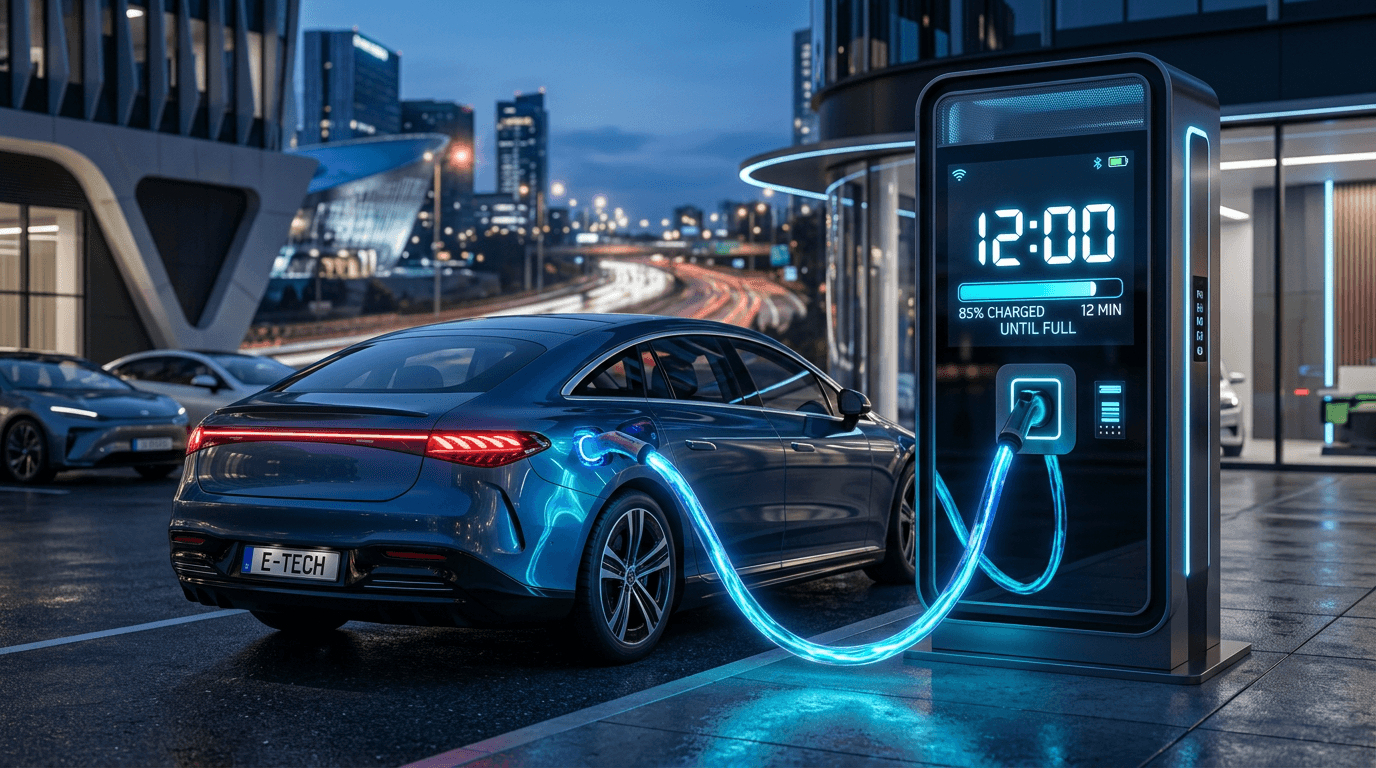
The fundamental gap between internal combustion engine (ICE) vehicles and electric vehicles (EVs) is closing at a staggering pace. On March 13, 2026, Ars Technica reported that BYD's latest EV platform is capable of achieving a near-full charge in just 12 minutes. This technological leap addresses the single greatest hurdle to EV adoption: charging anxiety. For the first time, the time spent at a charging station is rivaling the time spent at a traditional gas pump, marking a psychological and functional milestone for the industry.
The Engine of Efficiency: 800V and Silicon Carbide
The backbone of this breakthrough is the industry-wide shift toward 800V power architectures. According to technical papers published in Micromachines (Oct 2025), the move from 400V to 800V is enabled by Silicon Carbide (SiC) devices. SiC components offer faster switching speeds and significantly lower power loss compared to traditional silicon. This allows for higher voltage delivery without the excessive heat buildup that typically plagues rapid chargers. Academic reviews in RSC Advances (July 2025) confirm that advanced thermal management, including phase change materials (PCM), is essential to support these ultra-fast cycles safely.
Market Dynamics: Rivian R2 vs. The Incumbents
As Chinese manufacturers like BYD push the limits of speed, Western competitors are fighting to keep pace. Rivian's upcoming R2 (The Verge, 2026) is the centerpiece of this struggle, aiming to deliver high-performance specs at a competitive price point to challenge the Tesla Model Y. The R2's success will largely depend on its ability to integrate these high-speed charging capabilities. Meanwhile, the democratization of high-voltage technology means that features once reserved for high-end luxury EVs, like the Porsche Taycan, are now becoming standard in more accessible models.
Infrastructure and the Heat Management Paradox
While the cars are ready, the grid and individual chargers face a daunting task. An ultra-fast charge creates an immense momentary load on local electrical systems. Researchers are now focusing on multiport bidirectional converters (Scientific Reports, 2025) that can integrate renewable energy and grid power to stabilize these high-demand charging sessions. Ensuring the longevity of the battery while subjecting it to 12-minute 'blasts' of energy requires high-precision full-field temperature reconstruction, a field that has seen significant innovation in fiber-optic sensing for batteries in early 2026.
Global Trends: The 2026 Inflection Point
Google Trends data shows a steady interest in EV infrastructure, particularly in regions like California. While the search interest for 'EV' remains modest, the underlying demand for faster solutions is undeniable. As 800V systems become the norm, the industry is moving away from 'range anxiety' toward 'throughput efficiency.' 2026 is shaping up to be the year where EV charging finally catches up to human patience, potentially ending the decade-long dominance of gasoline as the only option for truly convenient long-distance travel.