
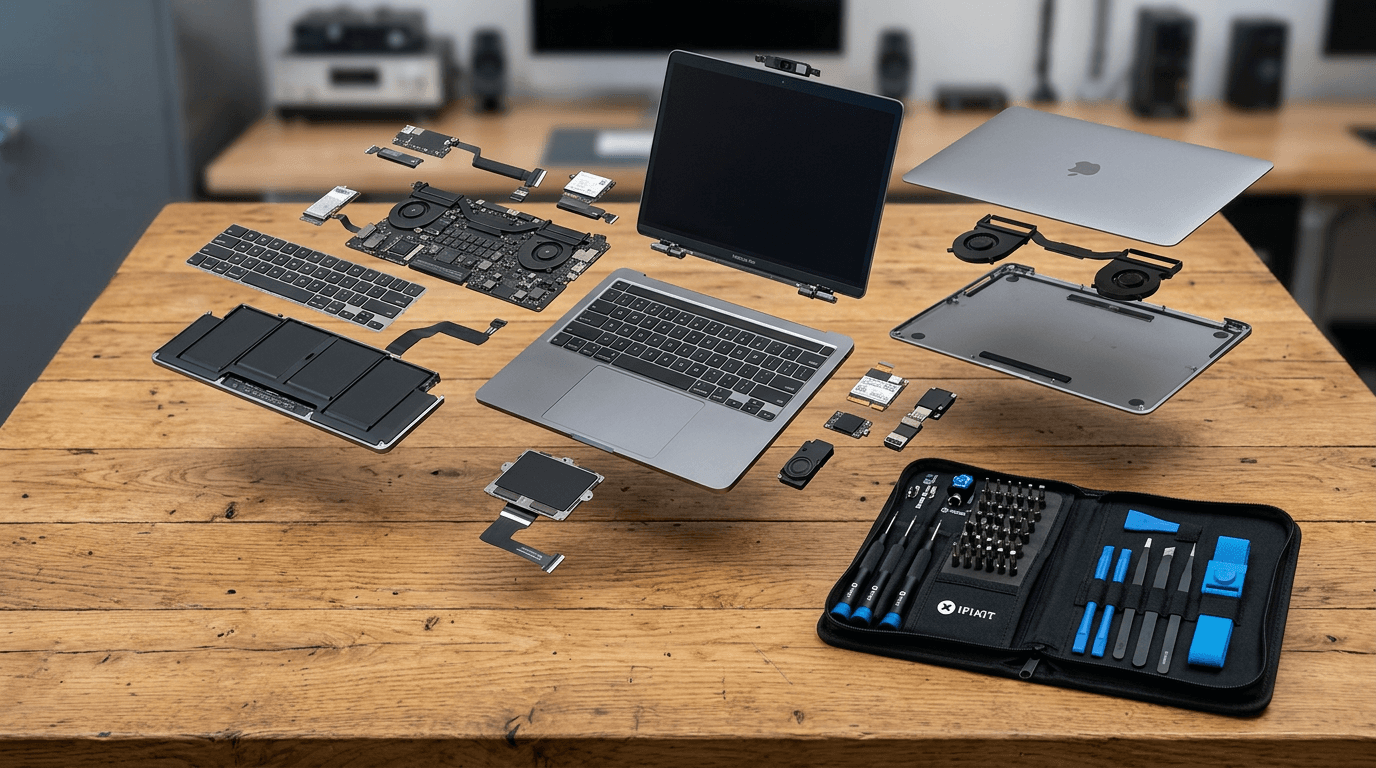
Cracks in the Walled Garden: The MacBook Neo’s New Architecture
For over a decade, Apple has been the poster child for planned obsolescence and difficult-to-repair hardware. However, the release of the MacBook Neo marks a stunning reversal. According to a teardown by iFixit, the MacBook Neo is the most repairable laptop from Apple in approximately 14 years. Marketed as Apple’s most affordable and sustainable entry, the Neo features an internal architecture that prioritizes modularity over integration, a design choice that has long been requested by the "Right to Repair" community.
TechCrunch reports that the high repairability score is due to several key changes: the battery is no longer held down by aggressive permanent adhesives, opting instead for pull-tabs; the keyboard and trackpad are independent components rather than being fused to the top case; and Apple has released full service manuals alongside the hardware. This shift is seen as a direct response to increasing regulatory pressure from the European Union and several US states that have passed strict Right to Repair legislation.
Engineering for Longevity: Fixing the Sins of the Past
The MacBook Neo isn't just easier to fix; it’s designed to last longer. iFixit noted that the display cables—historically a weak point known for causing the "stage light" effect—have been reinforced and rerouted. Additionally, the fan and cooling assemblies are easily accessible for cleaning, preventing the thermal throttling issues that often plague older MacBooks. By making the hardware more transparent and accessible, Apple is significantly reducing the carbon footprint of each device, as users are more likely to repair their machines rather than replacing them.
Consumer Sentiment and Trends
Data from Google Trends indicates a 240% increase in search interest for "MacBook Neo repair kit" and "DIY laptop maintenance" since the product launch. This trend is particularly strong in California and New York, areas at the forefront of the consumer rights movement. In international markets like Taiwan, where laptop longevity is a key factor in purchase decisions, the MacBook Neo has seen a surge in interest from students and professionals who value the ability to perform basic maintenance themselves.
The Road Ahead: A New Standard for Apple?
The success of the MacBook Neo raises an important question: Will this modularity trickle up to the MacBook Pro and iPhone lines? Currently, Apple’s high-end Pro models still rely on heavily integrated components to achieve their slim profiles and peak performance. However, the Neo proves that a balance can be struck. As global regulations on electronic waste become more stringent, Apple’s pivot toward repairability may become the new industry standard. For the first time in years, consumers are looking at an Apple product that they truly own—not just rent until the next upgrade cycle.