
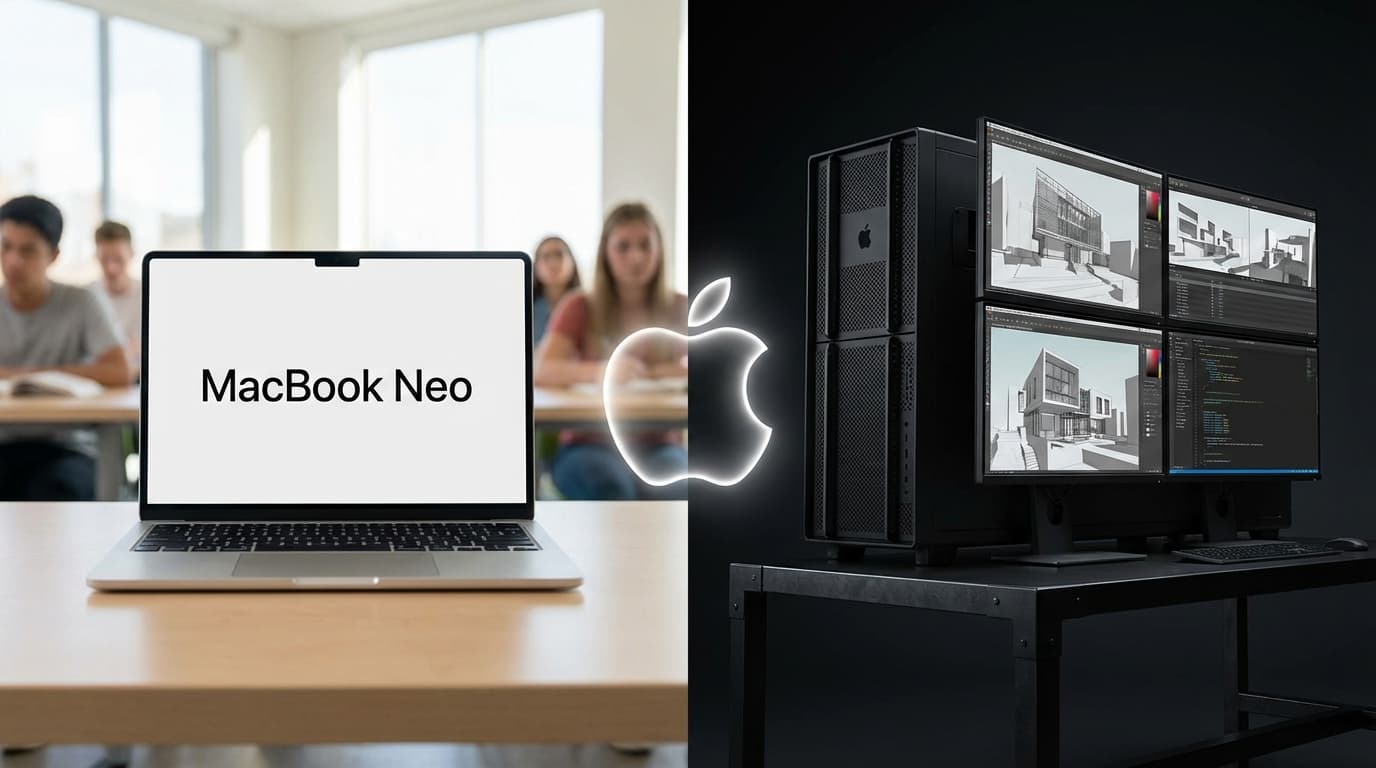
The Barbell Logic: Apple’s Two-Front Strategy
Apple is executing a tactical pivot that many analysts are calling a “Barbell Strategy.” On one end, the company has recently launched the MacBook Neo—an entry-level powerhouse designed to capture the education sector and emerging markets with aggressive pricing. On the other end, as reported by Bloomberg’s Mark Gurman and echoed by The Verge, Apple is now readying a trio of ultra-high-end products. This dual-pronged attack is designed to cement Apple’s dominance at both the budget and premium extremes of the consumer electronics market.
According to insider leaks, these three new “Ultra” products will command significant price premiums over their current mainline counterparts. While the “Ultra” branding may not be applied to all three—following the nomenclature of the Apple Watch Ultra—the internal philosophy remains the same: performance without compromise for the professional elite. This move comes as Apple looks to maximize margins in an era where unit growth for iPhones has stabilized, shifting the focus to high-value hardware ecosystem upsells.
The Ultra Trio: What to Expect from the New Lineup
Speculation regarding the specific products is reaching a fever pitch. First on the list is a larger-format “iPad Ultra,” potentially featuring a 14.2-inch screen and a chassis designed for heavy-duty multitasking, effectively replacing the niche currently occupied by high-end laptops for artists and designers. The second rumored entry is an overhauled “Mac mini Ultra,” which would feature a bespoke cooling system to house the most powerful variants of the M-series chips, bridging the gap between the Mac Studio and the Mac Pro.
Finally, reports suggest a “Studio Display Ultra” is in the works, utilizing next-generation mini-LED technology with ProMotion support for 120Hz refresh rates. According to The Verge, these displays might incorporate dedicated AI processing silicon to handle on-device tasks like advanced video upscaling or background noise cancellation in real-time, independent of the connected Mac. Google Trends data indicates that interest in "Apple Ultra Products" has surged by 45% globally, with significant spikes in professional creative hubs like California, London, and Taipei.
Supply Chain Synergy: High-End Tech for a High-Volume World
The success of this strategy relies on Apple’s unparalleled supply chain vertical integration. By utilizing legacy chassis designs for the MacBook Neo (repurposing the iconic MacBook Air silhouette), Apple can lower production costs and pass savings to the consumer. Meanwhile, the Ultra line serves as the pioneer for Apple’s most expensive innovations, such as the early adoption of 2nm chip manufacturing processes. This internal "subsidization" allows Apple to innovate at the bleeding edge without sacrificing overall profitability.
However, this aggressive expansion into every market tier is not without its challenges. Regulatory bodies in the EU and the US continue to monitor Apple for “ecosystem lock-in” behaviors. By positioning the Ultra line strictly as professional workstations, Apple is attempting to mitigate antitrust concerns that typically apply to consumer-grade devices. The goal is clear: create an “irreplaceable” suite of tools for the world’s most demanding professionals, ensuring they never leave the walled garden.
Looking Ahead: 2026 as Apple’s Pivot Point
2026 is shaping up to be a defining year for Apple. While the MacBook Neo is currently driving massive volume with pre-order gift card deals aimed at back-to-school shoppers, the upcoming Ultra lineup represents the long-term future of the brand. Under Tim Cook’s leadership, Apple is evolving from a prestige-only brand into a ubiquitous ecosystem that caters to everyone from first-time laptop buyers to high-end data scientists.
For the consumer, the Apple catalog is about to get more crowded and expensive, but also more specialized. This strategic divergence ensures that whether a customer has $600 or $6,000 to spend, Apple has a tailored experience waiting for them. The upcoming months will reveal if the market has the appetite for an even higher tier of "Ultra" luxury, but if history is any indication, Apple is betting on a future where the sky is the limit for performance and price.